
Indigent defense agency gets funding boost but not full pipeline request; omnibus SB 2111 passes
Get AI-powered insights, summaries, and transcripts
Subscribe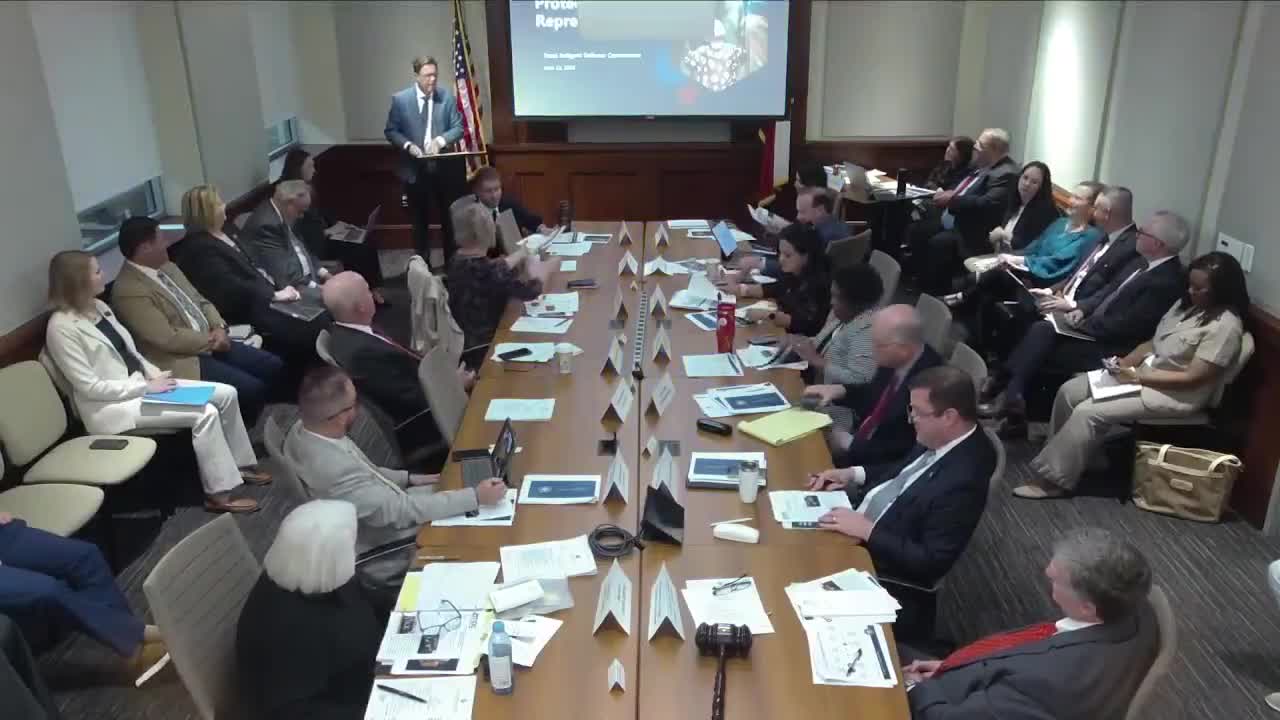
Summary
Scott Ehlers, executive director of the Texas Indigent Defense Commission, told the council that the commission received a material but partial funding increase for the next biennium and that SB 2111 — TIDC’s omnibus bill — passed the legislature.
Scott Ehlers, executive director of the Texas Indigent Defense Commission, told the council that the commission received a material but partial funding increase for the next biennium and that SB 2111 — TIDC’s omnibus bill — passed the legislature.
Budget outcome and remaining gaps TIDC had requested roughly $111 million in additional funding across multiple priorities, including pipeline programs to address rural attorney shortages, family‑protection representation, and public defender expansion. The legislature provided roughly $18.7 million initially and allowed use of up to $10 million in unspent one‑time funds (LoanSTAR) plus a $5.1 million supplemental allocation in HB 500, yielding about a $25 million net increase for the biennium, the director said. The commission’s exceptional item requests for broad pipeline and family‑protection grants were not fully funded; the director said the commission hopes to return to the legislature in a future session for additional appropriations.
SB 2111 and statutory cleanups Ehlers said SB 2111 (the TIDC omnibus) included multiple statutory cleanups related to magistration and other TIDC priorities. The bill also included a legislative resolution recognizing the Gideon anniversary. Ehlers thanked Senators Zaffirini and Representative Moody for getting the omnibus across the finish line.
Why it matters TIDC said the additional one‑time and supplemental funds will help develop temporary projects and rural supports, but the commission warned that persistent attorney shortages and structural funding limits still put strain on local systems. Council members and TIDC officials said the pipeline question remains pressing and may require a coordinated interim strategy.
Ending TIDC will use the supplemental and one‑time funds with restrictions (temporary projects and rural county focus) and return to the council with plans for how to deploy the money and where additional investment is required to sustain public defender offices and family protection representation.