Get Full Government Meeting Transcripts, Videos, & Alerts Forever!
Get email alerts on the Personnel Exemptions topic
No spam. Unsubscribe anytime.
Board approves temporary civil‑service exemptions for two KPD positions and a KFD part‑time assistant
Summary
The Civil Service Merit Board approved three exemption requests: two from KPD (a firearms examiner trainee covered by a CJ grant through Sept. 2027 and a second 'NIVIM' technician related to ballistics) and a part‑time executive assistant for the Fire Department for one year from hire.
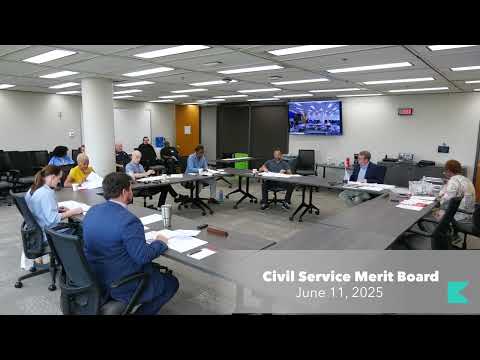
The Civil Service Merit Board voted Wednesday to approve three temporary exemptions from civil‑service hiring rules: two requested by KPD and one requested by the Fire Department.
The votes matter because exemptions allow departments to fill time‑limited or grant‑funded roles outside the usual civil‑service competitive hiring process.
The first motion approved KPD’s request to exempt a firearms examiner trainee position through Sept. 30, 2027. Staff said the earlier VCIF grant that had funded two similar positions ends June 30, and a new CJ grant will pick up funding starting July 1 and run through September 2027, so the department asked to continue the exemption under the new grant.
The board then approved a second KPD exemption described on the agenda as a “NIVIM” technician. A staff member indicated that designation relates to ballistics; the agenda language did not spell out the acronym. The board approved that request without objection.
A third request from the Fire Department sought authority to hire a temporary, part‑time executive assistant for up to one year from the date of hire to provide training and fill in as needed; staff and the chief said pension and hiring nuances were being addressed. The board approved that request as well.
Each item was approved by voice vote; the clerk recorded “ayes” and no opposition was stated on the record. No motions’ maker or seconder names were given in the public discussion. All approvals were procedural in nature; the board did not adopt new policy or change civil‑service rules.