Get Full Government Meeting Transcripts, Videos, & Alerts Forever!
Get email alerts on the Building And Fire Codes topic
No spam. Unsubscribe anytime.
Pasco seeks ways to ease sprinkler and occupancy rules for downtown events while stressing safety
Summary
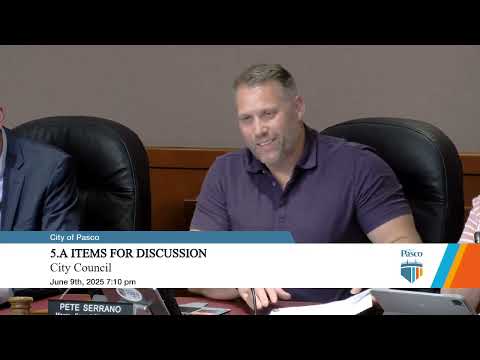
Pasco officials and a building-code consultant on June 9 discussed options to allow more events and activity downtown while meeting state building and fire-safety requirements that, in many older buildings, force costly sprinkler retrofits.
Pasco officials and a building-code consultant on June 9 discussed options to allow more events and activity downtown while meeting state building and fire-safety requirements that, in many older buildings, force costly sprinkler retrofits.
The session followed complaints from local property and business owners that code-triggered sprinkler requirements and occupancy thresholds prevent reuse of basements and other underutilized spaces. The city retained Willie Hill, a certified building official working with BHC Consultants, to review rules and suggest options to help business owners open legally while preserving safety.
Hill told the council that two national code changes after the 2003 Station nightclub fire in Rhode Island lowered sprinkler trigger thresholds for assembly uses: the occupant-load trigger changed from 300 to 100 people in 2006, and a newer nightclub definition captures venues with viewing or dancing areas larger than 350 square feet. Many downtown buildings were constructed before those thresholds and so lack sprinklers that would now be required for larger events.
Hill and staff outlined options that jurisdictions commonly use to allow events without immediately requiring full sprinkler retrofits: limiting posted occupant loads, issuing special-event permits with mitigation conditions (monitored fire alarms, temporary fire watches, additional security or certified personnel), reconfiguring floor areas or inserting fire separations to reduce 'fire area' size, and pursuing alternate means and methods under code section 104 with documented engineering justification.
Council members and business owners stressed the practical burden of retrofits on small owners. Councilmember Blaisdell noted that many local businesses said they were told they "can't" host events unless they install sprinklers; business owner commenters and the consultant urged clearer guidance and more staff outreach. Staff said they will prepare an interpretation memo to clarify how the city will interpret the 350-square-foot viewing/dancing threshold and when special-event mitigations will be allowed.
Deputy City Manager Richa (staff) said the city is working to give staff more discretion while creating frameworks so code officials have consistent guidance and comfort approving mitigations. City legal counsel noted that any program that alters formal enforcement must be carefully structured to avoid unintended liability; staff said they will evaluate alternatives and identify examples from other jurisdictions such as Tacoma that have used monitored alarms, restricted occupancy and fire-rated separations as alternate compliance measures.
Hill recommended outreach and education for property owners and operators so they know limits on exits, occupant load posting, and when to seek permits or engineering review. He said local fire marshals retain enforcement authority and can order closures when occupant loads exceed posted limits or conditions of a permit are violated.
No ordinance was adopted at the workshop. Staff said next steps include drafting an interpretation memo, surveying peer cities' code approaches, preparing templates for special-event permits and communicating options to downtown building owners to reduce ambiguity and encourage compliant reuse of older spaces.