Get Full Government Meeting Transcripts, Videos, & Alerts Forever!
Get email alerts on the Marina Restaurants Lease topic
No spam. Unsubscribe anytime.
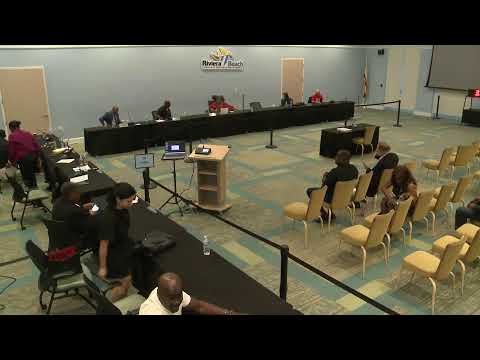
Riviera Beach CRA postpones Rafiki Tiki term-sheet vote after commissioners press for exit ramp, community benefits
Summary
At its June meeting the Riviera Beach Community Redevelopment Agency postponed action on Resolution 2025-11, a proposed term sheet for a lease with Rafiki Tiki LLC, directing staff to return with a revised term sheet at the board’s July 9 meeting.
At its June meeting the Riviera Beach Community Redevelopment Agency postponed action on Resolution 2025-11, a proposed term sheet for a lease with Rafiki Tiki LLC, directing staff to return with a revised term sheet at the board’s July 9 meeting.
The item before the board was a draft term sheet negotiated by staff and reviewed by JLL that would expand the current Rafiki Tiki lease to the restaurant’s ground-floor space at the Marina Event Center, include an option for rooftop use, and offer a $200,000 tenant allowance toward construction. Anita Jenkins, the CRA director of neighborhood services, told commissioners “the lease would commence on August 1,” and described a five‑year initial term with three five‑year renewal options, a 3 percent annual escalation and base rent at $22.50 per square foot triple net plus pro rata operating costs. Jenkins said the draft contemplated an additional $1,500 monthly charge for the outside/sidewalk area and that tenant allowances would be paid after the tenant completes construction and submits verified costs.
Why it matters: the Marina Event Center and the larger Marina Village Phase 2 are central to the CRA’s waterfront redevelopment strategy. Commissioners voiced concern that committing assistance and long options without stronger protections could complicate a future developer’s master plan for the marina or leave the agency paying for improvements that must be removed or relocated.
Board concerns and requested revisions
Commissioner Spiritus and others stressed the need for an explicit “exit ramp” should a future Marina Village developer require alterations or relocation of the restaurant. Commissioner Spiritus asked that the CRA be able to cancel a lease with a notice period of 90–120 days and, if termination is required, reimburse the tenant a negotiated portion of documented improvements; he suggested 75 percent as a model for reimbursement of verified, eligible costs. Jenkins confirmed staff’s intent to require full documentation (receipts and contracts) before releasing CRA funds.
Several commissioners also asked for an independent cost estimate for the tenant’s buildout. Jenkins said the vendor’s current estimate for the proposed first‑floor expansion is “around a million dollars.” Commissioner Spiritus recommended hiring an independent estimator and validating construction contracts and receipts before any CRA payment.
Local participation and community benefits
Commissioners and city staff discussed including community‑benefit commitments and intentional local contracting language in the term sheet. Attorney Chris Smith told the board the CRA could not legally make use of exclusively local contractors an absolute requirement in the lease, but it could “put it in there as a suggestion” and strongly encourage local and minority‑owned vendors through negotiated terms. Multiple commissioners said they want an enforceable community‑benefits provision — for example, mentoring or procurement provisions that create opportunities for smaller local food operators — to be negotiated into the term sheet and lease.
Operational and physical questions
Jenkins and staff outlined other operational points the board asked to resolve before a final lease: separation of plumbing to avoid service interruptions to the Event Center, staging and safety during construction so as to maintain event operations, definition of which parking spaces would remain reserved for restaurant operations, and how rooftop access and interior security would be handled if the top floor becomes a separate operator. Commissioners repeatedly asked whether the first‑floor expansion would “preclude” other operators from the rooftop and whether the CRA would be asked to fund further work to make the rooftop functional; staff said retrofit costs for an operational second floor are a separate issue and would require additional analysis and negotiation.
Applicant’s role
Rafiki Tiki’s principal, Dimitri Saloom, provided a business plan to staff and placed a high priority on local hiring and mentoring opportunities. Jenkins said JLL reviewed confidential financials submitted by the applicant and that staff used those materials in drafting the term sheet.
Board action and next steps
Vice Chair Kishamba Miller Anderson moved to postpone consideration of the proposed term sheet until the CRA’s July 9 meeting so staff could return with additional cost verification, community‑benefits language, and proposed exit‑ramp language; the motion passed 4–1 with Commissioner Davis Paneer dissenting. Jenkins and Executive Director Jadel Mercius said staff will make best efforts to meet the board’s timeline and to hold one‑on‑one briefings with commissioners before the July meeting. Attorney Chris Smith reiterated that the current resolution authorizes staff to continue negotiating a lease consistent with the term sheet but that any final lease would return to the board for approval.
What remains unresolved: the board asked for an independent construction cost estimate, clarified criteria and documentation for the $200,000 allowance, drafted exit‑ramp language that limits the CRA’s exposure, a parking plan that balances event needs and restaurant customer parking, and a defined community‑benefits package with measurable elements and enforcement language. Staff also agreed to explore how any future marina master developer would be expected to accommodate an existing tenant or assist with relocation negotiations.
The agency did not approve a lease and will not execute any lease until a final version returns to the board for vote.
Ending
The board’s postponement keeps the lease‑negotiation process open while requiring staff to return with cost verification, draft community benefits and exit provisions at the July 9 CRA meeting.