
Marlborough committee approves special permit for hospital emergency-department expansion and proposed proton therapy center
Get AI-powered insights, summaries, and transcripts
Subscribe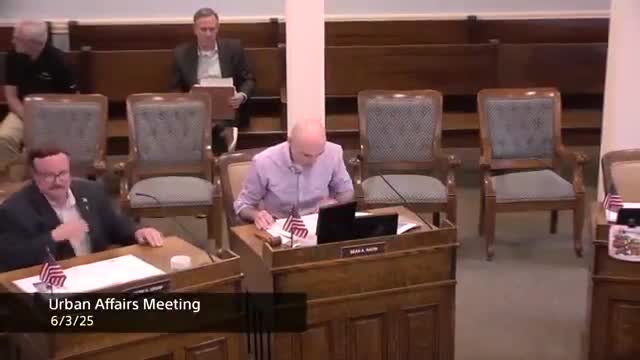
Summary
The Marlborough City Council Urban Affairs Committee voted to approve a special permit allowing Marlborough Hospital and UMass Memorial Realty Inc. to expand the emergency department by about 8,000 square feet, add treatment rooms and pursue a proton therapy center pending state approval.
The Marlborough City Council Urban Affairs Committee voted June 3 to approve a special permit allowing Marlborough Hospital and UMass Memorial Realty Inc. to expand the hospital emergency department, add a multidisciplinary clinic and pursue a proton therapy center, pending any further required approvals.
The vote clears a special-permit application (Order 25-109418) that, as presented at the meeting, would add about 8,000 square feet to the emergency department, increase treatment rooms from 13 to 27 and support more than $100,000,000 in overall hospital improvements. "There's over a $100,000,000 in improvements to the hospital," Attorney Brian Faulk said during the hearing.
The permit includes standard conditions requiring construction in accordance with city and state building and zoning laws, site-plan review by the city's Site Plan Review Committee before a building permit is issued, stormwater and erosion-control supervision during construction and lighting and landscaping conditions intended to limit off-site impacts. The decision also requires the applicant to record the special permit at the Middlesex South Registry of Deeds after the 21-day appeal period required by Massachusetts General Laws, chapter 40A, section 11, has elapsed.
Why it matters: Committee members said the expansion is intended to increase the level of care available locally rather than to deliberately increase patient volume. City officials and hospital representatives said the project would help meet current demand and prepare for future care needs in the region.
At the meeting, hospital representatives described the proposed proton therapy unit as subject to additional regulatory review. "For the proton therapy... that is pending regulatory approval. That is going through the whole determination of need process through the Department of Public Health," a hospital representative said. The hospital estimated the proton therapy service would serve roughly 300 patients a year when at capacity, translating to an estimated 8 to 10 scheduled patient visits per weekday to that specific entrance, with clinic hours generally during daytime weekday hours.
Committee members reviewed municipal department comments included in the record. "The police department does not have any issues with this special permit application," Police Chief David Georgi said in the written comments read into the record. Assistant Fire Chief Emmanuelson and the Board of Health (per Director of Public Health Paul Dinwiddie) also reported no objections. Priscilla Reyer, the city's conservation agent, requested landscaping-related conditions; the draft decision incorporates additions in response to those comments.
Councilors asked about site details raised as conditions in site-plan review, including a remnant gravel parking pad on the property. The committee requested the applicant evaluate options for that gravel area, including permeable pavers or grassing the area, as part of formal site-plan review. The decision also requires a site superintendent with credentials acceptable to the city's engineering division and conservation commission to manage stormwater and erosion controls throughout construction.
Questions about future parking and traffic were raised. Hospital staff said routine proton therapy and clinic appointments will be scheduled and staggered and that emergency-department demand remains unpredictable. The hospital reported roughly 29,000 to 30,000 emergency-department visits annually in recent trends. The hospital said it will monitor parking use and consider operational options — including shuttle service or valet — if warranted.
The committee voted 4–0 with one member absent to approve the special permit. After the vote a committee member asked that the committee suspend rules to refer the matter to the city solicitor's office so the permit language can be drafted in proper format for the full council vote on June 23.
The permit includes a provision allowing limited engineering changes during site-plan review so long as changes do not materially alter use, increase impervious area, reduce green space, change traffic flow or enlarge the building footprint beyond what the council approved. Final occupancy will be withheld until the applicant complies with all conditions and site-plan approvals.