Get Full Government Meeting Transcripts, Videos, & Alerts Forever!
Get email alerts on the School Transportation topic
No spam. Unsubscribe anytime.
Poquoson staff propose bus stop‑arm cameras and parent tracking app; board raises enforcement and vendor questions
Summary
Operations staff presented plans to equip buses with stop‑arm cameras through a vendor program (Bus Patrol) and to trial a parent bus-tracking app. Board members asked for details on vendor selection, staff workload, revenue handling, law‑enforcement roles and alternative technologies; no contract or MOU was approved at the meeting.
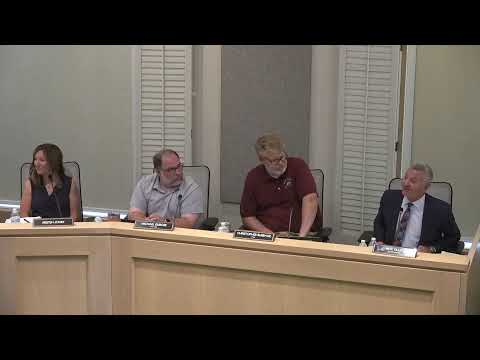
Poquoson City Public Schools operations staff briefed the board on two transportation initiatives on May 20: a proposed stop‑arm camera program run by a private vendor and a trial rollout of a parent-facing bus-tracking app.
Mister Roberts, an operations presenter, said the city council recently passed an ordinance that clears the way for school divisions to seek board approval to use stop‑arm cameras and that the district has been working with a vendor called Bus Patrol. "Bus Patrol is the current vendor PCPS has been working with for information and options to provide the stop arm cameras along with additional bus cameras to enhance overall bus safety," Roberts said. He described a revenue-share model in which the vendor funds camera installation and collects a portion of citation revenue to cover ongoing technology fees and administration; staff said there are no upfront costs to the district under the proposed model.
Roberts also described a limited parent-app trial to test real-time bus location and estimated arrival times; the district will expand testing over summer Academy and aim for a full launch at the start of the school year.
Board members pressed staff for more detail on vendor selection, program costs, and operational responsibilities. "My concern is...we might be stepping into the law enforcement side as a school division," said Mister Claude, noting that the proposed program relies on citation revenue and that the school’s role in processing or responding to citations needs definition. He asked for the vendor selection documentation, comparisons with other companies and clear answers about the district’s time commitment for citation review and court contacts.
Staff said they are finalizing a memorandum of understanding with the Poquoson Police Department to govern evidence review and cited that the department would expect about an hour or less per week to approve or decline citations. Roberts said the vendor’s model assumes the technology fee will be covered by citation revenue; if monthly revenue does not cover the fee, the vendor rolls that balance forward and ultimately writes it off if not recouped, so the district would not pay technology fees directly.
Board members also asked about alternative approaches sighted in vendor literature — for example, predictive alert systems that warn drivers and students when a vehicle is approaching the stopped bus — and requested that staff produce a written Q&A and vendor-comparison documentation before any agreement is authorized. Staff said the program will require a formal school-board authorization and an MOU with police before moving forward.
No contract was approved at the meeting. Staff said they will provide the board with the proposed contract and supporting comparisons and will return with the draft MOU for the Poquoson Police Department for the board’s review and potential action.