
EGLE outlines shift from landfill disposal to materials utilization, and tips debate on charging out-of-state waste
Get AI-powered insights, summaries, and transcripts
Subscribe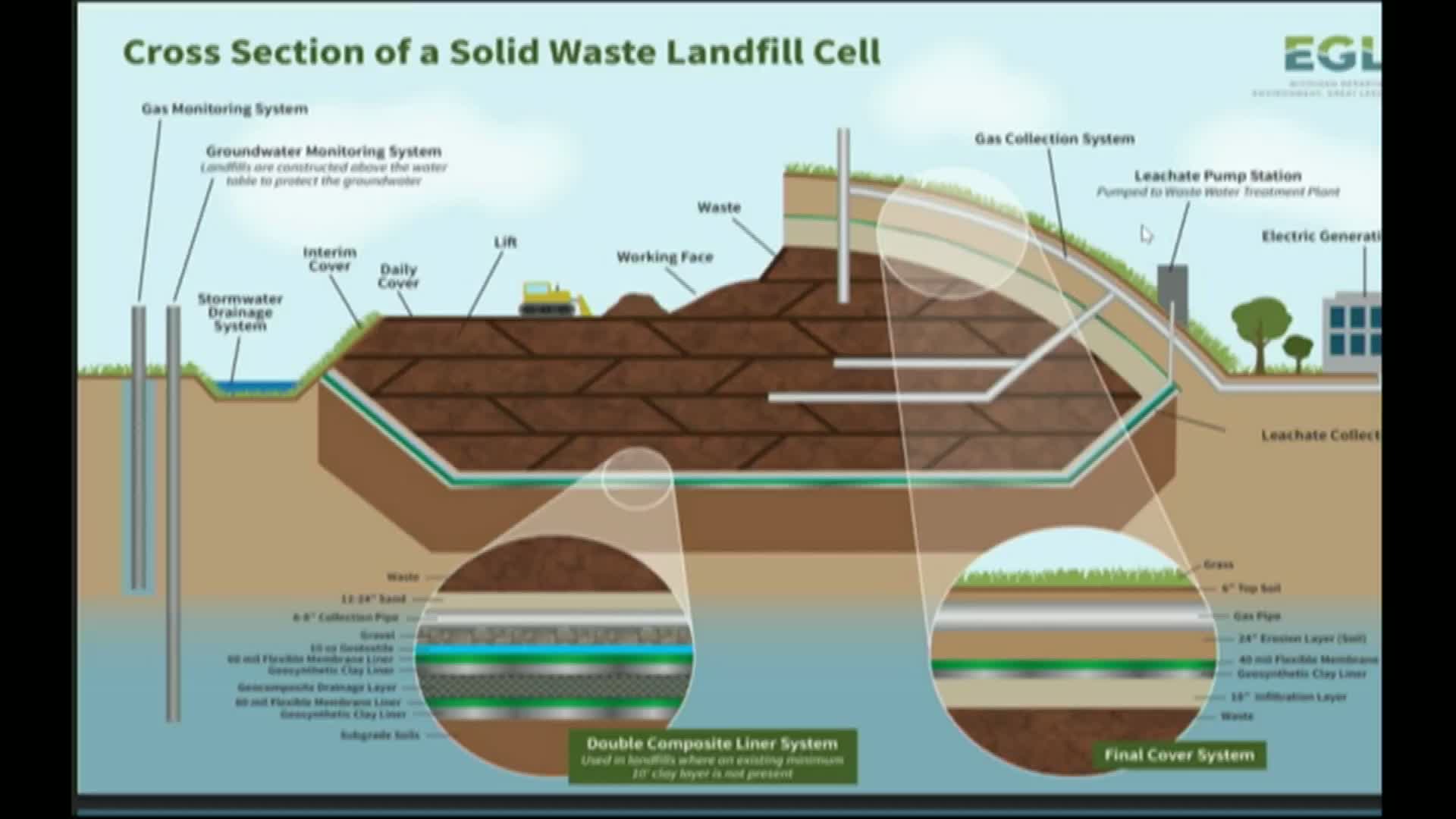
Summary
EGLE officials told a House appropriations subcommittee that Michigan has ample landfill capacity but is shifting policy toward recycling, composting and material markets; the agency and the governor's budget propose raising a disposal (tipping) fee to deter out-of-state waste and fund contaminated-site work.
Tracy Cascametti, acting director of EGLE's Materials Management Division, told the House appropriations subcommittee on Oct. 11 that Michigan has 67 permitted solid-waste landfills and that in the prior year about 24 million tons of solid waste were landfilled in the state.
Cascametti said about 80% of that tonnage is generated in Michigan and about 20% comes from out of state; Canada and Ohio were identified as principal out-of-state sources. She described modern landfills as "complex engineered systems" and said the agency inspects them at least quarterly.
The agency reported the current disposal surcharge is 36 cents per ton and generates roughly $6 million a year for solid-waste programs. Cascametti said the agency and the governor's budget include a proposal to increase tipping fees to both raise revenue for contaminated-site work and provide a deterrent to out-of-state waste.
Cascametti and deputy director Travis Boleskull described a policy shift from prioritizing disposal capacity to promoting materials utilization under amendments to Part 115 enacted in 2022. That utilization approach, the agency said, treats recycling, composting and anaerobic digestion as both regulatory and grant-making activities. Cascametti noted counties must update materials management plans under the new framework; counties receive $60,000 a year plus population and collaboration adjustments and may use leftover planning funds for implementation.
EGLE said the state's overall recycling rate for municipal curbside material was 25% in 2024 and that the agency has a goal of 30% by 2029. The agency described programs such as NextCycle Michigan (about $2 million in programming) to help develop markets for recycled materials.
No formal committee vote occurred. EGLE presented the fiscal and policy rationale for a fee increase and for directing money to reuse, recycling and contaminated-site response.