Get Full Government Meeting Transcripts, Videos, & Alerts Forever!
Get email alerts on the Childcare Myleap topic
No spam. Unsubscribe anytime.
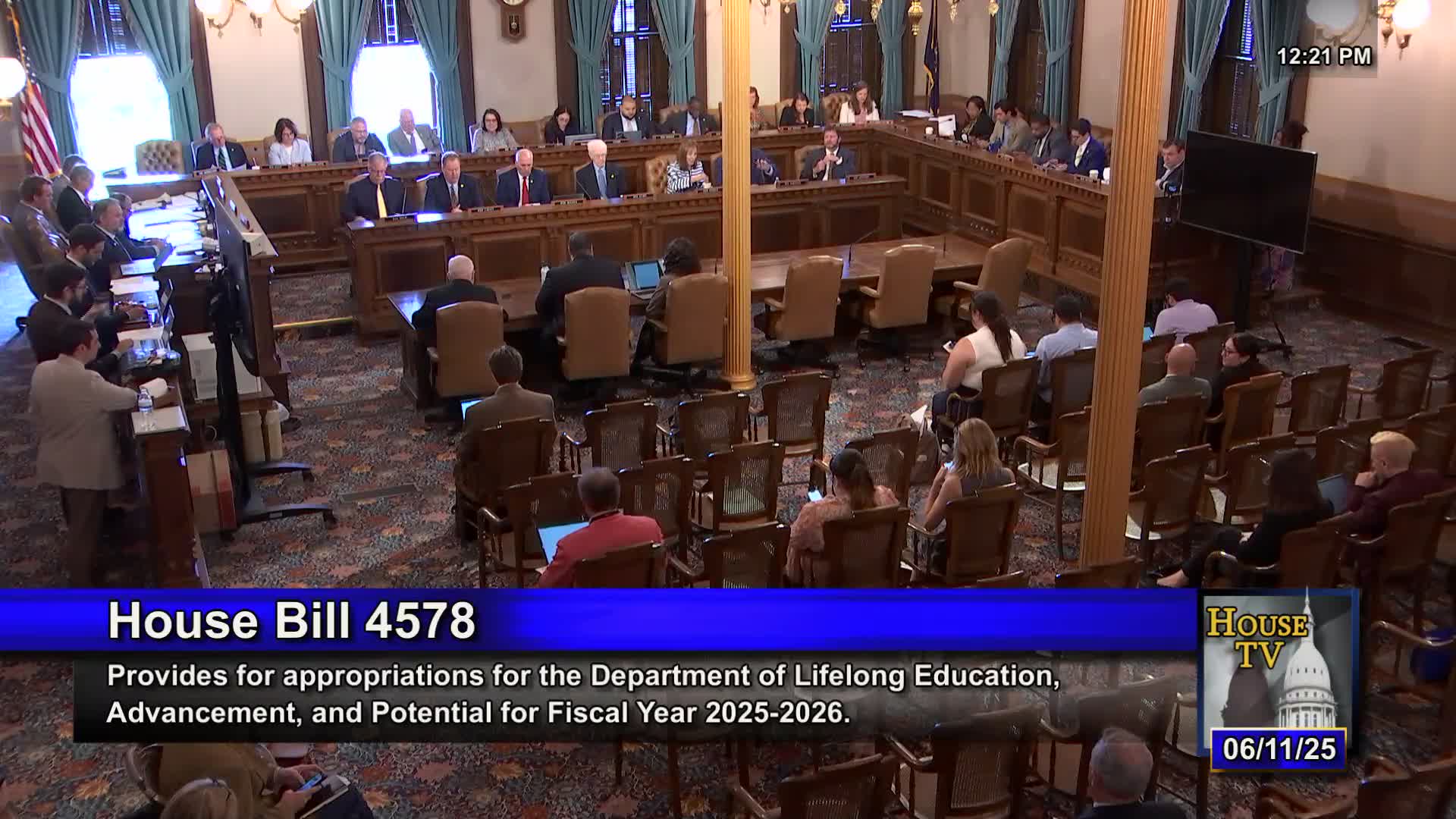
House passes MyLEAP budget with TriShare childcare benchmarks, staff cuts and new signature/pronoun limits
Summary
The committee approved the H‑1 substitute for MyLEAP (House Bill 45‑78), adding TriShare benchmarks and expanding eligibility while reducing FTEs and adding boilerplate limiting pronouns on official materials and other operational rules.
The House Appropriations Committee adopted the H‑1 substitute for House Bill 45‑78, the appropriation for the Michigan Department of Lifelong Education, Advancement, and Potential (MyLEAP). The measure includes increased caseload funding for child development and care, language creating benchmarks for the TriShare childcare hubs, an allowance for some Wisconsin residents to participate in hub funds, and multiple cuts to FTE authorization.
Analysts Perry Zilack and Noel Benson told the committee the bill holds total gross MyLEAP appropriations near current levels while increasing child care caseload funding by roughly $44.3 million (reflecting May consensus revenue estimates). The House reduced overall FTEs by about 62 positions (18% decline) and removed one‑time appropriations the executive had proposed.
Why it matters: The TriShare program is a statewide initiative to coordinate employer, public and family shares to expand childcare availability; members sought stronger reporting and benchmarks for hub performance and to allow limited cross‑border eligibility for families who live in Wisconsin but have Michigan‑based workers.
Key details
- Funding and staffing: House Fiscal summarized a gross appropriation of approximately $640.5 million and noted a $3.5 million gross decrease and a 62‑FTE reduction (to 281 FTEs). The House increased child development and care caseload funding by $44.3 million gross.
- TriShare benchmarks and eligibility: The House added language requiring benchmarks for regional TriShare hubs and allowed the funds to be used for families who live in Wisconsin but have a family member employed in Michigan; the change was framed as responding to Upper Peninsula cross‑border need.
- New boilerplate limits: The House adds a provision restricting use of pronouns on departmental materials (business cards, email signatures, letterhead) and imposes a $100 fine per violation pursued in the Court of Claims, according to the fiscal summary (section 3‑01). The House also eliminated several boilerplate provisions the executive submitted and did not include one‑time appropriations for FY26.
- Debate and oversight: Representative Snyder asked why MyLEAP would lose staff while being asked to administer new scholarship and portal work; analysts said staffing levels were judged adequate for the tasks but acknowledged negotiation could change that outcome. Upper Peninsula members described TriShare interest and local efforts to boost provider capacity.
What the record shows: The H‑1 substitute passed committee and included the new TriShare benchmark language and cross‑border eligibility for certain Wisconsin residents; the bill also contains significant FTE reductions and new reporting/compliance language.