Get Full Government Meeting Transcripts, Videos, & Alerts Forever!
Get email alerts on the Budget topic
No spam. Unsubscribe anytime.
Lynnbrook presents $110 million 2025-26 budget, says levy will tax at cap
Summary
District officials presented the final 2025-26 budget at a May 7 hearing, outlining a $110 million spending plan, a 2.93% tax-cap levy, increases tied to rebid transportation contracts, proposed reserve uses for technology and roof work, and options should voters reject the budget on May 20.
Lynnbrook Union Free School District officials on May 7 presented a $110,000,001.53 proposed 2025-26 budget and told the public the district would levy at the allowable tax cap, a 2.93% increase.
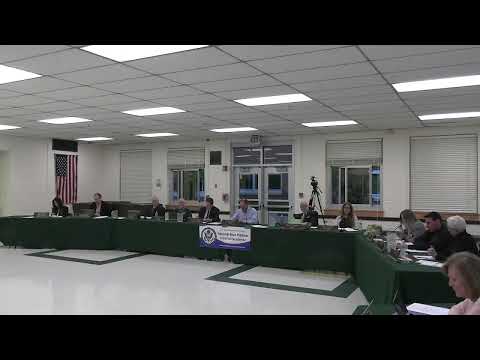
The hearing, delivered by staff member Joel Press and reviewed with Superintendent Paul J. Lynch and other administrators, outlined revenue, reserves and four ballot propositions the community will vote on May 20. "This was a tough budget year," Press said, adding that getting the budget into balance "took a a a lot of work and a lot of heavy lifting." He said cooperation with staff and a retirement incentive helped avoid layoffs.
Why it matters: the budget sets spending and services for next school year and will be decided by resident voters on May 20. If the budget fails the district must either resubmit the budget in June or adopt a contingency budget that would force immediate cuts and a 0% tax levy.
The proposal totals about $110 million, an increase of roughly $3.8 million (3.53%) over the current year. Press said the district will use $2.99 million in reserves in the 2025-26 plan, leaving a projected reserves balance of about $11.5 million after the scheduled uses.
Major drivers and program details - Transportation: the budget shows large increases tied to rebidding contracts. Press said transportation and student support services rise by about $750,000; special-education transportation specifically rises by about $470,000. He explained the district had paid below-market rates for years and was required to rebid after a long-time provider declined to renew. The administration said negotiated adjustments reduced the increase but could not eliminate it. - Staffing: the budget adds 1 professional staff member (an occupational therapist) intended to reduce contracted services over time. It also abolishes 15 full-time equivalent teaching positions through attrition; Press and board members clarified those are not layoffs but positions not being refilled after retirements or resignations. - Special education and related costs: the district expects a net reduction of just over $100,000 in special-education costs driven largely by a more than $900,000 decrease in private tuition as some students return to district services, age out, graduate or move away. Out-of-district public tuition and some related services increase modestly. - Facilities and capital: the proposed budget includes $600,000 for West End bathroom renovations and $150,000 for classroom renovations to support a planned expansion of the district's special-education continuum at West End. Facilities and operations spending is up slightly over last year, including asbestos/lead testing and remediation that Press said stem from a new New York State requirement lowering the remediation threshold. - Technology and networks: communications and technology spending is up about 8%, driven by network administration and device costs tied to the district's 1:1 device program and phone system upgrades. The district is asking voters for use-of-reserve authorization of $400,000 for technology wiring and device replacement (Proposition 2). - Summer and program fees: the district will expand its summer program and add an academic component; Press said summer playground fees will rise to $300 for in-district children and $330 for nonresident children.
Reserves and ballot propositions - Proposition 1: the budget vote itself on May 20. If approved, the $110 million budget will take effect as proposed. - Proposition 2 (technology reserve): seek voter authorization to spend $400,000 from the technology reserve — $175,000 for district-wide wiring and $225,000 for device and touchscreen replacement and roughly 100 middle-school laptops. Press emphasized voter authorization of reserve spending does not change the tax levy or tax cap. - Proposition 3 (capital facilities reserve use): seek authorization to use capital facilities reserves to replace the older portion of the high-school roof (estimated at about $2.7 million) and to allocate $500,000 to renovate a science classroom at North Middle School. - Proposition 4: reauthorize and increase the continuous facilities improvement capital reserve for three more years, increasing its cap to $18 million and maintaining a maximum annual funding threshold of $2 million; funds would come from year-end surpluses.
Taxes and the cap Press walked through the district's tax-cap calculation and said the allowable levy limit is $78,895,593 (a 2.93% increase). "We are taxing at the cap," Press said. He described the combination of state aid, local revenue and applied fund balance that produces the required local levy under the proposed budget.
If voters do not approve the budget on May 20, Press said the board could present the same or a modified budget for a revote in June or move to a contingency budget, which would impose an automatic 0% tax-levy increase. He warned that meeting the contingency requirement would mean approximately $2.2 million in reductions from the proposed budget.
Board review and public process Board members and the administration repeatedly thanked staff, principals and the teachers' association for negotiations and partnership that helped the district present a budget under the cap and without program cuts. Board members pressed for clarity about the 15 FTE abolitions and Press and the superintendent confirmed the reductions are achieved through retirements and resignations, not layoffs.
Next steps and voting information Voter registration deadline for the district election is May 14. The budget vote is May 20; polls open at 7 a.m. and close at 9 p.m. The district webpage holds details on polling locations and absentee ballots.
Ending note: the presentation was a public hearing; the board adopted the proposed budget earlier in March and will now put it to the community vote on May 20.