Get Full Government Meeting Transcripts, Videos, & Alerts Forever!
Get email alerts on the Mental Health Interventions topic
No spam. Unsubscribe anytime.
Student trial at Cohoes High finds bilateral and multidirectional eye‑movement exercises both reduce emotional distress from school stressors
Summary
A randomized student study compared EMDR‑style bilateral eye movements and multidirectional MEMI protocols and found both approaches significantly reduced self‑reported emotional distress but neither outperformed the other in this single‑session, school‑based trial.
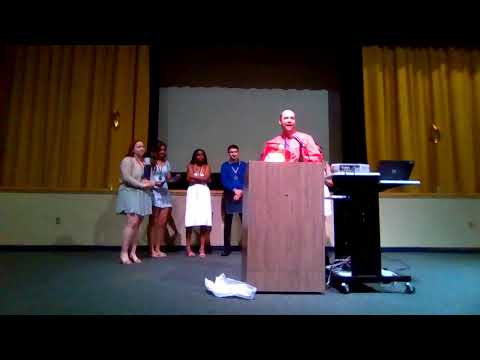
Lola Stevens, a Cohoes High School senior, presented a randomized classroom study comparing bilateral eye movements (as used in EMDR) with multidirectional Eye Movement Integration (MEMI) exercises to assess which better reduces stress linked to school‑related memories.
Stevens recruited students in grades 9–12 with parent and student consent and randomly assigned participants to one of two eye‑movement conditions. Each participant completed a pretest severity rating for an identified school stressor, received two 20‑second sets of the assigned eye movements with a retest in between, and then a posttest. She said sessions included a sensory‑grounding technique—students described three objects using five senses if emotional regulation was required before continuing.
Stevens reported both interventions produced statistically significant reductions in emotional severity ratings (p < 0.001 for bilateral; also significant for multidirectional), while neither produced a significant change in the physical‑sensations measure. When comparing the two protocols via analysis of variance, she said there was no statistically significant difference between bilateral and multidirectional eye‑movement groups.
She listed study limitations that may have reduced variance and obscured differences between protocols: requirement of confidentiality in the school setting that limited probing of more traumatic memories, use of extra credit as an incentive (which may have affected participation), and that students were not actively experiencing the stressor at the time of testing but recalled it.
Stevens concluded that both types of eye movements were effective in the short term at reducing emotional distress associated with school stressors in a single‑session classroom setting, but that longer, multi‑session studies with higher‑severity memories would be needed to test whether one protocol is superior.
Her mentor on the project was Dr. Mike Denninger, who developed the MEMI protocol referenced during the presentation.