Get Full Government Meeting Transcripts, Videos, & Alerts Forever!
Get email alerts on the Transportation Systems Plan topic
No spam. Unsubscribe anytime.
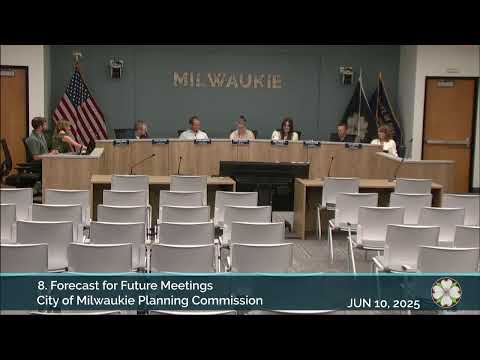
Milwaukie staff present draft Transportation System Plan project list; public outreach set for June–July
Summary
City planners and consultants reviewed a draft inventory of pedestrian, bicycle, transit, freight and roadway projects developed from a needs-and-gaps analysis and set a June–July public outreach program. Staff said the city currently projects roughly $20 million in local revenue over 20 years and will prioritize projects for constrained funding.
Milwaukie planning staff and consultants presented a draft project inventory and methodology for the Transportation System Plan (TSP) update, outlining pedestrian, bicycle, transit, freight and roadway projects identified through a needs‑and‑gaps analysis and a citywide prioritization framework.
Planning Manager Laura Weigel and consultant Matt Hugart (Kittelson and Associates) described the process used to locate gaps — missing or substandard sidewalks and bikeways, intersection crossing deficiencies and areas of overlapping community priority (schools, parks, transit stops, town centers). The project list is intended to feed a later prioritization step and a financially constrained project list for grant eligibility and capital improvement planning.
The nut graf: staff emphasized that the map set is an inventory, not a finalized design package. The draft separates projects by mode and type (multiuse pathways, sidewalks, intersection crossings, on‑street bike lanes, neighborhood bikeways and roadway/connection projects) and will be refined after public outreach this summer and further technical evaluation.
Key points from the presentation and discussion:
- Methodology and goals: The team used pedestrian and bicycle Level of Traffic Stress (PLTS / BLTS) metrics and layered neighborhood hubs (schools, parks, transit stops) with quarter‑mile walk buffers to identify where higher‑quality facilities are needed.
- Project types: Pedestrian projects include new or upgraded sidewalks and intersection crossing treatments (RRFBs and crosswalk improvements). Bicycle projects include multiuse separated paths, on‑street bike lanes and signed shared routes. Transit projects shown are limited to projects coordinated with TriMet/Metro and reflect known or planned service; freight projects drew heavily from the North Milwaukee Industrial Area planning work.
- Funding context: staff said the city’s current estimate of local revenue for transportation is roughly $20,000,000 over 20 years (about $1 million per year), which staff called limited for the full scope of projects; the project inventory positions the city to apply for external grants and place future projects in the capital improvement plan.
- Project examples and local concerns: Commissioners and staff discussed particular corridors and nodes: Harrison and 30th/37th area crossings, Railroad Avenue/Harmony Road connections, Monroe and Washington corridor work under way, and connectivity gaps between Lynnwood and Stanley neighborhoods. Commissioners urged alignment of parallel multiuse paths and noted pavement quality, wayfinding and intersection sight‑lines as factors that could change project design.
- Process and next steps: staff will use an evaluation matrix tied to the TSP goals and run a prioritization to propose a financially constrained list; that prioritization will come back to the commission in a future meeting. Public outreach is scheduled in June and July (open house, community workshops, focus groups, Engage Milwaukie online survey) and advisory and technical committees will continue feedback.
Ending: Staff said maps and project descriptions will be refined after the outreach; commissioners were encouraged to submit written feedback and advisory committee members will present project materials to neighborhood associations over the next two months.