Get Full Government Meeting Transcripts, Videos, & Alerts Forever!
Get email alerts on the Housing Affordability topic
No spam. Unsubscribe anytime.
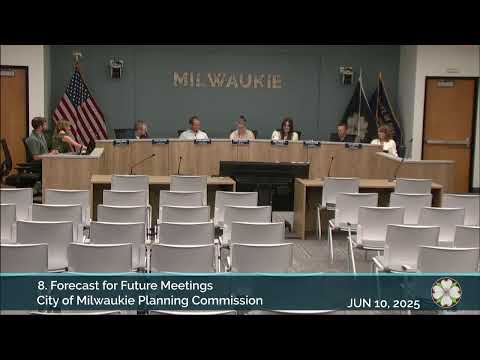
Milwaukie planners outline zoning incentives to spur affordable housing; code changes to return for public hearing
Summary
Milwaukie planning staff presented a package of proposed zoning code amendments aimed at lowering regulatory barriers to affordable housing and creating a single incentives section, 19.511, that developers could use when projects meet specified affordability and longevity requirements.
Milwaukie planning staff presented a package of proposed zoning code amendments aimed at lowering regulatory barriers to affordable housing and creating a single incentives section, 19.511, that developers could use when projects meet specified affordability and longevity requirements.
The proposal would allow a qualifying development — middle housing, mixed‑use residential or multiunit housing — to apply for a bundled set of up to 10 variances in a single Type 2 review (staff decision) in exchange for meeting income‑restriction targets and long‑term covenants, Planning Manager Laura Weigel and Senior Planner Vera Kolias told the Planning Commission. "This is an advance of a future public hearing to talk about this code amendment package related to affordable housing incentives," Kolias said during the presentation.
The nut graf: staff framed the code package as a zoning‑based complement to the city’s existing financial housing tools. The goal is to remove physical and dimensional barriers (setbacks, lot width, lot coverage, height, open space, facade requirements) that make smaller or lower‑cost projects infeasible, while reserving the largest incentives for projects that produce deeper affordability or 100% affordable ownership developments.
Under the draft, a qualifying development would need to meet one of these income mixes: at least half of the units at 60–80% of area median income (AMI); a 40% share at 40–60% AMI; 30% of units at 30–40% AMI; or 20% at below 30% AMI. Staff also proposed that projects with 100% of units at 80% AMI or below receive an additional 10 percentage‑point increase in incentives, and that 100% ownership projects receive a further 10‑point increase.
The package includes: allowing a single application to bundle up to 10 distinct variances (current limit is three), expedited Type 2 review with prioritized permit processing, expanded allowable reductions to front/side/rear setbacks and lot area or width, additional height bonuses in certain downtown and mixed‑use zones when at least half of units are restricted to 60% AMI or below, reductions in some facade articulation and glazing requirements, adjustments to open‑space and landscape minimums, and possible reductions to bike‑parking requirements.
Staff proposed continued affordability covenants to ensure long‑term availability: the draft requires monitoring and legal instruments to keep rental units affordable for a minimum of 99 years and homeownership units for a minimum of 60 years. Staff said they would revisit the 99‑year rental period after commissioner questions about alignment with common funding terms.
Commissioners and community members asked about details and tradeoffs. Commissioners urged caution on exterior facade variances to avoid creating a visual stigma for affordable buildings and emphasized that buildings should be durable and well‑designed. Commissioners and staff discussed how the city’s tree code and stormwater requirements intersect with the incentives package. Several commissioners asked staff to clarify whether homeownership restrictions would be recorded on title; staff said yes and said developers would need a development agreement or affordability covenant recorded with the city.
Staff said the package was informed in part by Senate Bill 1537 (a state statute establishing a limited set of development adjustments and full adjustments), local code review of existing variances and feedback from developers and three council work sessions. Kolias said staff had not identified many peer cities that use a consolidated, code‑based incentive menu targeted specifically to income‑restricted housing and that the city is trying the approach as a complement to limited local financial tools.
Next steps and direction: staff will refine the draft language and return to the commission and public for a formal code amendment hearing. Kolias told the commission staff will bring the package back on July 22 for additional review and public hearing scheduling. Staff also committed to reworking certain sentences for clarity, and to consult with housing program staff (Joseph Brillio) about retention periods and program alignment.
Ending: Staff framed the package as an initial effort to test zoning levers and said it will be monitored and adjusted after implementation; commissioners and staff agreed to continue refining the details before adoption.