
Commission approves docked bike share RFQ; hears Lime present a seated 'glider' pilot concept
Get AI-powered insights, summaries, and transcripts
Sign Up Free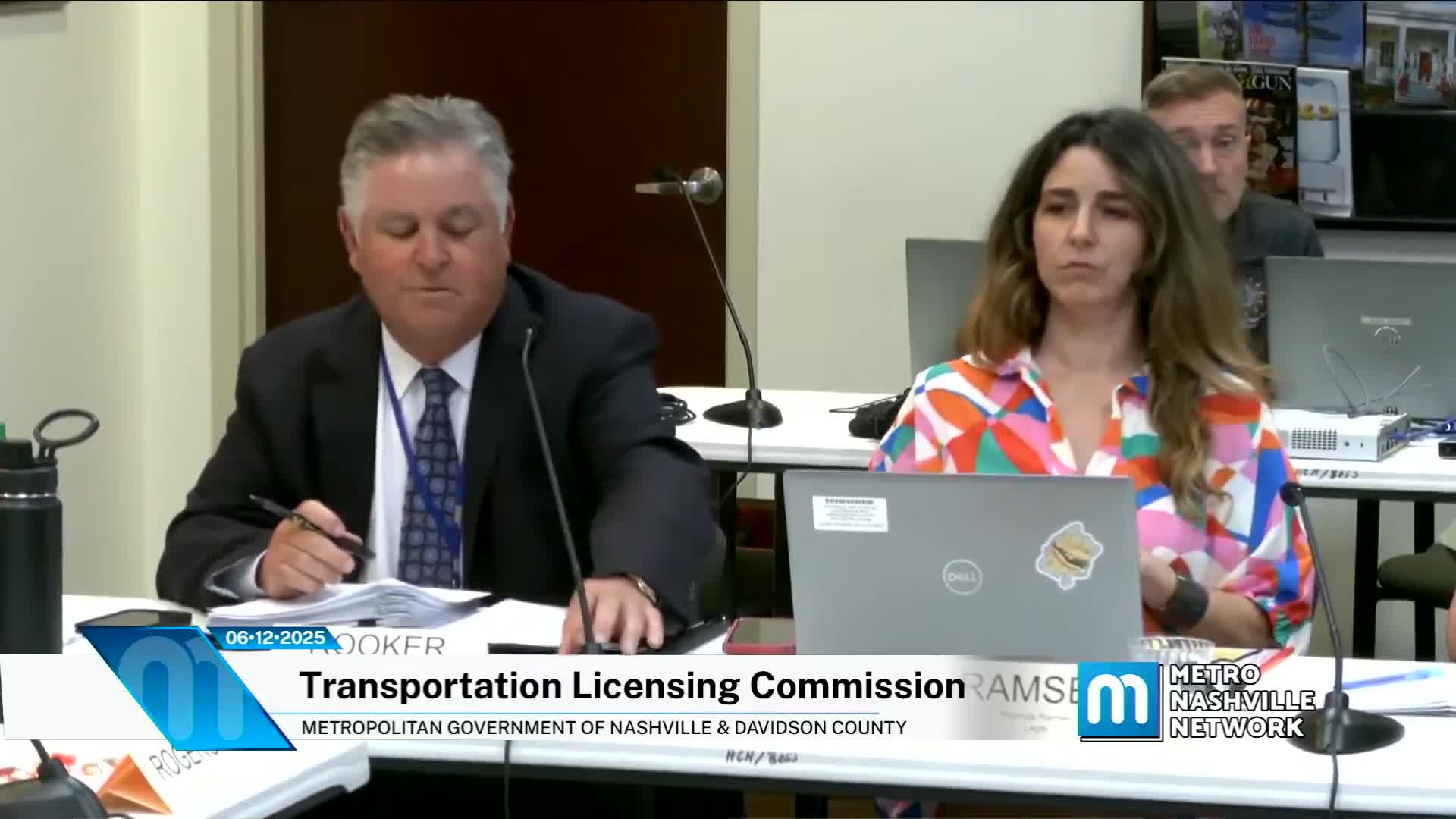
Summary
The commission approved a countywide RFQ for a docked bike‑share system and discussed Lime’s proposed seated electric ‘glider’ vehicle for a targeted pilot tied to WeGo bus stops and discounted fares for eligible riders.
The Transportation Licensing Commission approved the published request-for-qualifications (RFQ) seeking proposals for a docked countywide bike-share system and discussed a separate micro-mobility development: Lime’s seated electric “glider” vehicle, which company representatives proposed to pilot in partnership with WeGo.
Commission staff member TD told the commission the docked-bike RFQ had been published, was closing today at 2:00 p.m. and would be evaluated by staff; respondents would be scored and commissioners would be asked to approve a recommended vendor before contract negotiations. Commissioners voted to approve the RFQ as published.
Lime representative Lily (last name in packet) described the glider as a seated, throttle-controlled micro-mobility vehicle with a maximum speed limited to 15 mph, a stated battery range of up to 43 miles (70 kilometers) and heavier construction than stand-up scooters. Lime proposed staging roughly 25% of any pilot fleet at designated WeGo bus stops outside the downtown loop and offering a 70% discount for eligible riders (for example SNAP beneficiaries) at those stops to support last-mile transit connections. Lime said the vehicle is deployed in a small number of U.S. markets and that pilot data in other cities show longer trip lengths and broader demographic reach than conventional scooters.
Policy and operational points discussed - Response-time obligations for SUMDs: staff said docked systems inherit the same clearing and response rules used for SUMDs—operators have two hours to respond to standard notifications and 30 minutes for ADA-blocking cases. - Classification question: commissioners and staff discussed state vehicle definitions (Title 55) and whether a seated, 20-inch‑wheel vehicle should be regulated as a scooter, a moped, or categorized separately. Staff said they will review state law definitions and the commission’s rule language before any pilot approval. - Operational pilots: Lime requested preliminary endorsement to pursue a pilot; commissioners asked staff and Metro Legal to research how the vehicle should be classified under state law and MTLC rules before bringing any pilot authorization back to the commission.
Next steps - Staff will evaluate RFQ responses and return to the commission with a recommendation for vendor selection and contract negotiation. - For the glider, staff will research state classification and bring pilot details and any proposed contract language back to the commission for formal consideration.