
Supervisors consider personal-property tax relief to recruit volunteer firefighters and EMS
Get AI-powered insights, summaries, and transcripts
Subscribe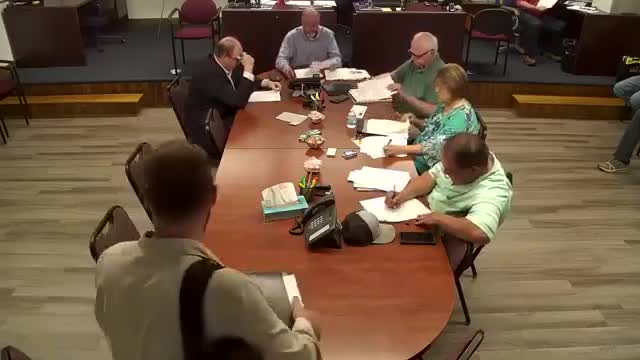
Summary
Nottoway supervisors reviewed options to reduce or waive personal-property taxes for volunteer firefighters and EMS personnel — including exempting one vehicle, all personal property, or pairing one vehicle exemption with a real-estate credit — and signaled preliminary support to pursue a one-vehicle exemption to zero as a near-term step.
Nottoway County supervisors spent the bulk of their June 12 work session discussing incentives for volunteer firefighters and EMS members, focusing on personal-property and limited real-estate tax relief to aid recruitment and retention.
Staff presented multiple options and associated county revenue impacts: exempting one primary vehicle owned by volunteers would reduce county receipts by about $22,009.94 across all eligible volunteers; exempting volunteers’ other personal property (trailers, additional vehicles) would cost about $45,002.46; combined options or all-personal-property exemptions were estimated at roughly $68,000 total. Staff also presented an option that would combine a one-vehicle exemption with a modest real-estate credit; that option’s total impact was estimated at about $77,000.
Supervisors and volunteer chiefs described operational reliance on volunteers and the high value volunteers provide; supervisors emphasized recruitment concerns and discussed practical eligibility rules (probation periods, active-roster verification). Chiefs explained that departments submit annual rosters and that probation periods typically last six months; staff said roster-based verification is the current method to determine eligibility.
Board members expressed support for starting with a near-term, lower-cost step — exempting one vehicle used for volunteer response and setting that vehicle’s tax to $0 — while acknowledging that real-estate exemptions are more complicated because volunteers vary in ownership and property values. Several supervisors and volunteer leaders argued a one-vehicle exemption would be a clearer, administrable incentive and could be funded without a large reallocation.
Staff noted no budget appropriation currently exists for a county-wide exemption; supervisors discussed reappropriating reserves or finding funds within the current budget to implement a one-vehicle exemption in the current fiscal year and to revisit broader incentives during next year’s budget process. Supervisors asked staff to prepare ordinance language, revenue reallocation options and implementation details for a future meeting.
No formal ordinance was adopted at the work session. Supervisors asked staff to return with a recommendation and draft language for board consideration.