Get Full Government Meeting Transcripts, Videos, & Alerts Forever!
Get email alerts on the Pension Investment Performance topic
No spam. Unsubscribe anytime.
Wyoming Retirement System posts above‑benchmark longer‑term returns; investment staff warn of greater near‑term volatility
Summary
WRS staff and independent consultants told the Select Committee on Capital Financing & Investments that long‑term returns improved, the fund reached top quartile performance in recent periods, and gold and marketable alternatives helped recent returns. WRS CIO and consultants recommended continued focus on risk‑adjusted returns as capital market
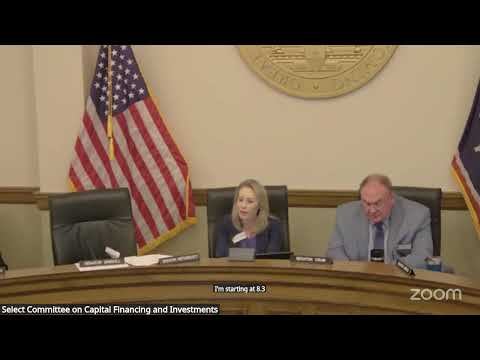
The Wyoming Retirement System (WRS) updated the Select Committee on Capital Financing & Investments on investment performance through March 31, 2025. WRS and its independent consultants told the committee the system’s longer‑term returns have improved relative to peers, but consultants and staff warned that capital‑market assumptions show lower expected risk‑adjusted returns over the next decade and more volatility.
Sam Massudi, CIO of the Wyoming Retirement System, told the committee that WRS focuses on beating its benchmark over longer windows and that the five‑year return of the total fund was presented at roughly 11.66% annualized — about 1.34 percentage points above the benchmark — and placed WRS in the top percentile of its peer universe. Massudi said the board’s objective is a “highest risk‑adjusted return” and that staff measure performance by comparison to benchmarks and peers rather than short‑term outcomes.
Independent consultant Mika Malone of Makita Investment Group emphasized drivers of the most recent quarter and longer horizons. Malone said U.S. equities weakened in the quarter while international equities and bonds helped returns; she highlighted that gold — which is just under 2% of the portfolio — was a strong contributor, up “a little over 9%” in the quarter and “about 40%” over the trailing year. Malone also showed attribution tables indicating that selection in marketable alternatives and private markets has been a persistent source of outperformance over five‑year periods, and that the portfolio’s standard deviation has been aligned with the benchmark while producing positive Sharpe ratios across multiple measurement windows.
WRS staff and their consultants also noted operational context. The total fund size presented by staff was about $31 billion. Staff said some alternative investments report with a lag, and that monthly interim reports may understate returns from delayed alternative valuations. WRS staff described how the fund separates a short‑term reserve (lower‑volatility bond investments) from the long‑term reserve, which affects reported short‑term returns versus long‑term results.
Patrick Fleming, who appeared in multiple investment roles during the meeting and who the session recognized as retiring at month’s end, reflected on his tenure, portfolio staffing and progress. Fleming said the team expanded from one to more than a dozen investment professionals, and he urged continued attention to risk‑management as expected capital‑market returns soften over the next decade.
Discussion vs. decision vs. direction: committee members thanked staff and consultants and requested the standard comparative reports LSO and staff provide annually (historical funding‑path charts, funding projections to actuarial 100%, and peer comparisons). There were no formal policy votes tied to the presentation; the committee asked staff to return with charts showing projected steps to actuarial soundness if requested.
Ending: Committee members publicly thanked Fleming for his service. Consultants said the portfolio has made meaningful progress, but flagged lower forward capital market assumptions and increased volatility as reasons to retain a focus on risk‑adjusted performance.