Get Full Government Meeting Transcripts, Videos, & Alerts Forever!
Get email alerts on the Sf70 Trust Funds topic
No spam. Unsubscribe anytime.
Wyoming converts wildlife and cultural trust funds to quasi‑endowments with fixed spending rates
Summary
Senate File 70, enacted by the Legislature, moves the Wyoming Wildlife and Natural Resource Trust and the Wyoming Cultural Trust Fund to a quasi‑endowment model with fixed annual transfers, 4% and 3% respectively, and requires investment as endowments; treasurer's office and the programs said they are preparing to implement the change.
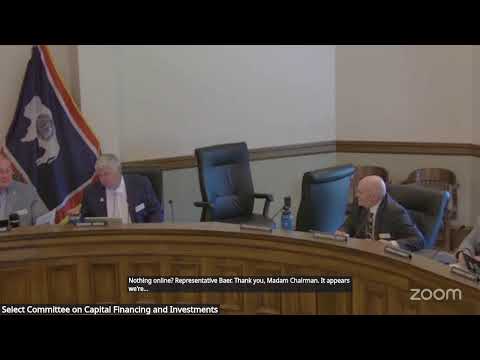
CHEYENNE — The Select Committee on Capital Financing & Investments reviewed how Wyoming will implement Senate File 70, a law that converts two statutorily created trust funds — the Wyoming Wildlife and Natural Resource Trust Fund and the Wyoming Cultural Trust Fund — into quasi‑endowments with fixed annual spending transfers.
Under the law, each trust fund’s corpus is no longer treated as entirely inviolate for spending decisions. Instead, the statute directs a fixed annual transfer to an income account that will be used for grants and program spending: 4% (wildlife) and 3% (cultural) of the five‑year rolling average market value, with excess earnings directed back into the trust corpus to inflation‑proof the fund.
Treasurer’s office staff said the accounting and income accounts required by the law are open and operational and that the office is working on the technical methodology to move the funds from the pool in which they currently sit to an endowment‑style allocation. Seth Consoliver of the treasurer’s office told the committee that the office is studying the most cost‑effective method to transition assets and expects to decide on an approach by July and to begin implementation early in the next fiscal year.
Program directors said they support the change. Sarah Sheen, deputy director for State Parks Cultural Resources, told the committee the agency is “ready to roll” and is seeking sufficient spending authority to cover the first calculations of the 3% spending amount. Bob Bud, director of the Wyoming Wildlife and Natural Resource Trust, said the law “codifies what we’ve tried to do” and that the approach should make the funds more inflation‑resilient and increase their long‑term grant capacity.
Numbers and mechanics: Committee discussion cited corpus amounts the agencies track — roughly $202 million in corpus for the wildlife trust (with about $100 million in the income account, the committee was told, including one large legislative deposit this year) and about $28 million in corpus for the cultural fund and $1.5 million in income — and explained that those figures will feed the five‑year rolling averages used to compute annual transfers.
Why it matters: The change aims to stabilise grant funding year to year, avoid the large swings that result when spending is drawn only from current year earnings, and allow the trusts to grow through retained excess earnings. Both treasurer staff and program directors said that the trust boards and the treasurer’s office had discussed the approach for years and consider the statute an operational improvement.
Next steps: The treasurer’s office said it will finalize the transition method and start work in July; the trust programs will work with the office to confirm spending authority and to update grant program budgets once the first five‑year average is computed.
Ending: Committee members requested a follow‑up on the technical conversion plan and a schedule for the first calculated transfers; no formal committee action was required at the meeting.