
Commission approves USDA APHIS wildlife-services contract after heated public criticism over cost, methods and reporting
Get AI-powered insights, summaries, and transcripts
Subscribe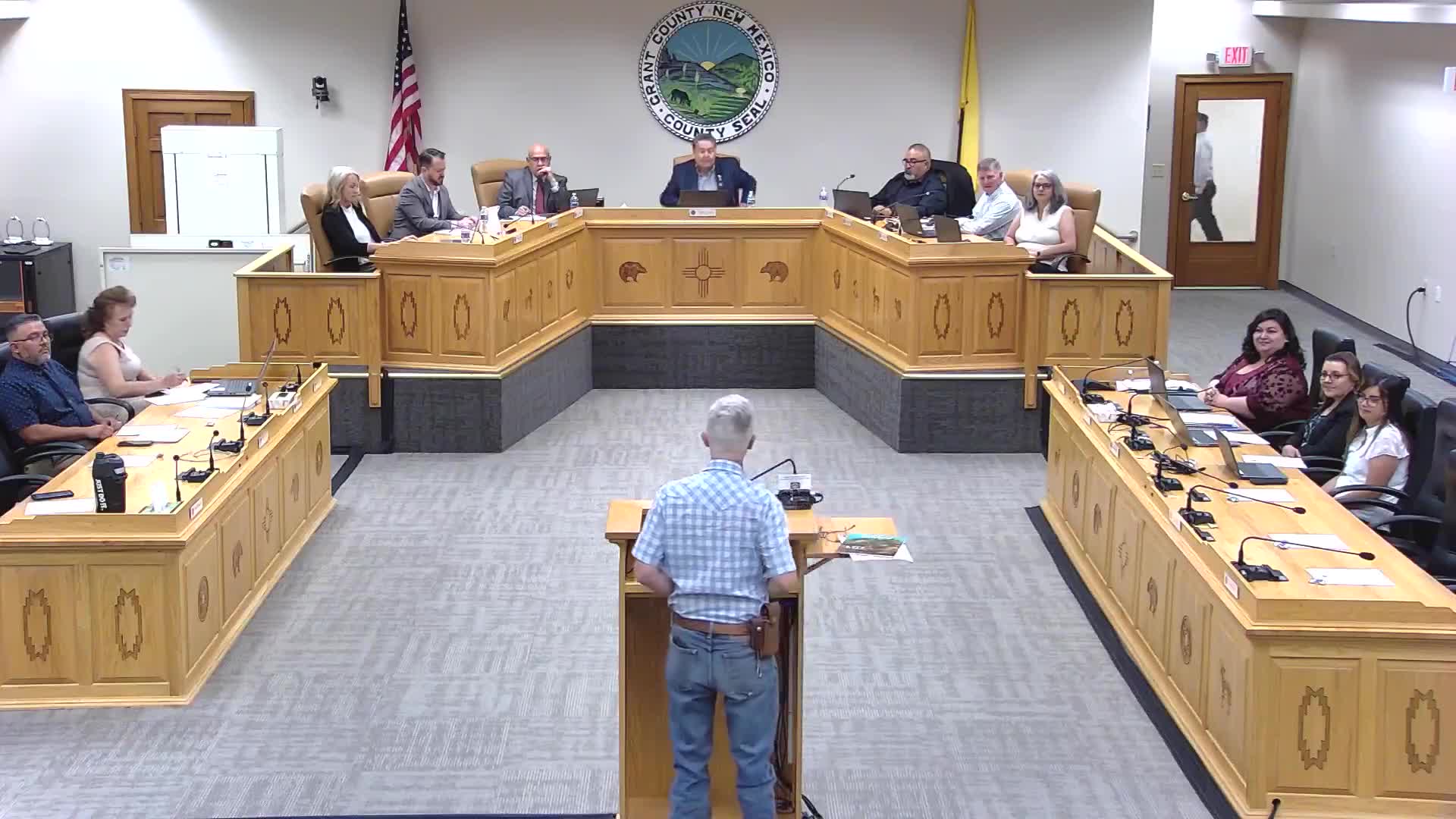
Summary
After more than an hour of public comment criticizing animal-killing methods, costs and transparency, the Grant County Commission approved a one-year USDA APHIS wildlife-services agreement (A-25-08). Commissioners stressed accountability and left open the ability to terminate or revisit the contract.
Public commenters urged the Grant County Board of Commissioners on June 12 to reconsider the county’s contract with the U.S. Department of Agriculture Wildlife Services (APHIS), raising concerns about cost effectiveness, animal welfare and transparency. After public testimony and commissioner discussion, the board approved Agreement A-25-08, the APHIS work and financial plan, with the motion carried in open session.
Multiple speakers presented detailed objections. Carlos Martinez, a wildlife biologist, told the commission the contract “is not cost effective and it’s not even beneficial for what it is supposed to do,” citing 2024 removals that he said included coyotes and gophers and comparing annual program costs he estimated at roughly $94,000 to documented losses under $20,000. He urged the county to terminate the contract on fiscal grounds.
Valerie Dobritch, another wildlife biologist, questioned the contractor’s reported hours and pay, saying a listed 450 hours of work equated to “$205 per hour” and asking for full activity logs and verification of whether predator reports were independently confirmed. Other speakers, including Glenn Griffin and Christine Hess, asked for better quarterly reporting, argued that cooperating ranchers’ matching funds had not been met, and raised concerns about trap signage, the use of Conibear-style traps and potential conflicts of interest when the contractor also operates as an outfitter.
Commissioners and county staff provided clarifying information during the meeting. County staff said the federal share of the contract is 66% and the county share is 34%; a portion of the county contribution is expected to come from Taylor grazing fees (typically $12,000–$15,000), leaving the county general-fund obligation below $20,000 in the current plan. The contract price discussed was $94,234, up from $92,000 the prior year; one speaker said the cooperating-rancher match is set at $36,000 but has not been met in recent years, which increases the county’s net cost.
Commissioner comments reflected competing priorities. Commissioner Stevens said she favored continuing the contract because, she argued, the county lacks an alternative that would respond to public calls about problem wildlife and because the contracted model leverages federal funds; she also urged more education and outreach. Chairman Ponce and other commissioners said they want improved transparency and reporting and noted the board can end the contract if performance or oversight does not meet expectations. Commissioner Shelley moved to approve the APHIS agreement and Commissioner Flores seconded; after discussion the motion carried.
The commission also heard and approved a related procurement and implementation timeline question: several commissioners asked for a public presentation by wildlife services or other agencies and for clearer quarterly reporting that documents follow-up actions and verification of predation claims. Members of the public and commissioners requested a follow-up meeting to examine the contractor’s activity logs, verification procedures and any potential conflicts of interest.
Outcome: The board approved Agreement A-25-08 (USDA APHIS) in open session. Commissioners instructed staff to continue work on transparency, and several commissioners indicated they may revisit the contract if requested reporting and public engagement are not provided.