
Commissioners press to repair city seawalls, consider private adaptation outreach as costs rise
Get AI-powered insights, summaries, and transcripts
Subscribe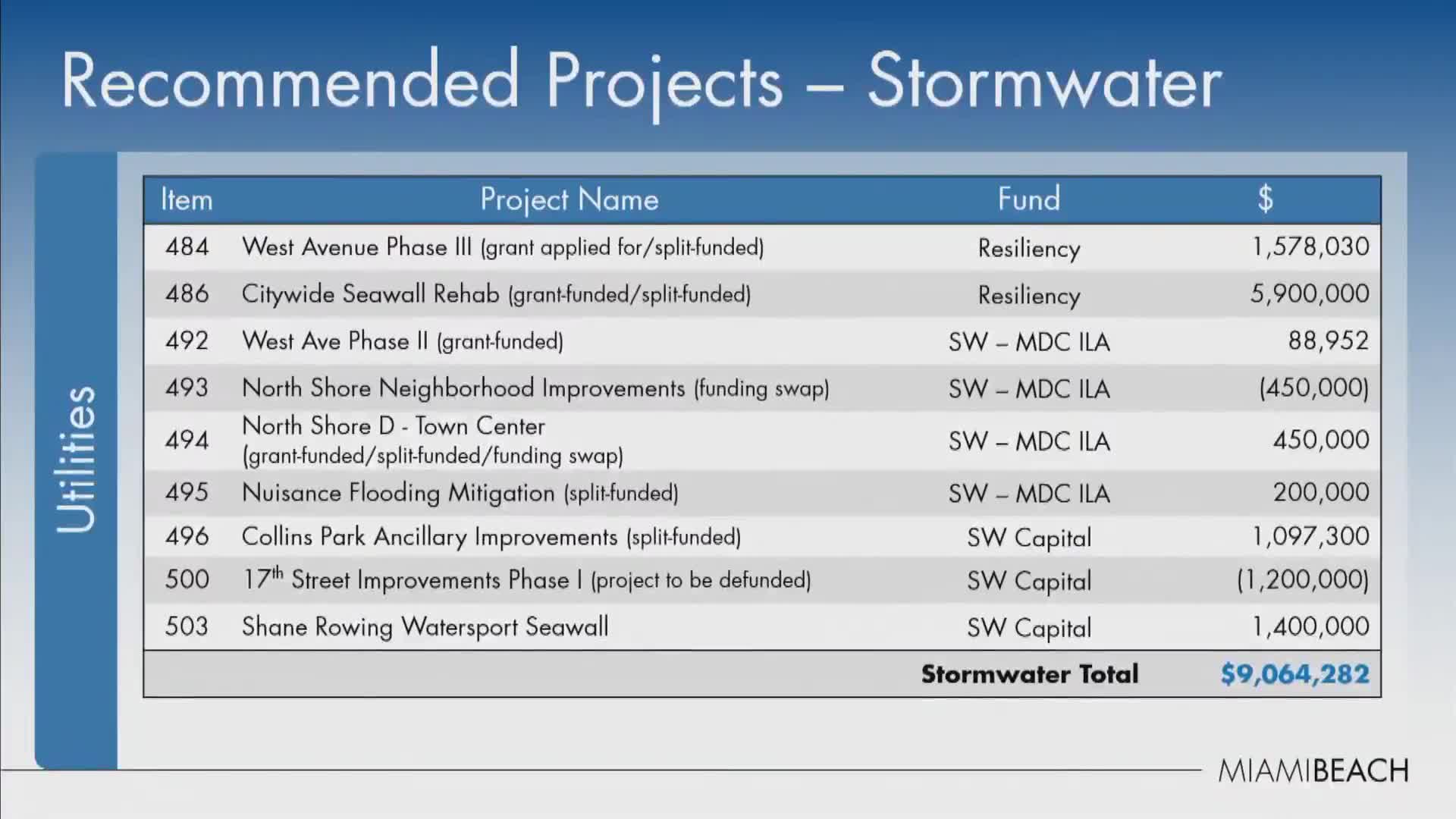
Summary
Commissioners discussed prioritizing repairs of city‑owned seawalls and exploring programs to help adjacent private property owners time repairs with city work. Staff said the city owns a small portion of seawalls (less than 10 percent) and costs per linear foot have risen substantially.
Commissioners discussed the city’s seawall program and whether the administration should expand outreach to private property owners to encourage coordinated repairs when the city is working in a neighborhood.
A member of staff noted the city owns a small share of seawalls — referenced during the meeting as under 10 percent — and commissioners asked whether limited city funds should focus on the city‑owned seawalls with the greatest vulnerability. Staff and the city manager said the city is prioritizing seawalls with the most pressing vulnerability and that seawall costs have risen markedly over recent years (presenters said typical costs had about doubled from roughly $1,500 per linear foot to over $3,000 per linear foot in recent years).
Commissioners suggested exploring ways to link private property owners to contractors and consider bulk or pooled procurement or incentives so private owners can upgrade when the city schedules nearby seawall work. Staff noted the private property adaptation program (PPA) helps mitigate costs for private property owners but does not currently link private owners to the contractors the city uses; staff said they would explore options and report whether an administrative action or commission item is needed.
Why it matters: seawalls are a core coastal resilience measure; deferred or piecemeal repairs can increase future costs. Staff said prioritization is necessary because the city owns a small portion of seawalls but must set an example and address public assets.
Next steps: staff will review options to better coordinate private repairs with city work, assess whether administrative action suffices or a commission item is needed, and continue prioritizing the most vulnerable city‑owned seawalls.