
Planning commission defers Owen Valley wastewater site plan after residents raise well and pressure concerns
Get AI-powered insights, summaries, and transcripts
Subscribe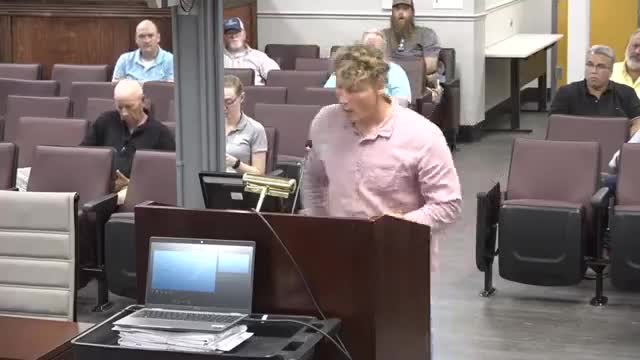
Summary
Williamson County planners deferred a decision on the Owen Valley subdivision's nontraditional wastewater treatment site after residents said a private well lies closer than reported and commissioners asked staff to confirm setbacks and required water upgrades.
The Williamson County Regional Planning Commission on Wednesday deferred approval of the Owen Valley subdivision's nontraditional wastewater treatment site plan after residents raised concerns about a nearby private well and low water pressure in the area.
Commissioners said the item was postponed so staff and the applicant could clearly identify the wastewater system components and confirm whether any public or private wells fall within county setback distances and to outline required water-line upgrades.
The issue matters to nearby homeowners because county zoning requirements call for identification of wells near wastewater sites "in order to protect drinking water aquifers," and specify that public water supply wells within 1,500 linear feet and private wells within 500 linear feet of a wastewater treatment or disposal site must be identified and, for shallow wells within 500 feet, monitored. A county staff member told the commission the rules apply to all wastewater system components, including holding or storage ponds.
At the meeting, two neighbors spoke during public comment. Connor Valentine, of College Grove, said, "I have a water well on my property. It's probably 4 or 500 feet away from the development," and asked that the record reflect that a private well exists closer than the developer's written materials indicated. Joseph Novak, who also lives on Owendale Lane, told the commission he was "curious as to what that would do to, you know, normal things like water pressure" for existing homes if the subdivision is built.
Richard Howes, with SCC (the county's wastewater reviewer), told the commission his firm did not find any wells "when we did our report within the 1,500 feet of the system itself." At a later point, Howes confirmed that the developer's mapping measured setback distances from the treatment components and said the well cited by residents was outside the 1,500-foot zone as measured from the system.
County staff also told commissioners they are "working with the utility district to get water line upgrades made." Commissioners asked what documentation the applicant must provide; staff said the developer must supply a letter of water availability showing adequate pressure and that numerous off-site water improvements would be required and listed when the concept plan returns.
After discussion, the commission voted to defer the site-plan item to the July meeting so staff can verify well locations relative to all wastewater components, clarify whether the developer measured from the pond or other elements of the system, and enumerate required water-system upgrades. A motion to defer carried.
The developer and consultant on the record were identified as Kelsey McGee of T. Scribe Engineering and Richard Howes of SCC. The commission recorded no final approval; the matter will return to the agenda for further review and confirmation of setbacks and water infrastructure requirements.