Get Full Government Meeting Transcripts, Videos, & Alerts Forever!
Get email alerts on the Budget Taxes topic
No spam. Unsubscribe anytime.
Quakertown school board votes 2% tax increase after hours-long budget debate
Summary
After more than an hour of public comment and board discussion, the Quakertown Community School District board approved a 2% tax increase for the 2025–26 year to reduce an expected structural budget gap and preserve fund balance.
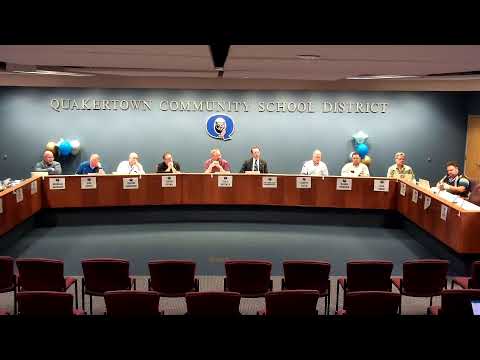
Quakertown Community School District board members voted 8–1 to adopt a 2% real-estate tax increase for the 2025–26 fiscal year after a long public discussion of the district budget and projected deficits.
The vote by the board of school directors followed public comments from residents who said rising property taxes are putting pressure on senior and fixed-income households, and an extended board debate about how much to rely on reserves versus raising revenue.
The measure matters because the district is projecting a multiyear budget shortfall if it does not raise revenue or reduce spending. District finance staff presented a proposed 2025–26 budget showing a projected deficit if no tax action is taken and warned that continuing year-to-year deficits would erode the district’s fund balance.
At the meeting, resident Wes Combs described local financial strain during public comment: “We need help.” Marsha Ring, who said she is a 1974 graduate of the district and a Quakertown Borough resident, told the board, “You blew $8,000,000 to build that thing,” referring to a multipurpose athletic field earlier funded by the district; she called on the board to stop additional spending and reconsider increases.
Board members who supported a tax increase said the district must balance commitments already approved by the board — including multiyear labor contracts — with the need to protect the district’s financial standing. Board member Shermer said cutting tax support now would be “frankly, irresponsible,” given recent contract approvals and predictable annual cost increases.
Superintendent Dr. Friedman and business office staff framed the budget as a combination of predictable, recurring personnel costs and one-time capital projects. Finance director Miss Young presented the budget slides showing: an estimated proposed budget shortfall (budgeted deficit figure shown to the board as roughly $14.2 million), a current projected 2024–25 deficit (presented at about $8.2 million), and the district’s estimated fund-balance trajectory if no tax action occurred (board materials projected the district’s fund balance declining from about $31.5 million to about $18.5 million by 2025–26 under a no-increase scenario).
During discussion several board members urged a middle path: some members argued for a smaller increase; others said the district needed additional revenue now to avoid deeper cuts and to protect the district’s credit and capacity for capital projects. After motions and multiple votes on alternatives, the board approved option D — a 2% tax increase — with eight votes in favor and one dissenting vote (Board member Ayusu).
Board President Hippoff said the tax action was difficult but necessary to maintain services and the district’s financial health. The board directed administration to include the adopted rate in the district’s final budget documents and to continue looking for cost savings and revenue options.
The board moved on to several consent items after the vote. The tax increase resolution will be incorporated into final budget paperwork and the district’s public notices ahead of tax-billing cycles.