Get Full Government Meeting Transcripts, Videos, & Alerts Forever!
Get email alerts on the Urban Forest topic
No spam. Unsubscribe anytime.
Committee discusses tree preservation during street reconstructions; seeks clearer process and inter‑committee review
Summary
Committee members and city forester outlined why many street reconstruction projects require tree removal and agreed to develop clearer cross‑committee process and earlier notice to alderpersons and parks staff to reduce surprise removals.
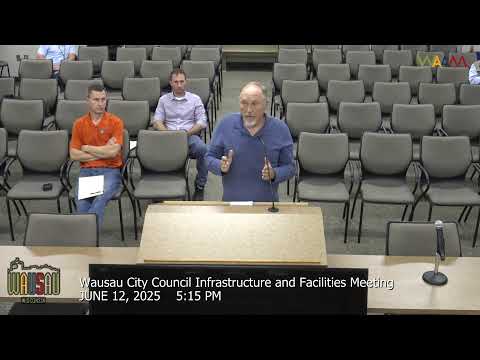
City staff and the city forester briefed the Infrastructure and Facilities Committee on June 12 about why street reconstruction projects often require removal of public boulevard trees, and committee members requested a clearer process for tree preservation review.
Why it matters: Several recent reconstruction projects have resulted in substantial tree loss along city streets, prompting alderpersons and residents to press for stronger preservation measures, earlier involvement of parks staff and clearer public notice.
Key points from staff and forester - Excavation and utilities drive impacts: Engineering staff explained that typical full street reconstructions require deep excavation for water, sanitary and storm infrastructure; water mains are commonly placed ~8 ft deep and sanitary sewers often range 8–12 ft and can reach 20 ft in places. Deep excavation and required clearances mean tree roots are often disturbed. - Design geometry and narrow terraces: The city’s typical residential roadway widths (33–37 ft back of curb) and resulting terraces often leave only a 3–7 ft boulevard between curb and sidewalk. That small terrace, combined with service laterals and driveways, reduces the area where a mature tree can retain root stability. - Forester’s assessment criteria: City Forester John (John, City Forester) said his review factors include the species and current health of the tree, likely future condition, and whether the excavation would compromise structural stability. He noted a rule of thumb referenced in the discussion: a tree’s critical stability depends on root zone width roughly three times the trunk diameter — wide root loss can create fall risk after construction.
Concerns raised and requested next steps - Aldermanic concerns: Alder Mark Neal (Alder Neal) and others described neighborhood examples where many mature trees were removed during projects and asked the city to pursue "extraordinary measures" used elsewhere to preserve canopy where possible. Residents and alderpersons requested a process that brings tree‑preservation options to committees early in the design schedule rather than after plans are finalized. - Existing guidance and outreach: Participants referenced a past City of Wausau Tree Planting and Preservation Specification Manual and asked staff to locate and re‑engage those practices or outside experts with experience preserving trees in reconstruction projects. - Operational constraints: Engineering staff and maintenance representatives stressed that some trees planted too close to utilities or in unsuitable locations were not originally well sited and are difficult to preserve; they also noted public‑safety risks when trees fail after construction.
Committee direction The committee asked engineering and parks staff to develop a clearer cross‑departmental process to: 1) identify likely tree losses earlier in project design; 2) present projected tree impacts and mitigation options to Infrastructure and to Parks & Recreation and to affected alderpersons; and 3) explore outside expertise or programmatic approaches (including potential conduit/utility placement strategies and replanting programs) to reduce loss of canopy where feasible.
Ending: Staff agreed to return proposed process steps and an outreach plan. The committee suggested Parks & Recreation and the Bicycle & Pedestrian Advisory Committee be part of early reviews where relevant.