Get Full Government Meeting Transcripts, Videos, & Alerts Forever!
Get email alerts on the County Finance Cfp Tax Restructure topic
No spam. Unsubscribe anytime.
Baker Tilly warns Boone County to plan for state tax restructuring and potential revenue shifts
Summary
County financial consultant Baker Tilly previewed an updated comprehensive financial plan (CFP) and summarized recent state legislation that will change local income tax structure, homestead deductions and levy processes; the county was advised to expect revenue uncertainty and to work with consultants ahead of the 2027–2028 transitions.
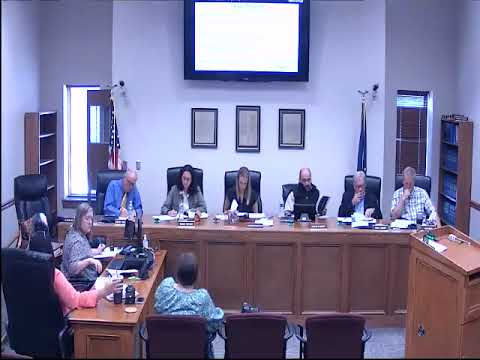
Baker Tilly presented a preliminary update to Boone County’s comprehensive financial plan and outlined how recent state legislation will change local revenues and budgeting processes for the county.
The briefing matters because state changes to property-tax deductions, maximum levy growth rules and the redesign of local income tax (LIT) collections will shift how revenues are raised and allocated beginning in 2027–2028. Susan Cowan, senior manager at Baker Tilly, told the council the firm is using legislative-services estimates for now and is building an in-house model to produce more precise Boone County projections.
Cowan said the county should expect the following key changes: the maximum levy-growth cap is set at 4% for 2026 but may revert to prior calculations afterward; homestead and other property tax deductions were changed in recent sessions and will step differently over the next several years, and the state is consolidating multiple LIT types into a new county-level structure effective Jan. 1, 2028. Cowan said, “We are currently using the numbers that were provided by the legislative services agency,” and that Baker Tilly expects to deliver a county-specific model within weeks so the council can assess specific local impacts.
Under the new LIT framework described by Cowan, the county services general local income tax will replace several existing LIT types and may provide up to 1.2% on adjusted gross income back to the county; separate optional rates can be adopted for fire/EMS (up to 0.4% total across eligible fire entities) and for non-municipal units (up to 0.2%). Cowan said decisions by municipalities with population greater than 3,500 (Lebanon, Zionsville and Whitestown in Boone County) to adopt their own LITs will affect the county’s taxable AGI base and complicate payroll-withholding and administrative processes for employers.
Cowan reviewed circuit-breaker projections and legislative-service estimates: she said legislative services projects an additional Boone County property-tax revenue loss of about $1,252,000 in 2026 because of the change in deductions and valuation rules. She cautioned that results will vary by community within the county and that some growth in net assessed value could offset part of the losses if new development increases the tax base.
Baker Tilly recommended the county update its capital plan and coordinate with department heads during the upcoming budget cycle; Cowan noted the firm will provide revised revenue estimates (preliminary estimates typically arrive in August and final certified amounts in October). She also highlighted operational impacts: departments that currently receive LIT allocations (public safety, jail/correctional) will see those revenues and related expenses move into the county general fund under the new structure, and the county will need to decide how to track and reserve funds for capital or deferred maintenance within the changed fund structure.
Council discussion raised administrative concerns. One councilmember flagged HR/payroll operational complexity because employees’ tax-withholding and applicable rates will depend on their residence and possibly different municipal LITs. Cowan and council members agreed further modeling and interagency coordination will be required; Baker Tilly said it will produce a revised CFP and updated projections to support the 2026–2029 budget process.
Ending: The presentation was informational. Council members asked for a follow-up model and for Baker Tilly to work with county staff as the 2026 budget process proceeds; no ordinance or tax change was enacted at the meeting.