Get Full Government Meeting Transcripts, Videos, & Alerts Forever!
Get email alerts on the Labor Unemployment topic
No spam. Unsubscribe anytime.
Senate adopts change limiting weeks of unemployment pay for striking workers to 10 weeks
Summary
The Oregon Senate adopted the conference committee report on Senate Bill 916, cutting the maximum weeks of unemployment benefits for striking workers from 26 to 10; supporters called it a compromise, opponents warned it would shift bargaining power and cost taxpayers.
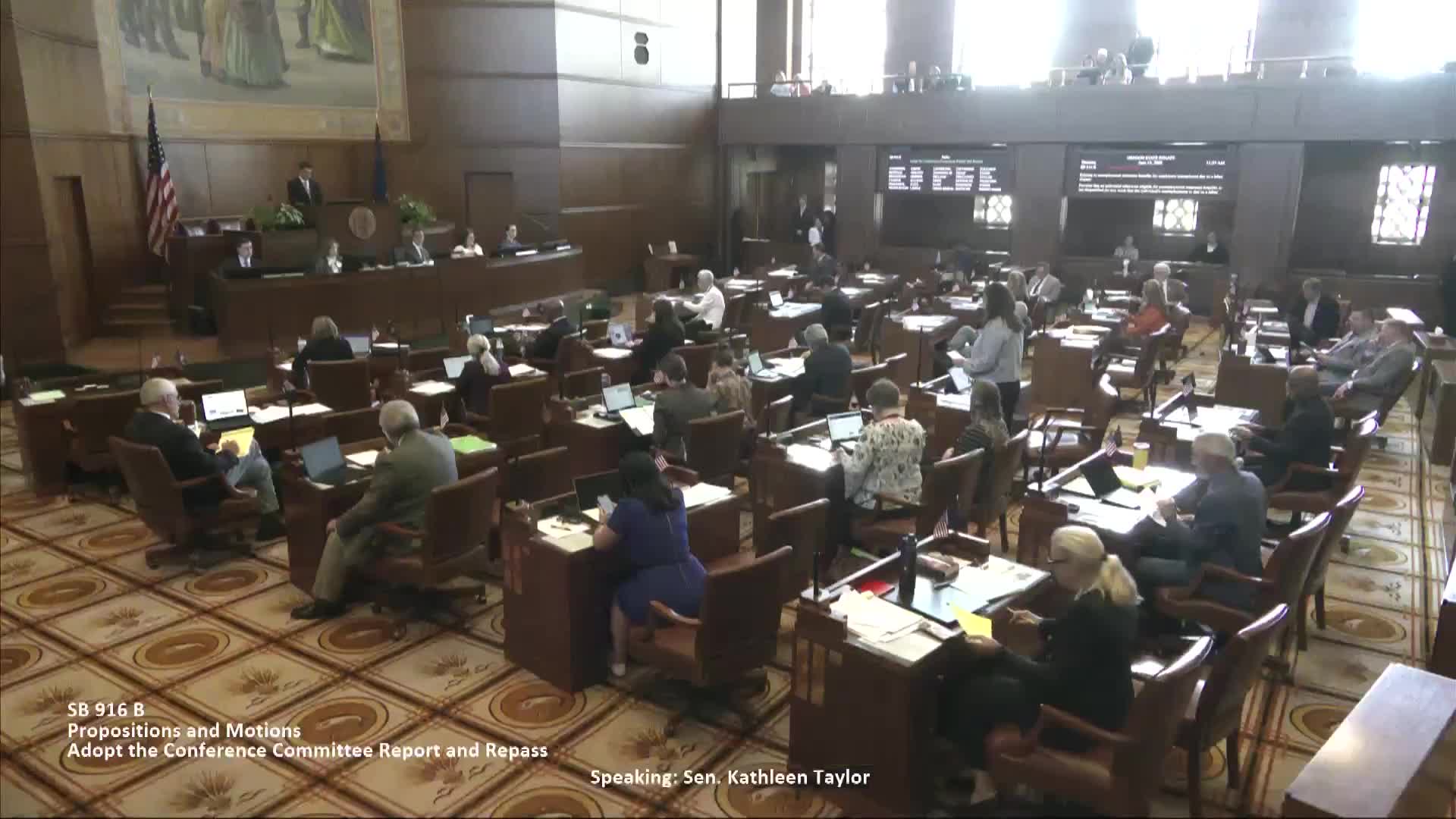
The Senate on Thursday adopted the conference committee report and repassed Senate Bill 916, a measure that limits the number of weeks a worker can receive unemployment benefits while on strike from 26 to 10.
Proponents said the 10‑week cap was a negotiated compromise between versions passed earlier by each chamber. "This amendment is a compromise that still protects workers and levels the playing field between employers and employees," Senate Majority Leader Kate Taylor said on the floor as she presented the conference committee amendment.
Supporters argued the change fits within the differences between the versions the Senate and House had previously approved and preserves benefits while narrowing the duration for which striking workers can draw unemployment insurance.
Opponents, led by Senator Daniel Bonham, said the change would make strikes easier by effectively paying striking workers with unemployment funds and shift bargaining power away from employers. "This is a terrible idea to move forward and allow public labor unions, public employees who are paid for by the state, by tax dollars, to serve a purpose that the state has deemed essential," Bonham said, adding that paid strikes would harm students and other service recipients.
Senator Chris Robinson also urged rejection, saying broader consequences would include increased bargaining pressure on government employers and higher costs for taxpayers. "When it's easier to strike, because you will get paid, therefore, the negotiations will be pushed in another direction," Robinson said.
The conference committee report passed on a roll call and the bill was declared repassed. Vote tallies were recorded on the floor; the clerk reported the motion carried with the constitutional majority required to repass the bill.
Senators who opposed the change urged continued engagement with public-sector stakeholders and signaled plans to continue public and political debate outside the chamber.
The measure will now proceed to the governor for signature or veto per usual legislative process.