Get Full Government Meeting Transcripts, Videos, & Alerts Forever!
Get email alerts on the Telemarketing Texts topic
No spam. Unsubscribe anytime.
Committee hears HB 3865 to add text messages to robocall rules; debate centers on consent and do-not-call conflicts
Summary
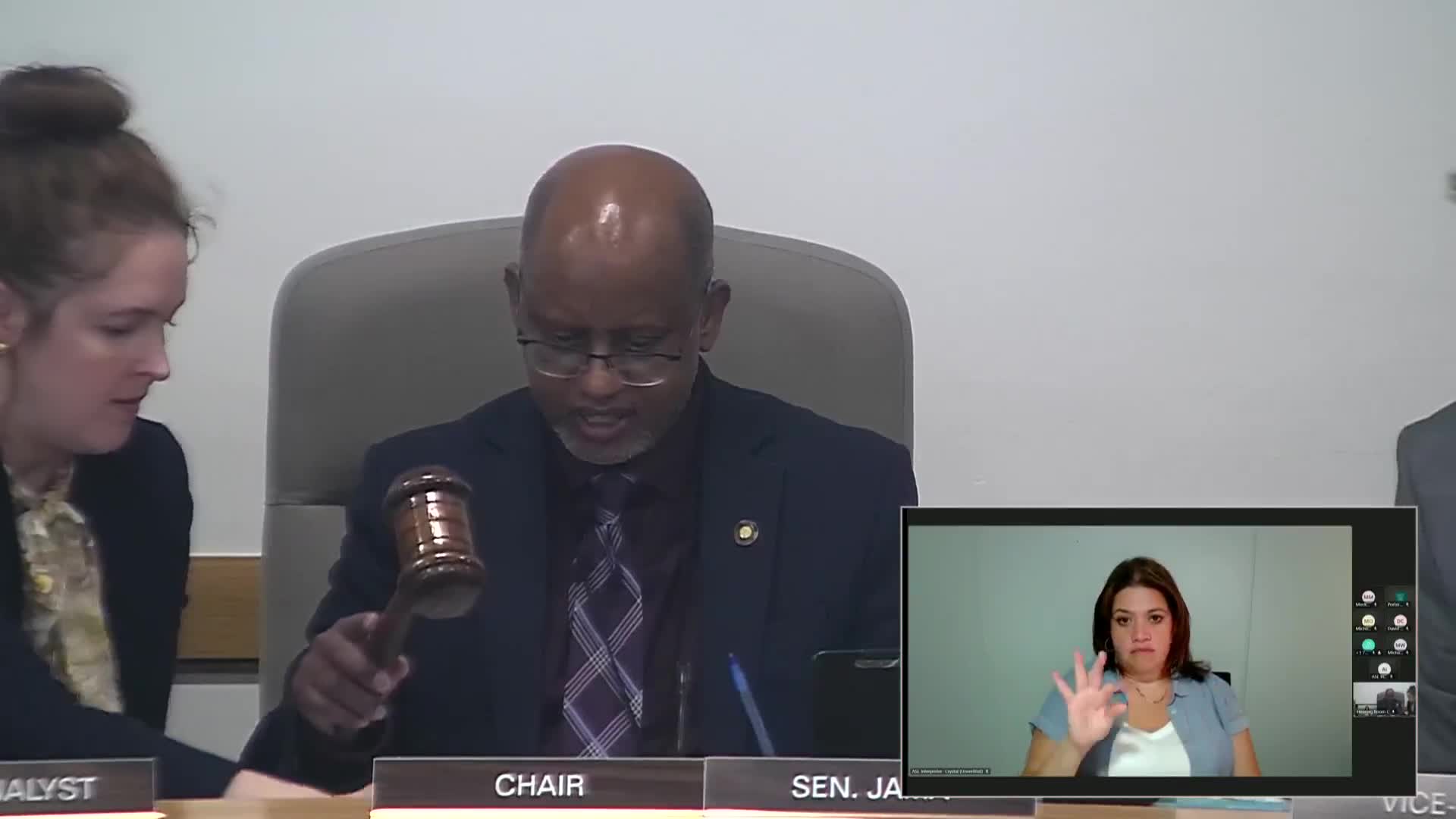
The Senate Committee on Rules held a public hearing on HB 3865, a bill that would add text messages to Oregon's telephone-solicitation rules and limit solicitations to 8 a.m.–8 p.m. and three contacts in 24 hours.
The Senate Committee on Rules held a public hearing on House Bill 3865, a measure to add text messages to Oregon's existing rules on telephone solicitations and automatic dialing devices and to set time and frequency limits on solicitations.
Representative Nathan Sosa, sponsor, said the bill "adds text messages to our existing and long standing laws regarding robocalls and telephone solicitations" and would limit solicitations to three times in 24 hours and to the hours of 8 a.m. to 8 p.m. The bill exempts established business relationships, debt collectors subject to the Fair Debt Collection Practices Act, public safety and law enforcement agencies, school districts and replies to messages received. The A-engrossed version originally included additional bases for claims under the Unlawful Trade Practices Act; the B4 amendment removes two such bases: (1) a solicitor's misrepresentation or falsification of their telephone number or location as an independent UTPA claim, and (2) failure to make specified disclosures in text-message solicitations.
Senator Floyd Brzozynski, chairing the Senate Judiciary Committee earlier in the process, explained the B4 amendment was developed after stakeholder conversations and said the committee intended that the established business-relationship exception apply to both the hour and frequency limits. Representative Sosa said the change to 8 a.m.–8 p.m. was made to align with Washington state practice and that the bill allows reliance on a telephone number's area code to determine location/time zone.
Business groups and industry witnesses urged more explicit treatment of consumer "prior express consent." Amanda Dalton of the E‑Commerce Innovation Alliance said the bill still lacks a mechanism to ensure businesses can rely on a customer's opt-in: "What it doesn't include is a customer's consent to opt into marketing." David Carter likewise urged recognition of prior express consent and warned the bill could clash with consumers on the national do-not-call list.
Small-business testimony illustrated practical concerns. Michael Weider, founder of Lalo, described a common e-commerce scenario in which a parent shopping at 9 p.m. expects an immediate discount via text and said a strict curfew and failure to honor prior consent would harm customer experience and sales. Former Federal Communications Commissioner Michael O'Reilly testified that federal law (the Telephone Consumer Protection Act and related FCC rules) treats prior express consent and revocation mechanisms differently and recommended the bill be set aside until it resolves conflicts with the consent/do-not-call framework.
Committee members asked about the "text back STOP" mechanism and how the bill would interact with existing do-not-call protections; sponsors said that part was not the bill's focus and that Department of Justice or federal rules may govern that mechanism. The committee took testimony under time constraints, introduced the B4 amendment on OLIS, and closed the public hearing without a committee vote recorded on final passage during that session.