Get Full Government Meeting Transcripts, Videos, & Alerts Forever!
Get email alerts on the Transportation Funding Hb 2025 topic
No spam. Unsubscribe anytime.
Oregon joint committee hears wide agreement on need for HB 2025 funding, sharp disagreement on costs and specifics
Summary
Joint Committee on Transportation Reinvestment members held a June 12 public hearing on House Bill 2025, hearing hours of testimony from counties, cities, ODOT employees, labor unions, businesses and residents on a package that would modernize revenue, index fuel taxes and preserve the 50‑30‑20 state highway fund split.
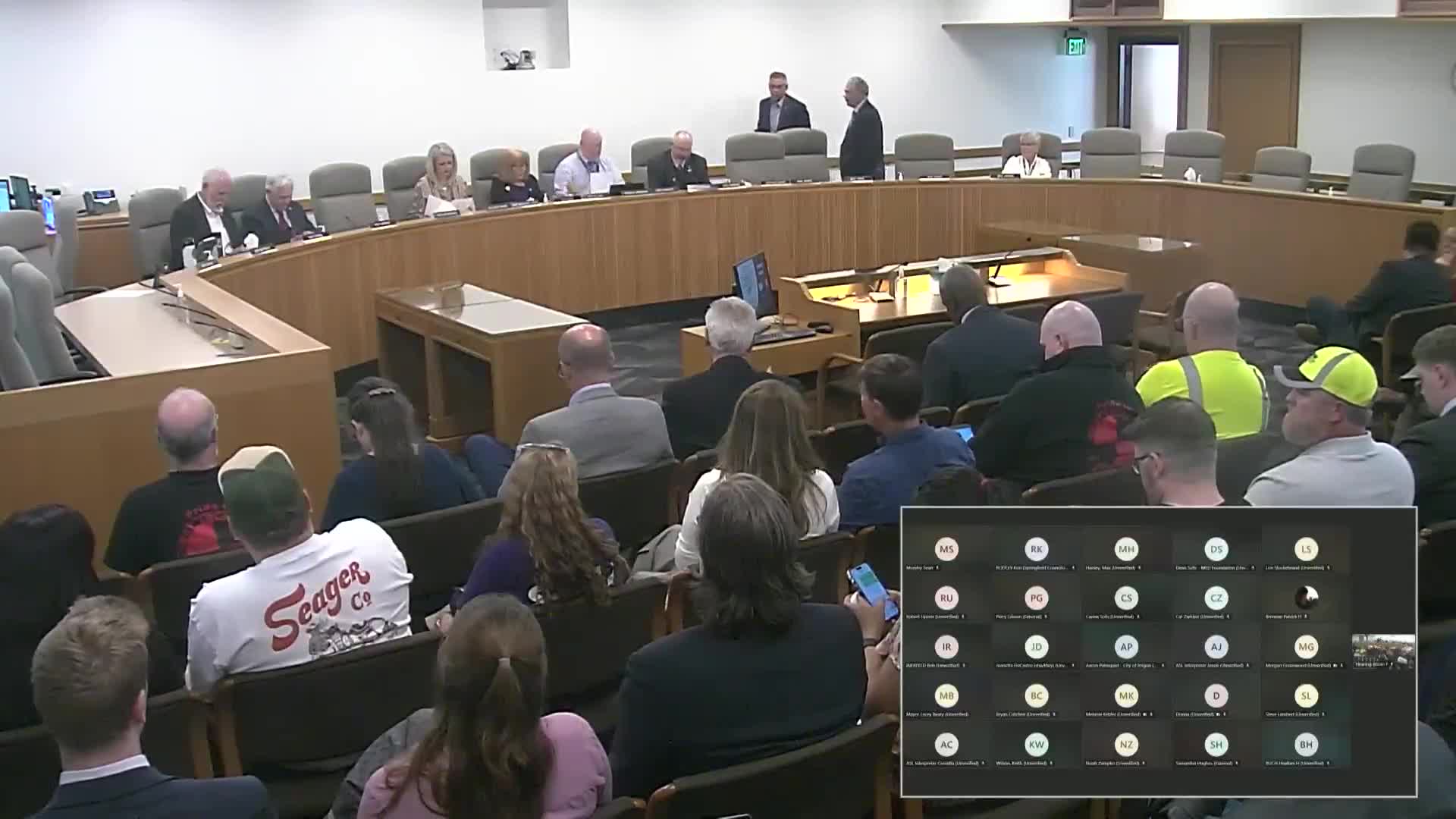
Joint Committee on Transportation Reinvestment members held a public hearing on Thursday, June 12, on House Bill 2025, the state's proposed transportation reinvestment package. Speakers ranged from county engineers and city mayors to Oregon Department of Transportation employees, labor unions, business groups and individual residents. Testimony emphasized two recurring themes: (1) local governments and ODOT say new, stable revenue is needed to maintain roads, bridges and safety programs, and (2) some business groups and many residents oppose the bill's scale and the package of new taxes and fees.
The lead-off testimony came from Mallory Roberts of the Association of Oregon Counties and the Oregon Association of County Engineers and Surveyors, who urged passage to "grow and stabilize the State Highway Fund" and to "maintain the county 30% share of state highway fund revenues." John Henriksen, director of the Multnomah County Transportation Division, said decades of underinvestment have left local systems run down: "You can only fill potholes so many times before the road needs to be completely rebuilt." Portland Mayor Keith Wilson told the committee Portland faces a roughly $6 billion maintenance backlog and that without state action "even deeper cuts are coming." Lacey Beatty, mayor of Beaverton and chair of the Metropolitan Mayors' Consortium, likewise said the package's preservation of the 50-30-20 split is essential for cities across the Portland region.
Supporters from smaller jurisdictions said the bill would allow match funding for culvert and fish passage work, jurisdictional transfers and targeted safety investments. Mike Russell, Columbia County public works director, said Columbia County's road fund is heavily reliant on the State Highway Fund and that the county maintains 550 miles of road and 104 bridges. Speakers from Hood River County, Jackson County, Benton County and others described similar backlogs, a shrinking workforce and the operational dependence on state funds for routine maintenance.
ODOT employees and union leaders warned of operational and safety consequences if funding is not secured. Jason Lawrence, a vice president representing ODOT employees, testified that without a package the agency could be forced to lay off "up to 1,000 workers," and said those cuts would reduce response capacity for storms, landslides and major crashes. Incident response staff and maintenance employees described operating on "skeleton crews," long shifts during storms, and life-or-death incidents where timely roadside response made a difference.
Several local officials and planners gave project-level examples they said HB 2025 could fund. Redmond City Council member Chad Zwicker urged a traffic signal at SW 30th and Highway 126 to address hundreds of crashes at that location; Hood River representatives described a completed Heights streetscape plan and asked for funding and a jurisdictional transfer so the city could begin improvements. Central Oregon builders and Bend officials said Great Streets and Safe Routes to School funding in the bill would support housing and safety priorities.
Not all testimony was supportive. Business groups and a number of residents criticized the bill's cost and breadth. The Oregon Auto Dealers Association and the Northwest Auto Trades Association opposed vehicle-related taxes and higher dealer/dismantler fees, arguing those increases would be passed to consumers. Several residents and small-business speakers called the bill "too big," questioned timing and transparency of negotiations, and urged breaking the package into smaller bills or requiring a fuller financial analysis before moving forward.
Several specific policy items drew concentrated pushback. Section 160's amendment to ORS 366.215, which would require a minimum 12-foot travel lane on freight routes, prompted multiple safety-related criticisms. Transportation advocates and city engineers said local context and lane-width flexibility matter for pedestrian and bicycle safety; David Benig of Portland and other speakers argued 11-foot lanes can better support multimodal safety in community settings. Conversely, industry and freight stakeholders argued for clear freight mobility standards.
Electrification and revenue modernization provisions drew mixed responses. Supporters welcomed indexing the gas tax to inflation and creating a road-usage charge for electric vehicles to preserve the principle that "all users pay their fair share." Several witnesses urged additional incentives and infrastructure funding for medium- and heavy-duty electric trucks and more support for transit operations. Others warned that a large mix of new fees (payroll taxes, registration and title fees, transfer taxes) disproportionally burdens working families and rural businesses.
No formal committee votes were taken at Thursday's hearing; the committee closed the public hearing after hearing from more than 90 registered speakers and said written testimony may be added to the legislative record on OLIS within 48 hours. Committee chairs said staff will circulate revenue projections and refined package options to stakeholders before next meetings.
Nut graf: The hearing made clear that local governments, ODOT employees and transit advocates see HB 2025 as a once-in-a-decade opportunity to stabilize funding for operations, maintenance and safety, while business groups and many residents question the package's cost, structure and equity. With both the technical design (lane widths, OReGO implementation) and fiscal design (mix of fees, indexing and distribution) under contention, the committee faces negotiating trade-offs between immediate preservation needs and concerns about regressivity and accountability.
Ending: Committee members said they will digest testimony and circulate draft amendments and revenue projections. Supporters urged timely passage to avoid layoffs and service reductions; opponents urged greater audit, transparency and smaller, targeted bills. The record remains open for written comments on OLIS for 48 hours after the hearing.