Get Full Government Meeting Transcripts, Videos, & Alerts Forever!
Get email alerts on the Mlp Mutual Aid Public Power topic
No spam. Unsubscribe anytime.
Municipal utilities and advocates press committee to clarify mutual‑aid protections for MLP crews
Summary
Municipal light department leaders and Energy New England told the committee H.3486/S.2252 and H.3330/S.2277 are needed to protect municipal utility crews who travel to help restore power and to clarify liability and employment protections across jurisdictions.
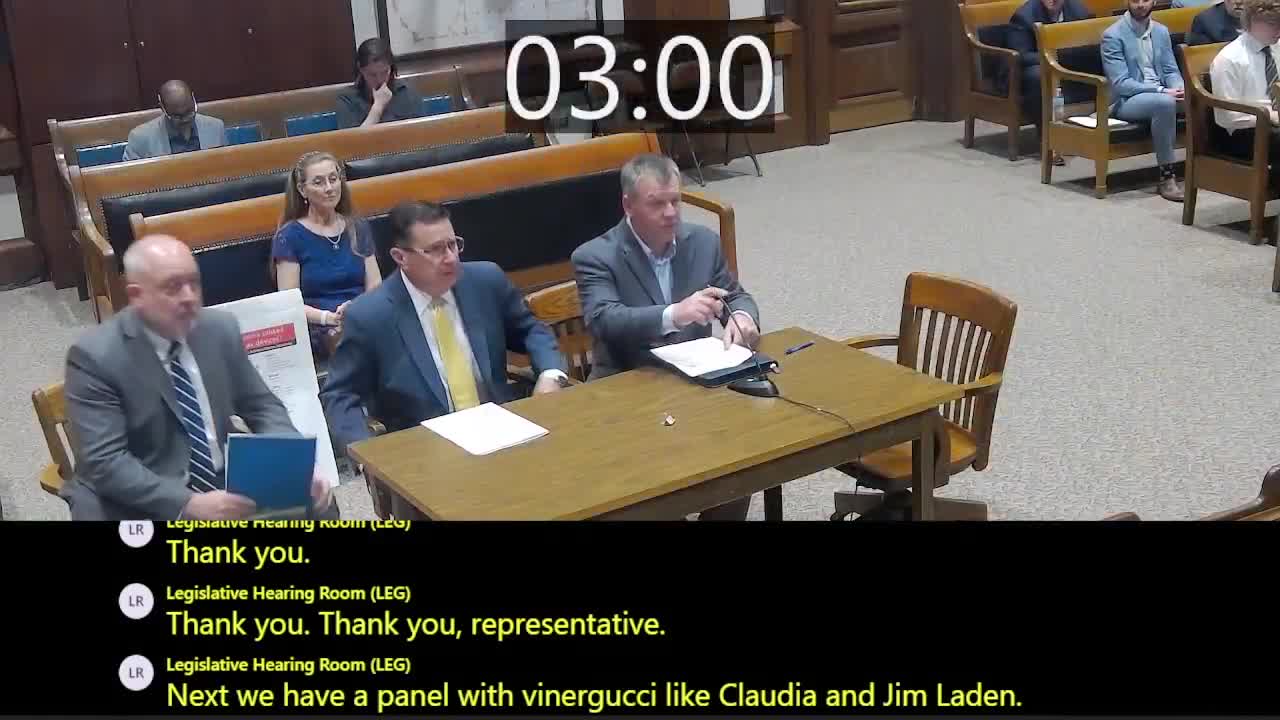
Representatives of municipal light departments and joint action agencies told the Joint Committee on Telecommunications, Utilities and Energy that two pairs of bills would fill gaps in protections for municipal utility crews who respond to emergencies and to non‑emergency mutual‑aid requests.
Michael Cloutier, general manager of the Middleton Electric Light Department and chair of the MEAM legislative committee, described the municipal light plant (MLP) model in Massachusetts and said locally owned nonprofits reinvest revenue into infrastructure and deliver lower rates. “Together, these locally owned utilities serve nearly 15% of the Massachusetts electric customers,” Cloutier said, and he urged support for H.3486 and H.3330 and their Senate companions.
Vincent Raguchi, chief strategy officer for Energy New England (ENE), told the committee that ENE’s members have secured long‑term clean‑energy contracts and that MLP customers typically pay substantially lower retail electricity rates than investor‑owned utility customers. Raguchi said the bills would “ensure MLP employees helping during emergencies like storm recovery will receive the proper employment protections and liability coverage across jurisdictions.”
Witnesses described two policy gaps the bills seek to address: employment and liability protections for MLP employees who travel out of their home jurisdiction to assist storm recovery, and clarity on whether MLPs can provide services — such as streetlight maintenance — for neighboring communities with appropriate insurance and legal protections. Cloutier described mutual‑aid deployments where MLP crews leave their own communities to assist others and said protections are needed “so that MLP mutual aid crews can continue to support communities in need without having to worry about their own financial security.”
Testimony relied on Massachusetts statutory context familiar to municipal utilities: MEAM referenced Chapter 164 of the General Laws as the existing statutory framework governing MLPs and described MLPs as nonprofit, locally governed utilities that predate investor‑owned service in many towns. ENE described long‑term contracts — hydropower, wind, solar, and nuclear procurements — used to secure carbon reduction and rate stability for MLP customers.
No formal vote occurred during the hearing. Committee members asked clarifying questions about protections and coverage; presenters said the bills would remove uncertainty and allow MLPs to continue mutual aid work without imposing undue risk on employees or on host communities. Supporters asked the committee to report the bills favorably to the full legislature.
Opposition to other proposed changes affecting joint‑action agencies was raised separately in the hearing record; those governance concerns were addressed by a different witness and are the subject of a separate article.
The testimony emphasized three themes: (1) municipal utilities deliver lower rates and local control, (2) MLP mutual‑aid workers need clear, across‑jurisdiction protections for employment and liability, and (3) clarifying statutes will help municipalities and MLPs collaborate on grid resilience and clean‑energy contracts.