Get email alerts on the Microstamping topic
No spam. Unsubscribe anytime.
Mass. commission recommends feasibility study, standards and penalties for firearm microstamping
Summary
A legislative commission studying emerging firearm technology recommended that the state study the feasibility of intentional microstamping, set testing standards and training, and create penalties for tampering; commissioners debated technical limits, industry burden and law‑enforcement processing requirements.
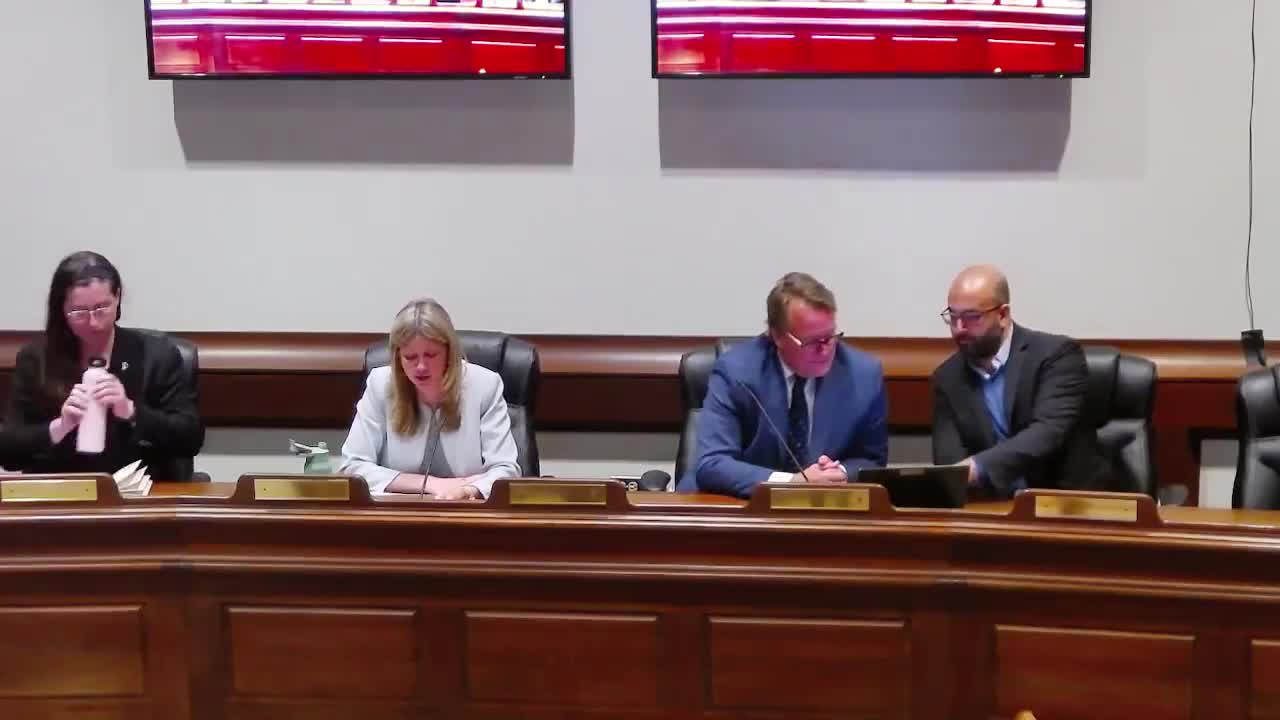
State Representative Kate (co-chair) and Senator Michael Moore (co-chair) told the Special Commission on Emerging Firearm Technology on March 4, 2025, that the commission will recommend the Legislature direct the state to study and, if feasible, adopt intentional microstamping standards and related enforcement measures.
The recommendation would ask the Legislature to: direct a state agency to determine the feasibility and viability of microstamping technology; establish standards and testing criteria; require training and licensure for entities servicing microstamped firearms; promulgate implementing regulations; and create criminal penalties for tampering with microstamping. The co‑chairs said any eventual requirement that semi‑automatic handguns be microstamped would apply only after the feasibility and viability determination, and that the Legislature would need to appropriate resources to support testing and laboratory work.
The commission’s charge, read at the start of the meeting, directs it to study “personalized firearm technology and microstamp technology” under a special legislative commission established pursuant to section 2A of chapter 4 of the General Laws. Commissioners cited the three states that have enacted microstamping laws—New Jersey, California and New York—during the meeting and said the commission had received testimony from researchers, law‑enforcement organizations and industry representatives.
Supporters argued microstamping could provide additional forensic leads. Commissioner Lezotte, who identified himself as an originator of microstamping technology, said the technology “would stay and provide forensic intelligence” and could help trace firearms to common sources and reveal trafficking patterns. Several law‑enforcement speakers asked that the feasibility review explicitly evaluate evidence recovery and forensic‑laboratory processing, not just manufacturing, because the forensic value depends on the ability to recover and read codes from crime‑scene casings.
Opponents and skeptical commissioners raised practical and legal concerns. Commissioner Windigan, speaking for the National Shooting Sports Foundation, emphasized that his group is a trade association and warned of industry impacts if manufacturers are required to comply; he also said states that passed microstamping laws have not yet achieved implementation. Several commissioners cited litigation and technical critiques of traditional ballistics comparison methods and urged caution until courts and other states’ implementation issues are resolved.
The panel also addressed conflicts of interest and transparency after several members questioned whether manufacturers invited to testify had declined; the co‑chairs said invitations had been sent and noted openness to additional witnesses. Commissioners asked staff to confirm whether existing microstamping statutes in other states include criminal penalties for tampering; the Attorney General’s office said it would review the final report and advise on whether it would be the appropriate agency to carry out a feasibility study.
No formal legislative changes were adopted at the meeting. The co‑chairs said their offices will draft a report reflecting the commission’s majority consensus and circulate it to members for comment before a final vote at the commission’s next meeting.
Ending: The commission agreed to reconvene to vote on a final report after staff draft circulation; the meeting adjourned by motion at the close of the session.
AI generated
The text on this page is AI generated. Summaries, highlights, analysis, and video transcripts are all produced from the original source material.
AI can make mistakes, so if you spot one, and we will fix it for everyone.
Note: the source content is unaltered by us. Any content source we link to, be it a video, an audio recording, or a document, is presented exactly as its publisher released it. That publisher is usually a government body, sometimes an individual official or another organisation.