Get Full Government Meeting Transcripts, Videos, & Alerts Forever!
Get email alerts on the Wildlife Control topic
No spam. Unsubscribe anytime.
Residents raise transparency, animal-welfare and conflict-of-interest concerns as county weighs USDA wildlife-services contract
Summary
Public commenters and commissioners debated the county's USDA Wildlife Services contract during the June 10 work session, pressing officials for transparency about predator removals, contractor affiliations and the county's share of costs; staff recommended continuing the contract, which is federally funded in part.
Public commenters at the Grant County Board of Commissioners work session urged more transparency and raised conflict-of-interest concerns about the county's contract with USDA Wildlife Services, which provides predator control and related services.
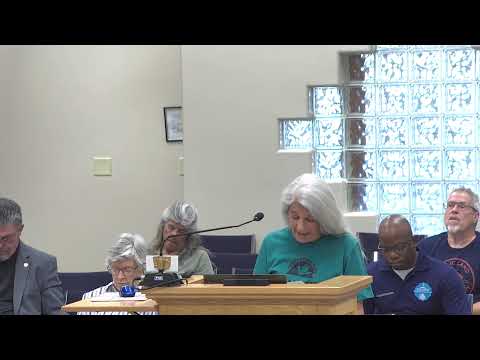
The issue drew repeated public comment at the June 10 work session, with several residents questioning how many animals are being removed, whether nonlethal options are used and whether the wildlife-services agent's private work as a hunting guide creates a conflict. "With $9,700 in claim damages from coyotes, 50 coyotes were shot for predation," said Glenn Griffin, a resident who addressed the board, adding that the quarterly reports show no mountain lions or bears killed locally even though work tasks for those species were recorded.
The county manager reviewed contract details later in the meeting. "The total agreement is 93,000. 66% of that is funded by federal appropriations and 34% comes to the county," the manager said, explaining that most of the county share is typically covered by targeted grazing fees and that the general fund makes up shortfalls.
Why it matters: The contract uses public dollars to pay for livestock protection and hazardous-animal responses. Residents said they want clearer reporting on which species are targeted, how many animals are removed and which methods are used on public versus private land. Several speakers asked the county to clarify safeguards against private gain by contractors who also guide hunters.
What was said and by whom: Candace Brinley told commissioners she was "opposed to our tax dollars being used to kill wildlife for any reason" and voiced concern about a conflict of interest between the wildlife-services agent's public work and private hunting guide business. Christine Hess described wildlife as part of the ecosystem and urged humane, nonlethal approaches: "They have as much right to life as we do."
Staff context and next steps: County staff told commissioners the contract language remained the same as the prior year and that last year's negotiations removed—or clarified—some disputed elements. Staff recommended the commission approve the USDA agreement (listed on the agenda as A2508). No formal vote on the contract was recorded during the work session; staff presented funding breakdowns and said the county pays roughly one-third of the total cost while the federal appropriation funds the remainder.
Matters still unresolved: Public commenters requested easier public access to contracts and quarterly reports; one commenter said he had requested the contract and not received it. Commissioners asked county staff to ensure contract documents and wildlife-services reports are posted or made available and discussed taking additional steps to clarify permitted methods on public land versus private land. County staff noted that records already released under IPRA (the state's public-records process) included quarterly reports but agreed to make the contract and reports readily available.
No formal action was recorded. Staff recommended moving forward with the USDA Wildlife Services contract and explained the funding split; commissioners discussed public concerns and asked staff to improve transparency and reporting to the public.