Get Full Government Meeting Transcripts, Videos, & Alerts Forever!
Get email alerts on the Smart Meters Opt Out topic
No spam. Unsubscribe anytime.
Massachusetts witnesses urge no‑fee smart‑meter opt‑out as utilities rollouts advance
Summary
Public commenters and disability advocates urged the Joint Committee on Telecommunications, Utilities and Energy to pass H.3551/S.2306 to require notification, a non‑transmitting analog option, and a no‑fee opt‑out as utilities install digital smart meters statewide.
Lawmakers heard extended public testimony urging passage of bills that would require utilities to notify customers before installing digital smart meters, allow a non‑transmitting analog meter choice, and eliminate opt‑out fees.
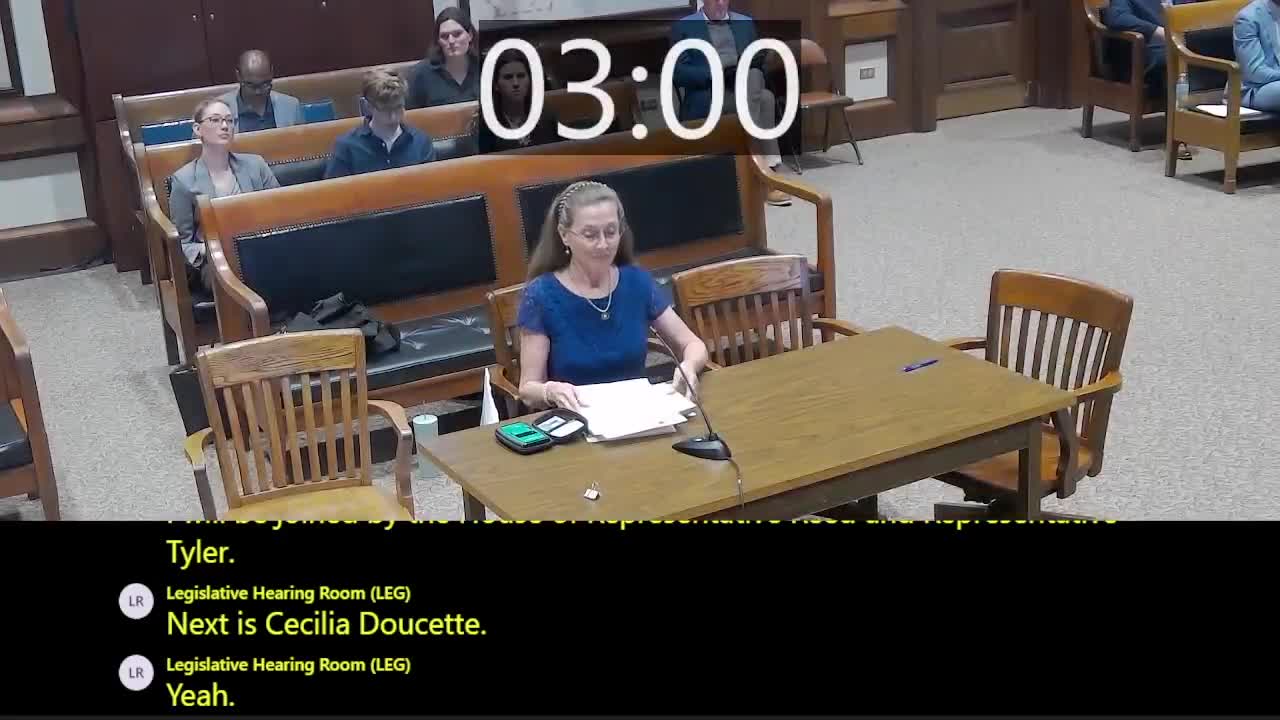
The topic drew some of the most emotional testimony of the hearing as dozens of witnesses described new or worsening health problems they attribute to radio‑frequency emissions from digital meters and asked legislators to pass H.3551 and S.2306. Cecilia Doucette, director of Massachusetts for Safe Technology, told the committee, “it is critical we pass ... no fee smart meter opt out bills with urgency,” and she urged legislators to support an emergency preamble on the bills to protect public health. Several other witnesses — including parents and people who identified themselves as medically sensitive — said they have had to change homes or take costly steps to reduce exposure after meters were installed.
The bills would require utilities to notify residents before swapping analog meters for digital devices, guarantee a non‑transmitting analog meter option, and bar monthly opt‑out charges that testimony described as financially punitive. Jean Lemieux, president of the Massachusetts Association for the Chemically Injured, told the committee that “consumers must be notified” and must have the “right to choose the type of meter ... without added cost.” Testimony repeatedly emphasized that people with chemical sensitivities or electromagnetic hypersensitivity (EHS) rely on low‑RF homes as a medical refuge and that adding a wireless transmitter outside a house can, they say, render the entire dwelling unusable.
Witnesses cited several regulatory and legal threads in arguing for legislative action. Multiple speakers referenced the Department of Public Utilities (DPU) smart‑meter proceedings and the Federal Communications Commission (FCC) exposure guidelines; Helen Walker noted a 2021 decision by the U.S. Court of Appeals for the D.C. Circuit that queried the FCC’s 1996 wireless‑safety recordkeeping and questioned whether the agency had adequate post‑1996 studies. Several witnesses said the DPU’s orders and utilities’ current opt‑out approaches leave some customers without a truly non‑transmitting meter or impose fees that effectively bar access.
Utility billing and opt‑out costs were a frequent concern in testimony. Patricia Burke described rate disparities and cited specific monthly fees in other jurisdictions and in Massachusetts that she labeled “not cost based”: “National Grid’s opt out fee in New York ... $17.71 per month; the Massachusetts opt out fee only for the electric meter ... $26.06 a month; Eversource’s fee ... $34 a month.” Witnesses also said some municipal water utilities proposed even higher charges. Those figures were offered by witnesses as evidence that opt‑out fees are punitive rather than strictly cost‑recovery measures.
Public health arguments were supported primarily by anecdotal case histories in the record. Amelia Coco Gilardi, 17, said she developed medical symptoms she described as electromagnetic sensitivity after continuous exposure to wireless emissions and asked lawmakers to “pass these bills so we can safely and without additional cost or penalty live in our homes.” Courtney Gilardi, testifying as a parent, urged lawmakers to imagine losing home accessibility and said analog meters were swapped without residents’ consent.
Other witnesses asked the legislature to act because they said the FCC has not adequately updated exposure limits and because some foreign jurisdictions require a radiation‑free alternative for people with EHS. Testimony referenced a variety of sources and advocacy organizations; speakers said written testimony included citations and asked the committee to review their supporting materials.
The committee did not take a vote on the smart‑meter bills at the hearing. Members asked several witnesses to provide citations and written studies referenced in testimony. For now, testimony establishes that proponents want (1) mandatory pre‑installation notification, (2) a guaranteed non‑transmitting meter option, and (3) elimination of monthly opt‑out fees, and they framed the policy as both a public‑health and social‑justice issue because of the cost burden on low‑income residents.
Supporters and opponents offered differing views on the appropriate regulatory path. Some witnesses urged immediate legislative action rather than waiting for federal agencies; others — including utility representatives not testifying at length here — have argued that smart meters are needed for grid modernization and that health claims have not been established to regulatory standards.
The hearing record shows strong, sustained testimony from individuals and small advocacy groups pressing the committee to report H.3551 and S.2306 favorably so local installations proceed with notification, alternatives, and no additional cost to vulnerable consumers.