Get Full Government Meeting Transcripts, Videos, & Alerts Forever!
Get email alerts on the Pharmacy Benefit Managers topic
No spam. Unsubscribe anytime.
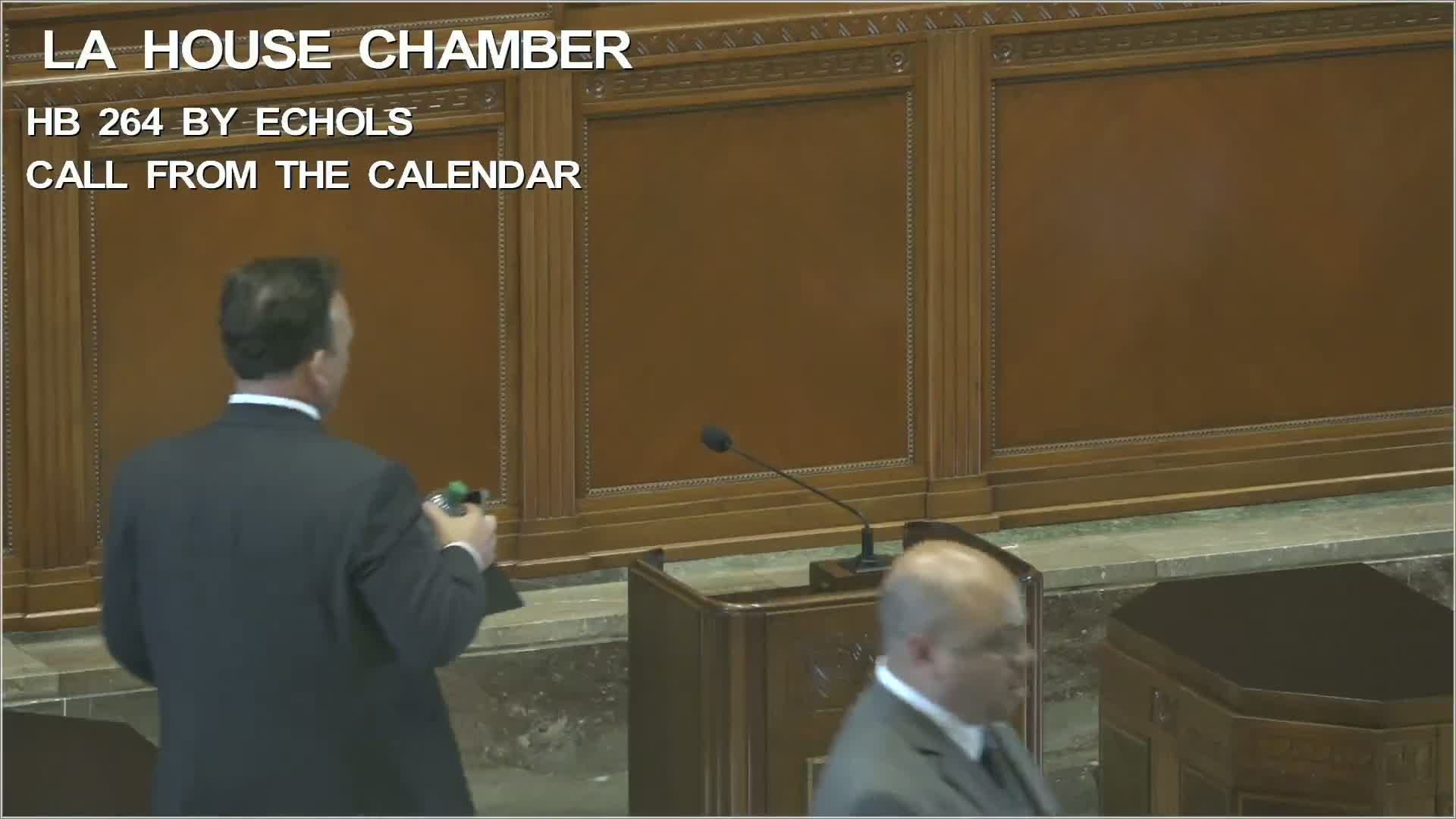
Louisiana House concurs with Senate amendments to HB 264, tightening oversight of pharmacy benefit managers
Summary
The Louisiana House voted to concur with Senate amendments to House Bill 264, a measure that expands oversight of pharmacy benefit managers (PBMs) by increasing transparency on rebates and compensation, granting audit and enforcement powers, creating a violations fund, and adding consumer protections for pharmacies and patients.
Representative Echols, sponsor of House Bill 264, told the Louisiana House on the floor that the measure—now amended by the Senate—adds broader definitions of rebates, increases oversight of pharmacy benefit managers (PBMs), and requires more transparent reporting and enforcement mechanisms.
The bill’s Senate amendments, Echols said, add expanded authority for the insurance commissioner to regulate PBMs, grant audit powers to examine PBM records, create a fund to hold money from enforcement actions and consumer refunds, and require more detailed reporting on PBM compensation and rebate allocations. Echols summarized other provisions as anti-steering protections for pharmacies, elimination of spread pricing, a manufacturer price-increase notification rule requiring 30 days’ written notice for wholesale hikes over 15 percent, and expanded advisory-council authority.
Why it matters: supporters said the package aims to restore money to consumers and protect independent pharmacies that they say have been harmed by PBM practices. Representative Echols said the Senate amendments were negotiated with a broad set of stakeholders and described the changes as strengthening oversight and consumer protections while increasing transparency.
“Today is a giant leap forward,” Echols told members. “The microscope is on. The shadows are shrinking. The games are over.”
Discussion on the House floor included questions from Representatives Hughes, Jordan and Chasse about whether the amendments included a prohibition on PBM ownership of pharmacies, whether the bill contains language to fully delink PBM financial incentives from pharmacy ownership and whether spread pricing is eliminated. Echols said the ownership prohibition from a separate bill passed earlier in the session was not included in HB 264 and that the Senate amendments contain only “broad-based language about a delinking.” He said the amended bill does eliminate spread pricing and contains multiple transparency and allocation requirements intended to return rebates to consumers.
Echols told members he had spoken with Attorney General Liz Murrill about what he described as an outside misinformation campaign tied to a PBM-linked corporation that texted state employees; he said Murrill committed to pursue charges if the outreach violated the state Office of Group Benefits contract or other rules. The bill also includes explicit grant of enforcement authority to the attorney general, Echols said.
The House voted to concur with the Senate amendments. The clerk recorded 100 yays and 0 nays on the concurrence motion; the clerk also announced 67 coauthors on the bill. Several members subsequently asked to correct their recorded votes on various measures during the session (changes to votes on this and other concurrence or conference reports appear elsewhere in the transcript). The House’s concurrence with the Senate amendments to HB 264 was announced on the floor after the recorded vote.
The amended HB 264 now reflects the Senate changes described on the floor and, per the concurrence vote, moves forward in the legislative process as amended. Additional formal enrollment and notification procedures were announced later in the session.