Get Full Government Meeting Transcripts, Videos, & Alerts Forever!
Get email alerts on the Education Pay topic
No spam. Unsubscribe anytime.
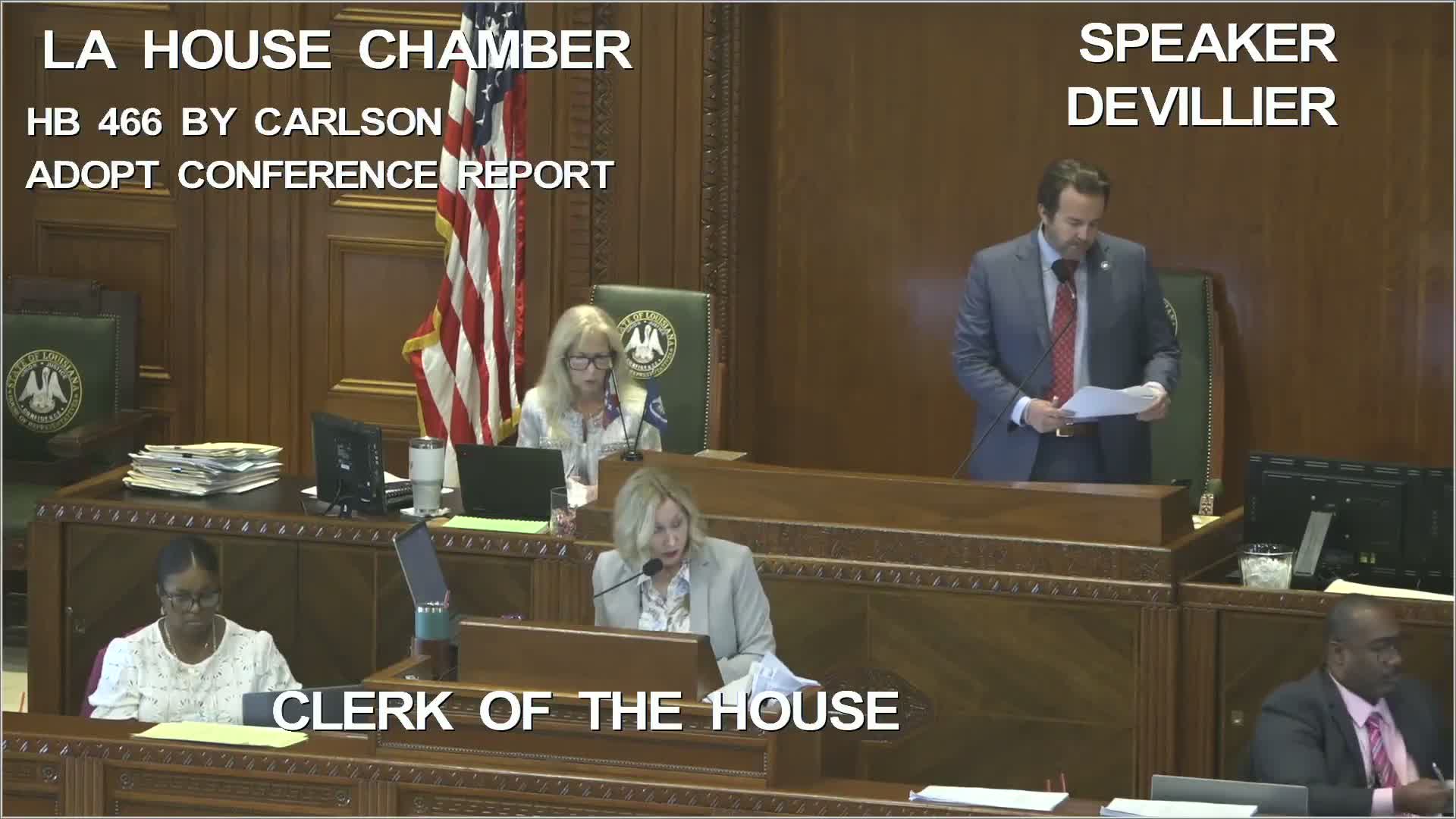
House adopts conference report on teacher pay raise; conference text aligns personnel definition with companion amendment
Summary
The House adopted the conference committee report on House Bill 466 addressing teacher and school employee compensation. Sponsors said the conference language aligned personnel definitions with a companion constitutional amendment and clarified districts’ ability to pay above the minimum; vote was 98‑0.
The Louisiana House adopted the conference committee report for House Bill 466, legislation addressing compensation for teachers and other school employees.
Representative Carlson, sponsor of the bill, told the chamber the conference report clarified the bill’s personnel definitions to align with Representative Emerson’s companion constitutional amendment and added language allowing districts to pay more than the state minimum raise if they choose. Carlson also said the report corrected a drafting issue that had inadvertently affected language in a separate numeracy bill by Representative Weibel.
On the floor, Representative Hilferty asked whether the bill accounted for New Orleans’ fully chartered system and whether charter teachers who do not participate in TRSL were covered. Carlson said the intent was to give every teacher a pay raise and that he believed language in Chairwoman Emerson’s portion addressed coverage for teachers not in TRSL. Representative Hughes publicly commended Carlson and Chairwoman Emerson, noting the bill incorporated numeracy language and calling the measure “a really great bill.”
Motion and vote: Representative Crossley moved final adoption; the clerk announced 98 yays, 0 nays and the conference committee report was adopted.
Why it matters: The conference text seeks to align statutory definitions with a parallel constitutional measure and preserve district flexibility to provide raises above a state minimum, affecting teacher compensation policy across the state.