Get Full Government Meeting Transcripts, Videos, & Alerts Forever!
Get email alerts on the School Nutrition topic
No spam. Unsubscribe anytime.
District food-service director outlines limits on fresh options, staffing and storage in school lunches
Summary
At a board meeting, the district’s food-service director described federal nutrition rules, commodity processing, staffing and storage limits, and local pilots (hydroponic towers, on-site lettuce) the district is pursuing to increase fresh menu options.
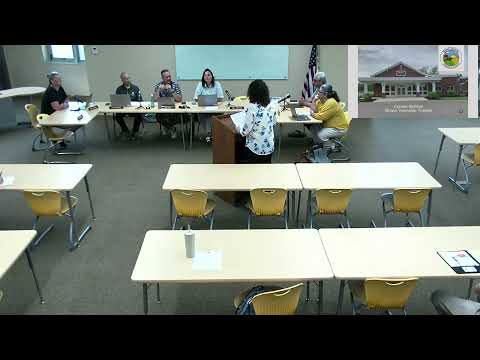
Buckeye Valley board members questioned district food-service staff about menu choices, staffing and options to increase fresh produce in school meals. Stacy, the district’s food-service director, told the board federal nutrition rules and commodity supply chains limit what the district can serve and that staffing, storage and service time further constrain menu changes.
Stacy said the district must meet federal nutrition requirements for calories, sodium and meal components each week; much of the food arrives through USDA commodity programs that are processed into items such as nuggets and pizzas at third-party processors. "We are allocated all these pounds. These pounds of product are sent to these processors," she said, explaining why some menu items are processed products rather than scratch-cooked entrees.
The director told the board Buckeye Valley is financially self-sufficient in food service and must balance offering choices students will take against waste. She said participation has been the highest in the last two years and that the district has introduced more fresh options: chef salads at all buildings and expanded fresh options at the middle and high schools. The elementaries are more challenging, she said, because younger children are less likely to eat unfamiliar vegetables.
Stacy described operational limits: many cooks work six-hour days, kitchen facilities are not currently equipped for large-scale "from-scratch" cooking without retrofits or a separate prep kitchen, and breakfast and lunch schedules require fast turnover. Board members asked whether increased staff hours or retrofits would permit more scratch cooking; Stacy said retrofits and additional staff could help but would require funding and planning.
The director also described local pilot projects: several buildings plan to grow lettuce on-site for sandwiches and salads; the district intends to seek grants for hydroponic herb/produce towers next year; and staff conduct taste tests with students before adding items to menus. She cited other districts’ examples — a nearby program that uses a food truck to support summer service and one that produces thousands of pounds of produce on campus — as models the board could study.
A board member noted the U.S. Dietary Guidelines are due soon and could affect allowable menu items. Stacy said, "There's always room for improvement," but repeated that federal rules, commodity allocations, storage, staffing and student preferences set practical limits.
Why it matters: The discussion links student nutrition, budget constraints, staffing and facilities. Board members directed staff to collect more information on retrofits, staffing hours, and pilot grants to see which changes are feasible within the district’s operational and budget constraints.
No formal vote was taken; the item was a discussion to inform future planning and possible grant applications.