
Holtville amends mutual-aid language to include two nearby prison facilities
Get AI-powered insights, summaries, and transcripts
Sign Up Free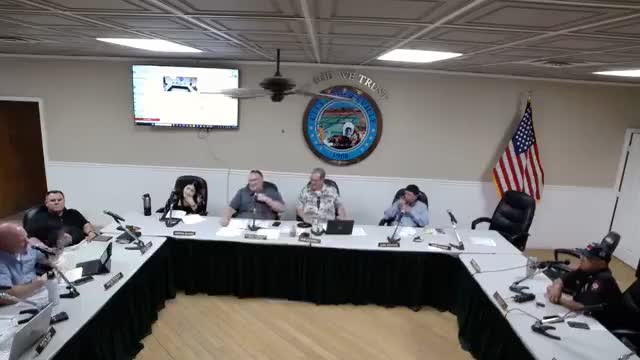
Summary
Council amended a memorandum of understanding to clarify mutual-aid procedures with nearby prison facilities, including advance gate-clearance requirements and escort procedures for emergencies; council approved the amendment by roll call.
Holtville City Council amended a mutual-aid agreement to explicitly include two nearby prison facilities after staff said both prisons requested formal acknowledgment of assistance procedures.
Fire staff told the council both facilities asked the city to sign an MOU stating that if they need assistance the city would respond under set procedures. "We've been asked by both prisons to send an MOU stating that basically if they need assistance, we go over there," the Fire Chief said at the meeting.
Staff described operational requirements tied to responding at prison campuses: in non-emergency circumstances the prisons require advance gate-clearance — staff said names of personnel who will enter the property must be submitted about 10 days in advance — and in emergencies a prison officer may escort city responders onto the campus. Fire staff also explained that unit availability can be an issue: large structure responses sometimes require two engines to achieve pressure in affected areas, and responders may need to leave identification at the gate for access or await an escort.
Councilmember motioned to amend the existing agreement to add both facilities (referred to in the meeting as Calabrio and Sentinel Estate) to the MOU language; the motion passed on roll call: John Munger absent; Mike Pacheco — yes; Marie Anderson — yes; Vanessa Ramirez — yes; Mike Goodsell — yes.
Staff said the amended language mirrors how the city handles mutual-aid with other nearby custody facilities and that the two MOUs are identical except for contract identifiers.
The amendment clarifies operational expectations for future emergency responses; it does not itself obligate the city to change staffing or equipment levels, though staff noted practical constraints (gate clearance, availability of units) that could affect response times.