Get Full Government Meeting Transcripts, Videos, & Alerts Forever!
Get email alerts on the Land Use Development topic
No spam. Unsubscribe anytime.
Fair Oaks Ranch council approves amended development agreement for Post Oak subdivision, sets annexation and PID hearings
Summary
The Fair Oaks Ranch City Council on May 20 approved a resolution amending the development agreement for the 345‑acre Post Oak Subdivision and set public hearings for voluntary annexation and consideration of a Public Improvement District; the amended agreement reduces authorized homes to 278, requires 1‑acre minimum lots, provides city water with on‑site septic wastewater, and transfers groundwater rights to the city.
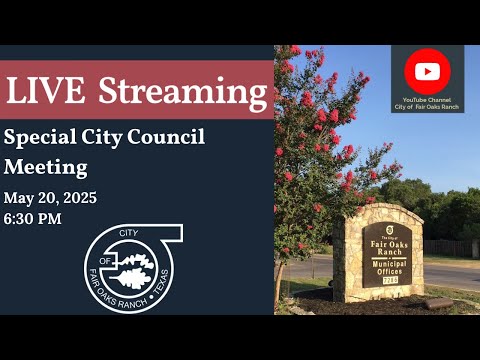
The Fair Oaks Ranch City Council on May 20 approved a resolution amending the development agreement for the 345‑acre project now known as Post Oak Subdivision, reduced the authorized number of homes and set public hearings for voluntary annexation and creation of a Public Improvement District.
The amended agreement trims the project’s footprint and infrastructure obligations: it reduces the number of homes from 635 under the original agreement to 278, requires all lots to be at least 1 acre, provides city water service while requiring on‑site septic wastewater systems, and transfers the property’s groundwater rights to the city, according to city staff presentations.
City staff described the tract as "a 345 acre tract located North and East of Ammon Road in our extraterritorial jurisdiction," and said the amended agreement replaces provisions for a centralized wastewater treatment plant with on‑site septic systems. Scott (city staff) told the council the developer will also convey groundwater rights "permanently to the city" as part of the utility services agreement included in the development agreement.
The amended agreement retains the option for Public Improvement District financing to cover infrastructure on the property; the city emphasized that any PID debt would be borne exclusively by property owners within the development and not by the city or its taxpayers. Scott said the PID, if created, would finance streets, drainage, water extensions and open‑space amenities and that the city would not assume repayment obligations.
The agreement also includes enhanced tree‑preservation measures: a 1:1 replacement ratio for trees 18–24 inches in diameter and a requirement that removals of trees larger than 24 inches must come before council approval. The developer will contribute to improvements on Ammon Road, including softening a curve at the project frontage and transferring a little more than 4 acres of right of way to the city to enable the work.
Caroline McDonald, of the law firm Brown and McDonald representing the developer, said the property is currently held by a BRMK entity and that "Bitterblue is set to close on the property here in July," after which the agreements will be held by Bitterblue Incorporated. The council accepted a voluntary annexation petition from BRMK Boerne Ranch LLC and authorized the city manager to negotiate a municipal services agreement; the council set the required public hearing on annexation for June 19, 2025.
Council members also accepted the developer’s petition to consider creating the Post Oak Public Improvement District and set a public hearing on June 19, 2025, to begin the formal process required by state law. If the PID moves forward after the public hearing(s), the city would adopt a service and assessment plan, levy assessments on the property owners in the district, and the district could issue bonds to finance improvements.
The council approved a professional services reimbursement agreement requiring the developer to deposit funds to cover city costs tied to PID formation and related consultant work. As described to council, the mechanism calls for an initial deposit (example figure discussed: $35,000), monthly invoicing against that deposit, and a requirement that the developer replenish the deposit if it falls below a $10,000 threshold or within 15 days if the account goes negative. Staff said the reimbursement agreement runs concurrent with PID phases and protects the city from out‑of‑pocket exposure while the developer funds formation costs; the agreement does not obligate the city to create a PID or issue bonds.
The council also authorized engaging p3 Works LLC as the proposed PID administrator; p3 Works was described as responsible for drafting the initial service and assessment plan, calculating and allocating annual assessments, coordinating with county tax collectors, managing disclosure requirements for bond issuance, and overseeing annual compliance while bonds remain outstanding. A p3 Works representative told council that their work typically continues for the life of any PID bonds until they are paid off.
Renee Gallegos, president of the Fair Oaks Ranch Homeowners Association, spoke during the public‑comment portion and requested involvement from the HOA in the new development’s parks and trails, saying the HOA manages three parks, a preserve and five trails and would like to “work collaboratively” with the Post Oak developer to support parks and trails and to ensure HOA members’ concerns about non‑resident use are addressed.
The council voted unanimously on the items presented at the meeting. The next substantive steps outlined by staff include the public hearings on June 19 for annexation and for the PID, anticipated additional PID hearings in July, and subsequent planning and zoning and final readings on ordinances anticipated in July and August as the review and approval process continues.
Questions and technical clarifications raised by council included the relationship among the legal entities holding the property (BRMK and Bitterblue), the timing of the developer’s closing, whether arbitration provisions appear in the agreement, how impact fees are assessed (staff said the amounts in the packet are the impact fees in effect now and that impact fees are assessed at plat recording or appropriate time), and the duration and mechanics of the reimbursement agreement and PID administration fees. Staff and the developer answered those questions during the meeting and confirmed the timeline alignment and that some contract language (e.g., specific dates and minor edits) would be filled in or amended before final execution.
The council meeting packet and staff presentation identify this package of actions as the initial set of approvals needed to move the Post Oak project through annexation, PID consideration, and the planning and zoning process; staff recommended approval of the amended development agreement and related procedural steps. The council approved the development‑agreement amendment and authorized staff to proceed with the annexation and PID public‑hearing processes on the schedule presented by staff.
A copy of the amended development agreement and related exhibits, the annexation petition, PID petition, the proposed reimbursement agreement, and the proposed PID administrator agreement were part of the council packet and will be subject to additional public hearings and subsequent ordinance readings before final land‑use approvals and any PID bond issuance.