Get Full Government Meeting Transcripts, Videos, & Alerts Forever!
Get email alerts on the Housing Shelter topic
No spam. Unsubscribe anytime.
Residents split as Family Promise seeks tiny‑home cottages; hearing‑examiner review and more neighborhood meetings expected
Summary
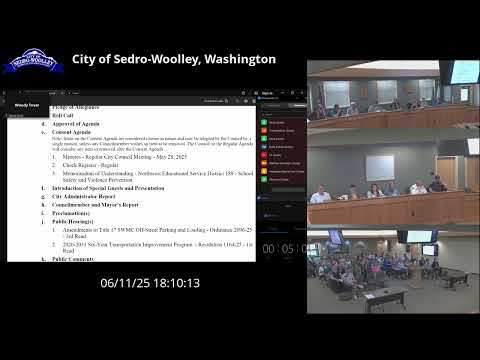
Dozens of residents and local church leaders packed Sedro‑Woolley’s June 11 meeting to debate a proposed Family Promise ‘cottage house’ project; supporters described the nonprofit’s high rehousing rates, while opponents raised concerns about notice, safety and whether nonlocal residents would be placed in the project.
Sedro‑Woolley — A proposed Family Promise project to add cottage‑style tiny homes and transitional units near two churches prompted a crowded, often emotional public comment period on June 11, with residents and clergy offering sharply divided views.
Multiple speakers at the council’s public comment period described Family Promise as a long‑standing local nonprofit that shelters families and helps them transition to stable housing; others warned the proposed project would increase visible problems at a small neighborhood site and questioned notice and screening.
Council members said the council does not decide land‑use approvals for the Family Promise proposal. Councilman Burns and other council members described prior city support for Family Promise — including funding for a house purchase and winter shelter — and said they had reviewed program rules and observed a history of local service. Burns told the council the city has previously provided about $220,000 in local funding to Family Promise and related community services.
“Family Promise offers common sense solutions to the real challenges facing our neighbors,” Burns said during his council report, adding that the organization enforces a code of conduct and serves families with children.
Residents who oppose the project said notice and outreach were inadequate and raised safety concerns for a site adjacent to single‑family houses. Several asked whether the covenant or conditional use would allow non‑family occupants and whether the organization could be required to restrict residents based on prior criminal history — a point Family Promise supporters and city staff said would conflict with state and federal nondiscrimination rules invoked in housing programs. One resident said she had filed a public‑records request seeking police and fire calls tied to the parsonage property.
Family Promise leaders and partner developers told the council their plans are still at a planning stage, with permits, screening protocols and operations yet to be finalized. Adria (Adria Wall), executive director of Family Promise of Skagit Valley, told council members the operator will screen and require program participation rules; Becky Bunke, board president, and several local clergy described the organization’s “trauma‑informed” model and said the cottages are intended for families with children who have already moved through the shelter program.
Several speakers who said they’d used Family Promise’s services described the organization as life‑changing and urged the city and neighbors to support the project. Developer partners said the cottages would be built off‑site and placed to minimize disruption; one partner described the housing as smaller in footprint and environmental impact than seven single‑family homes on the same lot.
What the council said: Mayor and council members repeatedly reminded speakers that the land‑use hearing is handled by the city’s hearing examiner and that there will be additional public meetings as the application moves through the land‑use process. Council members urged neighbors and Family Promise to keep engaging through the formal hearing and the applicant’s public meeting schedule.
What’s next: Family Promise organizers said they intend to continue neighborhood outreach and that a hearing examiner review is the next formal step for land‑use. Council members asked staff to clarify notice procedures and to ensure the hearing examiner schedule and application materials are publicized to nearby residents.