Get Full Government Meeting Transcripts, Videos, & Alerts Forever!
Get email alerts on the Land Use Cannabis topic
No spam. Unsubscribe anytime.
Council affirms Planning Commission denial for cannabis microbusiness zoning change in PD 409
Summary
The council voted 4-1 to direct staff to prepare resolutions denying requested text amendments that would have allowed cannabis microbusinesses in Planned Development (PD) 409 and to amend section 155.32 of the zoning code.
The Apple Valley City Council on Thursday affirmed the Planning Commission's recommendation to deny amendments that would have allowed cannabis microbusinesses within Planned Development (PD) 409 and to change section 155.32 of the city zoning code.
The vote—4 in favor of denial, 1 opposed—directed staff to prepare formal resolutions that list findings supporting the denial. Council members cited the availability of industrially zoned parcels, the fit of industrial zoning for microbusiness operations, and PD 409's adjacency to residential areas as reasons for the decision.
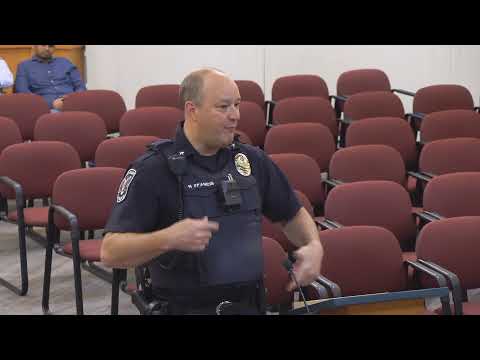
City planner Sydney presented the staff report and draft ordinance language. The proposed text would have allowed cannabis microbusinesses as a conditional use in PDs when the PD specifically authorized the use and would have added cross-reference changes to section 155.32 so PDs could permit microbusinesses where appropriate. The draft included conditions such as indoor-only activities, a required odor mitigation plan, off-street loading standards and limits on on-site retail to PD retail/office floor-area limits.
Attorney Carol Moss, representing the applicant, said the industry is highly regulated and that odor mitigation methods (HVAC and air filtration) and state licensing requirements address many concerns. She also said microbusinesses may operate with multiple endorsements (retail, manufacturing/cultivation and related activities) and noted real-estate and lender constraints that can make finding suitable space difficult.
Council members questioned whether there were adequate alternative industrial parcels in the city, whether a microbusiness could later add endorsements, and whether a retail-only model would differ from a microbusiness retail endorsement. Sydney explained that existing industrial districts (BPI, I-1, I-2 and industrial-guided PD parcels) are zoned to allow microbusinesses and that the Planning Commission's review found about 14 parcels not within buffer zones that appeared to be industrially guided and available for cannabis microbusiness use; staff cautioned those parcels may not be leasable or otherwise suitable.
Council Member Grandahl moved to affirm the Planning Commission's denial of the PD 409 amendment and to direct staff to prepare a resolution of denial listing reasons: (1) existing industrial zoning provides adequate locations; (2) industrial zones are best suited to microbusiness operations; (3) PD 409 is adjacent to residential properties; and (4) allowing microbusinesses in PD 409 "could cause disturbances in the area and nearby neighborhoods." The motion carried 4-1. Council Member Bridal then moved a similar motion to deny the requested amendment to section 155.32; that motion also passed 4-1.
Staff will draft the denial resolutions for council review; the city clerk noted the council must act by the July 10 meeting if it wanted to take different action.