
Mariner staff and community urge Mukilteo School District to address safety, behavior and morale at high school
Get AI-powered insights, summaries, and transcripts
Sign Up Free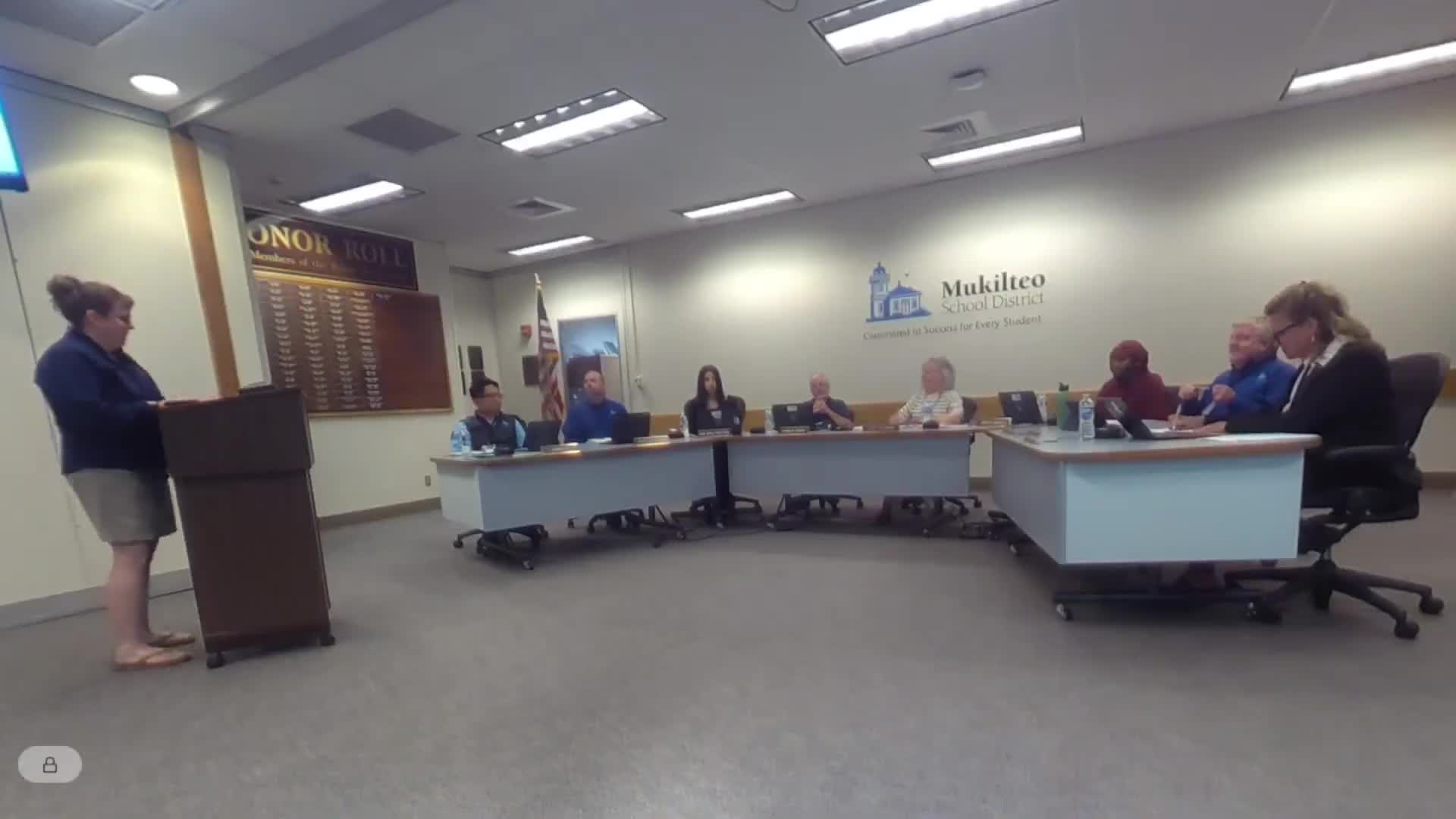
Summary
Multiple Mariner High School teachers, support staff and community members told the Mukilteo School District board that student behavior, cell phone use, vaping and perceived leadership failures have eroded staff morale and school safety, and asked the board for outside help and clearer enforcement of rules.
Dozens of Mariner High School staff and community members told the Mukilteo School District Board of Directors on June 10 that problems with student behavior, unchecked cell phone use, vaping and inconsistent discipline have left teachers and staff feeling unsafe and undermined educational goals.
The speakers said the issues are widespread and persistent and asked the board to provide clearer expectations, stronger enforcement and outside assistance. "Cell phone use is an elephant in the room," said Stephanie Wilson, librarian at Mariner, during the public comment period. "Students are connected to their phones."
The comments followed other public remarks about specific safety incidents and morale. Julie Anderson, a campus security staff member, said she has been physically attacked and described repeated incidents of students leaving campus, vaping in bathrooms and multiple false fire alarms. "Our fire alarm has been activated for neither a false pull or vaping in the bathroom at least 37 times," Anderson said. Chris Gonzales, a Mariner teacher, said LGBTQ+ students and staff have not always been adequately supported after incidents he described as targeted and harmful.
Speakers described consistent themes: staff report being yelled at and threatened when enforcing rules; many staff members believe consequences for disruptive behavior are inconsistent or absent; students reportedly roam hallways, skip classes and use phones and AirPods in ways that make instruction difficult. "We are at a breaking point that our school is not safe and cell phones are a high contributing factor to the downfall of our academic and emotional successes at this time," Wilson said.
Several speakers also asked the board for outside intervention or mediation. Janella Regal, a Mariner teacher, said progress has been made under district leadership but that trust between some school leaders and staff has eroded and needs repair. "We need something outside of ourselves in this moment," she said.
Speakers cited survey results and staff experience as evidence of deteriorating morale. One commenter referenced a climate survey finding that staff felt discipline policies were inadequate; multiple speakers described rising absenteeism among teachers and increased burnout. Colton Keebler, a math teacher and safety-team member, criticized recent operational decisions he said prioritized convenience over safety, including involving students in evacuation roles without collaborative planning.
The board took public comments and said it would respond in writing. No board action or formal directive addressing the Mariner statements was made during the meeting agenda portion that followed the public comment period.
The board chair reminded speakers that the district cannot respond to comments in the public record that would identify or compromise the privacy of students or staff. Board members moved on to other agenda items after concluding public comment.
District officials did not present an immediate plan on the record at the June 10 meeting to address the specific concerns raised by Mariner staff. The board said it would take comments seriously and reply as appropriate in writing.