Get Full Government Meeting Transcripts, Videos, & Alerts Forever!
Get email alerts on the Student Housing University Accountability topic
No spam. Unsubscribe anytime.
Council committee says university reporting yields data but urges stronger use and enforcement as neighborhoods feel pressure
Summary
At a June 12 Boston City Council hearing, city officials, former councilors and neighborhood advocates agreed the University Accountability Ordinance produces valuable student-housing data but said the city and institutions must use it more aggressively to address off‑campus student impacts, enforcement gaps and an estimated 24,255‑bed shortfall.
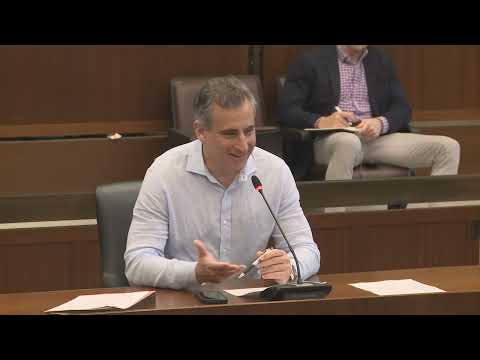
On June 12, 2025, the Boston City Council Committee on Housing and Community Development held a hearing (docket 0474) to assess the efficacy of the City of Boston Municipal Code's University Accountability Ordinance. Committee Chair Councilor Liz Braden opened the session, which featured testimony from former Councilor Mike Ross (author of the original 2004 ordinance), City Clerk staff, Mayor’s Office of Housing analysts and community housing advocates.
The committee heard that the ordinance — first adopted in 2004 and amended several times (notably in 2014 and streamlined in 2016) — requires institutions to report student housing data to the city. "The hearing is not about pointing fingers. It's just about accountability and balance," Councilor Sharon Durkin said in opening remarks. Several witnesses praised the ordinance for producing the data the city now uses to map student housing concentrations and long‑term trends.
Why it matters: Boston's universities and colleges are a major driver of local housing demand. Panelists said timely, accurate reporting is essential to shape planning, enforcement and institutional master plans. Mario Turan, research analyst for the Mayor's Office of Housing, summarized the most recent findings: enrollment in Boston‑based programs has risen since 2013; about 162,000 students are enrolled across Boston‑based institutions; roughly 41,000 students are housed in dormitories, about 39,000 students live off campus "not at home" and those off‑campus students occupy some 17,000 residential properties across the city. After accounting for dorms in construction, board‑approved projects and pipeline beds, MOH estimates about 24,255 full‑time undergraduates currently lack dorm placements that would keep them off the private rental market.
Community advocates described consequences where students concentrate. Patricia Flaherty, executive director of Mission Hill Neighborhood Housing Services, told the committee that long‑term residents have been displaced as investors buy multi‑family homes and convert them to student rentals. "Living off campus should be a privilege," Flaherty said, arguing the city must pair the ordinance's data with stronger enforcement and policy changes so neighborhoods retain families, seniors and naturally occurring affordable housing. Richard Giordano of Fenway Community Development Corporation said bluntly, "student rentals drive the market and student rentals displace long term residents," and cited blocks where investor purchases and conversions rapidly changed ownership and rent rolls.
Former Councilor Mike Ross, who authored the ordinance, and City Clerk staff said the reporting system has improved institutional compliance and created a data baseline that did not previously exist. Ross emphasized the point that policy must follow data: "It all starts with data, and that is why the university accountability ordinance matters." Clerk staff said most institutions file reports each year and the clerk's office forwards data to the Mayor's Office of Housing for analysis, but they acknowledged variation in address‑level reporting and turnover at school offices can create gaps.
Enforcement and privacy tension: Several councilors and panelists pressed how the data is used by enforcement agencies. Advocates urged Inspectional Services Department (ISD) and Boston Police to use the address data to enforce the city's occupancy limits (the local "no‑more‑than‑4" policy was discussed repeatedly) and to act on repeat problem properties. Mario Turan said MOH geocodes reported addresses and can join student counts to parcel records, enabling ISD to receive parcel‑level lists if requested. Former councilors and advocates cautioned against broad public disclosure of student unit addresses for privacy and legal reasons, while saying universities themselves should be required to know where their students live so they can act when off‑campus conduct harms neighborhoods.
Planning and permits: Witnesses recommended faster, targeted answers on capacity by matching hotspots from the annual report with institutional master plans (IMPs) and Article 80/permit reviews. Panelists proposed options such as incentivizing universities to build more on‑campus beds (through public incentives, PILOT adjustments or permitting streamlining), encouraging for‑profit dorm developers to partner with universities, and establishing clearer minimum on‑campus‑bed expectations during IMP approvals. Several speakers argued the city should hold annual hearings on the report and use the findings to set measurable, enforceable targets within institutional master planning.
Administration next steps: Turan told the committee the 2024 student housing trends report was expected to be published imminently. Councilors said they will pursue working sessions with the administration, ISD, BPDA planning staff and community groups to translate data into enforceable policy, to explore changes to the reporting timeline and to push for improved address‑level data quality from some institutions.
The hearing produced no formal votes. Chair Braden said the committee will continue the conversation and convene follow‑up sessions to refine policy levers and enforcement options.