Get Full Government Meeting Transcripts, Videos, & Alerts Forever!
Get email alerts on the Labor Relations topic
No spam. Unsubscribe anytime.
Teachers, union and community press Board as negotiations move to impasse over safety, class size and pay
Summary
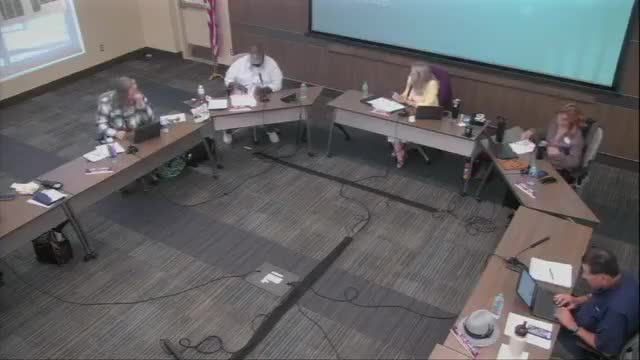
Hundreds of residents, educators and Mesa Valley Education Association members used public comment to press the Board of Education to resolve an impasse in negotiations by adopting enforceable contract language on safety, class size and pay.
Hundreds of residents, educators and Mesa Valley Education Association (MVEA) members used the Board of Education’s public‑comment period to press for contract language on student and staff safety, enforceable class‑size limits and the restoration of step increases in the licensed salary schedule. Dozens spoke; many said the district and board had not been negotiating with educators in person and that the district initiated an impasse.
Carrie Hicks, a second‑grade teacher, told the board she supported MVEA’s negotiated language on safety and asked the board to “honor covered employees' steps this year,” adding that a one‑time payment would make teachers “worse off” than maintaining step movement. Hicks said the step increases are not a bonus but part of the salary structure that affects long‑term pay and retirement.
Multiple speakers described classroom safety and behavior issues as an immediate concern. Laurel Heimstra, an educator and grandparent, said two of her grandchildren were pulled out of school “because of events that happened in their classrooms and in their hallways,” and asked the board to “come to the table, help us solve this, make our schools safe.” Several school psychologists and special‑services providers asked the board to support recruitment and retention with market‑aligned pay; Kim Leonard, a district school psychologist preparing to retire, requested a stipend and argued that psychologists are licensed professionals whose pay has fallen behind similar special‑service providers.
MVEA president Mamie Sue Javanick addressed the board and said the association and its membership brought model contract language drawn from other districts and legal review; she said the district declined to engage on the language and that the district’s decision to initiate impasse led to mediation. MVEA speakers said the impasse was the first in decades and asserted that the board’s absence from negotiations contributed to the breakdown in trust.
District response and board remarks
Board members and the superintendent said some elements of the disagreement are fiscal and legal in nature and noted the limits of local authority. Dr. Hill (superintendent) and district staff defended using legal counsel and steps taken to balance district finances. Board members said they had attended committee meetings and district schools; directors also stressed that the board’s options are constrained by state funding, statutes and legal requirements.
What was asked and what remains unresolved
Speakers and the bargaining team sought: enforceable safety language that would allow relevant staff to receive student behavioral histories confidentially (the proposal referenced FERPA safeguards), concrete classroom size caps accompanied by remedies when caps are exceeded, restoration of step movement in the licensed schedule for 2025–26 rather than a one‑time payment, and targeted stipends to retain in‑person school psychologists.
The board meeting did not record a final resolution to the negotiation impasse. Several speakers urged the board to return to face‑to‑face negotiations in good faith and to consider the binding contract language the MVEA presented.