Get Full Government Meeting Transcripts, Videos, & Alerts Forever!
Get email alerts on the Community Engagement topic
No spam. Unsubscribe anytime.
HRC plans hybrid community forums on immigration, mental health and housing; schedules 'Know Your Rights' immigration presentation
Summary
Commissioners agreed to pursue three hybrid community meetings beginning with immigration 'Know Your Rights' outreach, to be offered in multiple languages and coordinated through trusted community partners including faith organizations and schools.
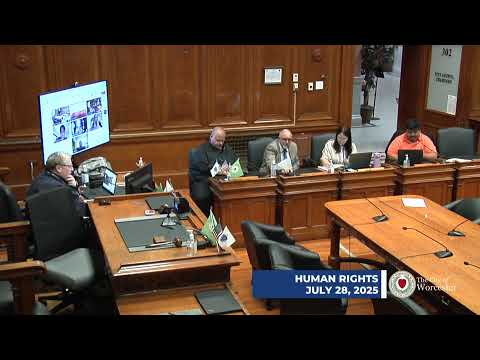
The Worcester Human Rights Commission discussed July 26 plans to hold three hybrid community outreach sessions this year, beginning with immigration and immigrant-rights outreach. The commission intends the sessions to be additional public-facing events — not replacements for monthly meetings — designed to reach residents who may not attend standard commission meetings.
The commission said immigration was a priority topic because many immigrants report fear of enforcement actions and lack of access to information about their rights. Vice Chair Randy Feldman reported that immigration attorney Susan Church, who has given “know your rights” presentations in the past, will present a virtual briefing for the commission. Commissioners emphasized offering sessions in Spanish and Portuguese and suggested working with faith leaders, schools and community organizations to build trust and reach community members who rely on nontraditional communications channels (for example WhatsApp) or who are reluctant to attend publicly labeled immigration events.
Other planned topics: Commissioners suggested the remaining two sessions could focus on priority pillars the commission identified — mental health and housing/homelessness — or adapt after the first session depending on community demand. Commissioners discussed hybrid delivery (in-person plus virtual access) to provide both a safe, private virtual option and an in-person format for people who prefer face-to-face gatherings.
Why this matters: Commissioners said hybrid town-hall sessions can create safer, more accessible ways to deliver legal and safety information to immigrants, to identify gaps in services, and to surface community-driven solutions on housing, homelessness and mental-health access.
Next steps: The commission will work with staff and the chief equity officer to refine logistics, identify partner sites (libraries, faith institutions, senior centers), and request communication support from the city where feasible. Commissioners recommended translating promotional materials and working with trusted community organizations to publicize the sessions.
Attribution: Vice Chair Randy Feldman described immigration outreach plans and noted Susan Church as a planned presenter. Commissioners Father Jonathan Slavinskas and others emphasized using faith-based and grassroots outreach to reach residents who might otherwise not participate.
Ending: Staff will return with a proposal for topics, a timeline and a communications approach; the first immigration presentation will be scheduled as a virtual session with supplemental in-person partner events recommended by commissioners.