
Yakima County commissioners call for public meeting on proposed Zillah bridge replacement
Get AI-powered insights, summaries, and transcripts
Subscribe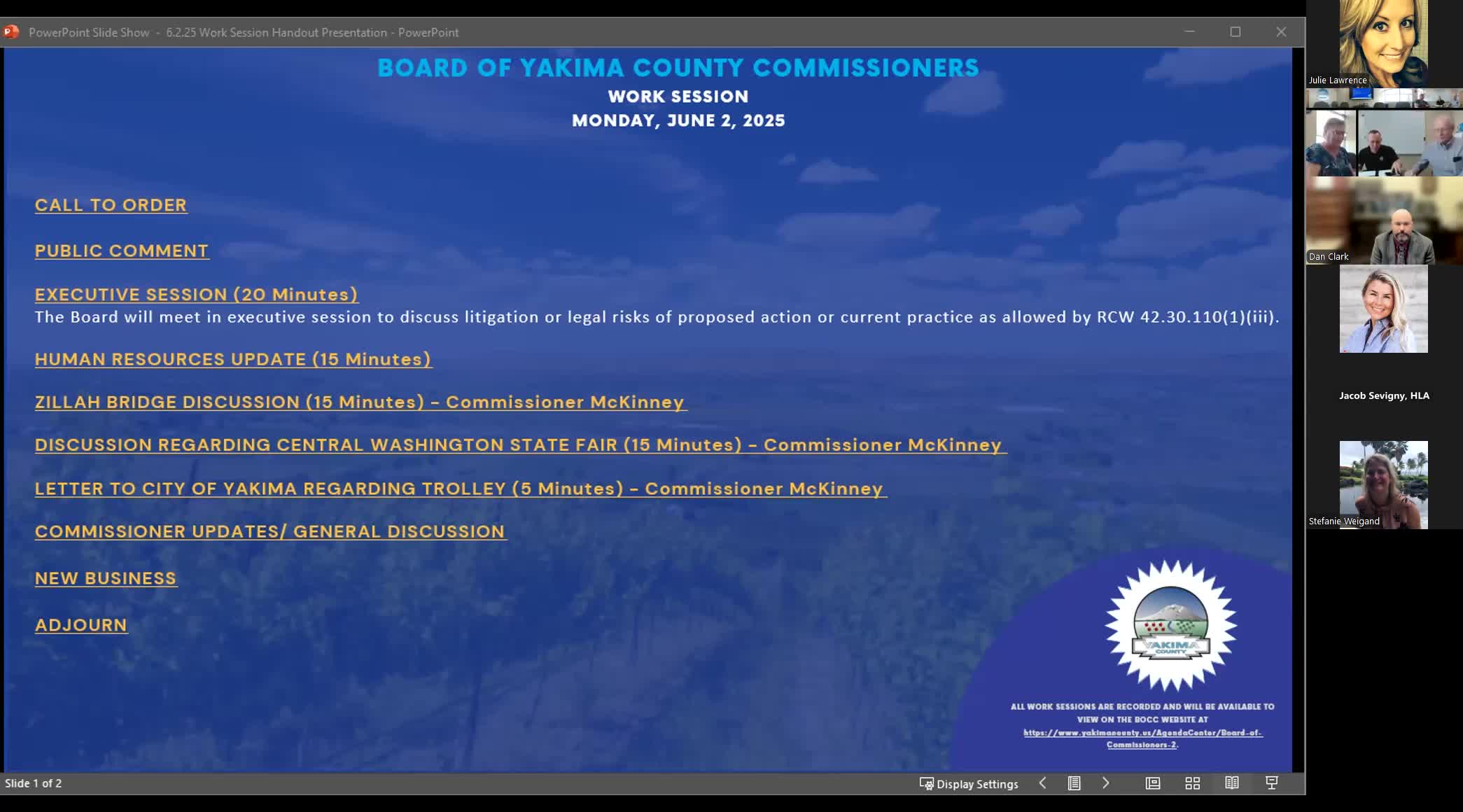
Summary
County commissioners agreed to hold a special public meeting in Zillah after residents in unincorporated Yakima County raised concerns about a state-funded project that would replace a long-closed vehicle bridge and potentially reopen it to traffic.
Yakima County commissioners agreed Monday to hold a special meeting in the City of Zillah to hear residents’ concerns about a federally and state-funded project to replace an aging bridge that currently carries only pedestrian traffic.
The commissioners’ decision came after residents in unincorporated Yakima County expressed opposition to plans that would replace an old pony-truss bridge and allow vehicles to cross a County-owned bridge the City of Zillah has maintained under a prior agreement. Matt Petrushevitz, a county roads official who has been involved with the project, told the board that “an agreement that was executed by both the city council and the county commissioners” assigned maintenance responsibility to the city while the structure served as a pedestrian crossing.
The project scored highly in state funding rounds and the city secured roughly $3.5 million for replacement, a sum county speakers cited in the discussion. Commissioners said some residents’ objections focus on the bridge design and its impacts on private property at the county side of the river, not only the change from pedestrian to vehicular use. Commissioners also raised concerns that the alignment and design as proposed could impose larger on-site impacts than a different alignment would have.
Commissioners discussed legal and jurisdictional nuances: the bridge is a county asset even though the city has been responsible for its upkeep under an earlier agreement. Commissioners said the county could direct the city not to proceed, and at minimum the board should hold a local meeting so constituents on both sides of the river can be heard. Commissioner Lindy agreed to work with Zillah city officials to set up a joint or special meeting in Zillah; County corporate counsel Dan Clark was asked to advise on how that meeting would be structured.
The board did not take a formal vote on the project during the work session. Instead, it directed staff and elected officials to arrange a public meeting in Zillah and to present both city and unincorporated-resident perspectives before any formal county position is adopted.
The next steps identified by the board are a locally held special meeting to collect public comment and a legal review by county counsel of the county’s options and authority regarding project approval or denial.