Get Full Government Meeting Transcripts, Videos, & Alerts Forever!
Get email alerts on the Historic Sites topic
No spam. Unsubscribe anytime.
Council approves Witch House, Pioneer Village and Charter Street Cemetery budgets; staff outline AR pilot and cemetery repairs
Summary
The Salem City Council committee recommended FY26 budgets for three historic sites and heard plans for small-scale augmented‑reality visitor features, continued use of Charter Street funds for repairs and a cemetery burial database.
The Salem City Council Committee on Administration and Finance recommended approval Tuesday of fiscal 2026 budgets for the Witch House, Pioneer Village and Charter Street Cemetery, approving combined departmental totals of $361,100 for the Witch House, $26,980 for Pioneer Village and $218,718 for Charter Street Cemetery.
The approvals, each moved by Councilor Stott and seconded by Councilor Harvey, carried by the voice vote recorded as “four hands plus my own,” indicating unanimous committee support in the room. The votes came during a committee hearing held June 9 in the council chamber on the proposed FY26 operating and capital plans.
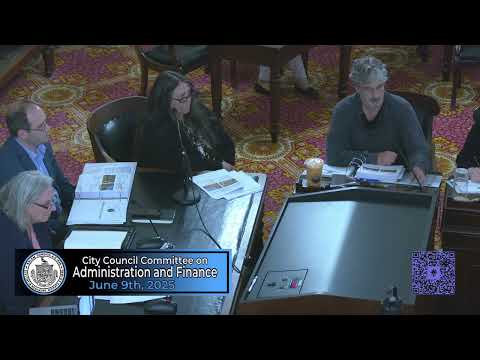
Elizabeth Peterson, manager for the Witch House, Pioneer Village and Charter Street Cemetery, told the committee that the weekday budget requests were small and mainly sought modest increases to part‑time and seasonal wages. She also described an augmented‑reality pilot intended to “enhance the visitors’ experience” at the Witch House and Charter Street Cemetery by providing time‑limited, remote or on‑site AR content to supplement timed tickets and classroom access. “We’re taking it just in small steps just to test out ideas,” Peterson said.
Peterson and councilors also described work funded through the Charter Street account, including tree trimming, path improvements, runoff control and storage for headstones. Peterson credited a staff member, Carl Schultz, for completing a database of burials that the department has posted online to help descendants and researchers locate graves. The database and fee income from visitors have contributed to the Charter Street fund balance used for those repairs; Peterson reported the account has built up and is now being used for repairs and projects.
Councilors asked about visitation data and crowd management at the Witch House. Peterson said the department moved earlier in the season to Eventbrite time‑ticketing after local congestion and safety complaints, limiting entries to small groups at a time to reduce crowding and damage. Peterson reported an in‑house count of 44,462 visitors as of May, and said a figure shown elsewhere in materials (roughly $1,016,901) was tied to visitor‑related totals; she characterized these as program estimates that vary by season and noted the ticketing policy intentionally controls attendance.
Council members pressed on expansion of AR to other historic cemeteries, preservation needs at Broad Street Cemetery and potential coordination with neighboring sites such as the Pickering House. Peterson said Charter Street work was intended to “embrace all of them” over time but that repairs and use of the dedicated fund had only recently reached the point where expansion could be considered.
The committee voting record shows motions to recommend each site budget to the full council; the committee’s voice tallies were recorded as carried. The committee did not adopt additional new policy or capital authorizations beyond the line‑item recommendations discussed at the hearing.
Looking forward, Peterson said staff will continue testing AR components and will coordinate with volunteers and friends groups for cemetery preservation and outreach.