Get Full Government Meeting Transcripts, Videos, & Alerts Forever!
Get email alerts on the Food Access topic
No spam. Unsubscribe anytime.
Council asks manager to study municipal grocery options after residents cite food access gaps
Summary
Following public testimony about grocery loss and food insecurity, the council asked the city manager to work with community partners and state and federal representatives to study creative grocery solutions, including public–private, cooperative or nonprofit models.
WORCESTER, Mass. — After residents described grocery deserts, long transit trips to full-service supermarkets and missed meals, the Worcester City Council asked the city manager to work with community partners and state and federal lawmakers to study options for increasing equitable access to affordable groceries.
Councilor João Paciello (district) amended his original order to focus on feasibility and partnerships; he and several speakers said the goal is to spur practical options — co-ops, community-run markets, public–private hybrids or partnerships with existing local food hubs — rather than to require the city to operate a supermarket.
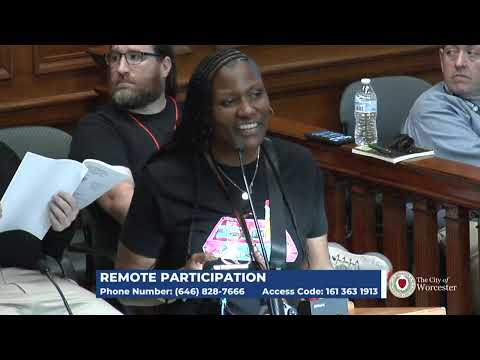
Mike Gaine, economic development and public policy associate at the Worcester Regional Chamber of Commerce, testified against a municipally run grocery, saying it could unfairly compete with existing private grocers; he urged the council to consider community partners instead. “As a municipally run grocery store, while it is a well‑intentioned idea, it could unintentionally compete with private businesses,” he said.
Other residents described recent closures, including a Stop & Shop on Lincoln Street, and urged the council to be creative. Seth Ward, a Lincoln Village resident, said the neighborhood now lacks a full-service grocer and called for options that would bring year-round access to fresh produce and local farm products.
The council ordered the city manager to consult with community groups (Worcester County Food Bank, Worcester Regional Food Hub, Regional Environmental Council and others), the state and federal delegations and local developers, then report back with recommended models and next steps. Councilors asked the manager to prioritize proposals that would not displace small local grocers, that would be financially sustainable and that would improve food access in identified food deserts.
Next steps: city staff will prepare a feasibility report and outline next steps, including potential funding sources and examples of co-op or municipal-market models used elsewhere. The council did not authorize any city-run grocery at this meeting.