Get Full Government Meeting Transcripts, Videos, & Alerts Forever!
Get email alerts on the Housing Policy topic
No spam. Unsubscribe anytime.
Committee backs FY2026–2030 housing production plan, adds strategies on vacancies and monitoring
Summary
The committee recommended adoption of the city’s FY2026–2030 Housing Production Plan, endorsing planning board suggested revisions and three added strategies: analyze vacant rental housing using the city property data platform, strengthen affordable housing monitoring and increase referrals to community partners to prevent displacement.
The Worcester City Standing Committee on Economic Development voted to endorse the city’s FY2026–2030 Housing Production Plan, as amended based on planning board recommendations, and sent the plan forward for adoption by the full City Council.
Peter Dunn, chief development officer, said the planning board reviewed a prior draft and recommended edits that the administration incorporated. The board’s changes included reframing a strategy about planning staff capacity from a study to an explicit increase in staffing to boost implementation; Dunn noted the FY2026 budget has added a long‑range planning position dedicated to that work.
The planning board also proposed three new strategies that the committee accepted: (1) conduct an analysis of vacant rental housing using the city’s new property data platform (Ptolemy Building Blocks) to identify vacancy rates and geographic concentration and guide policy; (2) strengthen the city’s capacity to monitor deed‑restricted affordable units and provide technical support to smaller owners to maintain compliance; and (3) enhance referrals to community partners such as the Central West Justice Center for housing stability and fair housing services to prevent displacement.
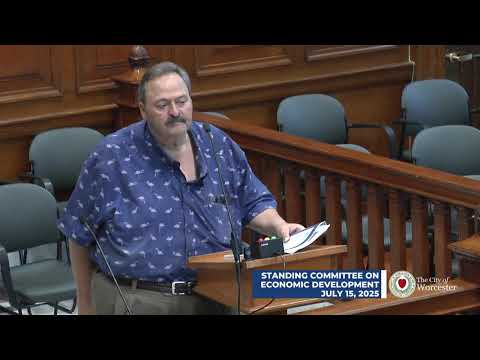
Dunn and Ms. Tozer (housing staff) explained the plan resulted from the city’s Housing Choice initiative grant and that adoption helps the city be competitive for state and federal housing funds. Members of the public and advocacy organizations spoke in favor. Will Talbot of Strong Towns Worcester supported the plan’s “build a better triple‑decker” competition and a recommended menu of pre‑approved housing types to encourage incremental development. Other residents urged aggressive use of tools such as the affordable housing trust fund, inclusionary zoning and tax‑incentive programs to preserve affordability.
Committee members questioned map details and school overlays; staff explained data layers and the property platform that aggregates inspectional services, fire and police data. The committee approved the motion to adopt the plan as recommended by staff and the planning board. Roll call recorded: Councilor Pacillo — yes; Councilor Toomey — yes; Chairperson Councilor Meryl Carlson — yes.
Dunn said the housing production plan estimates the city needs roughly 8,000 new units by 2034 and that adopting the plan and the added strategies will help target resources and make Worcester more competitive for grants and programs offered to Housing Choice communities.