Get Full Government Meeting Transcripts, Videos, & Alerts Forever!
Get email alerts on the Budget Hb2 topic
No spam. Unsubscribe anytime.
Mercedes ISD CFO lays out 2025–26 budget assumptions, says House Bill 2 raises teacher pay while district still projects a ~$993,700 deficit
Summary
Sylvia Garza, Mercedes ISD chief financial officer, presented the district’s 2025–26 budget assumptions and said recently passed House Bill 2 will increase state funding for teacher raises and other allotments; the district presently models a nearly $993,698 deficit under current assumptions.
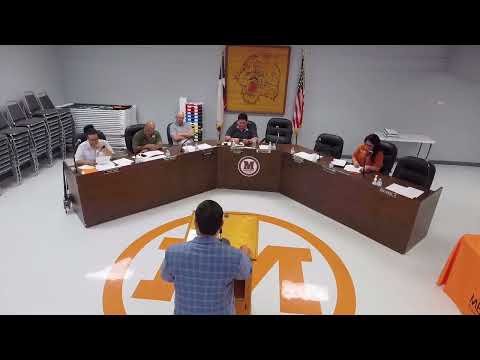
Sylvia Garza, chief financial officer for Mercedes Independent School District, told the board during a special workshop that House Bill 2 will bring new state funding and that the district is modeling multiple compensation scenarios while preparing a conservative 2025–26 budget.
Why it matters: HB2 changes funding formulas and adds allotments the district expects to use for sustained teacher raises and other supports; at the same time the district is planning conservatively and currently projects a general-fund deficit of $993,698 for 2025–26 under the assumptions presented.
Garza summarized HB2 and its local implications: she said the bill was passed and signed by Gov. Greg Abbott on June 4, 2025, and that it includes billions in additional school funding, increases to the basic allotment (the presentation cited an increase in the basic allotment), new or adjusted allotments for teacher compensation and for special education, and changes that fold the school safety allotment into Foundation School Program funding. “It’s been a busy legislative session. House Bill 2 … was passed and signed by Governor Abbott on June the fourth of 2025,” Garza said.
Garza presented three pay models to implement parts of HB2 locally: the district’s modeling includes tiered increases that would provide larger raises for teachers with five or more years’ experience (the district has 209 teachers in that category), mid-range increases for teachers with three to four years and smaller increases for teachers with zero to two years depending on the model chosen. She told trustees the district’s preliminary calculation used an ADA assumption of 3,841 and a projected fall enrollment of 4,01 at 91% attendance to estimate Foundation School Program revenue near $39,401,042.
Key figures Garza reported or modeled for 2025–26 included: projected local M&O property-tax collections of about $6,069,002.34 and interest & sinking (I&S) of about $2,622,003.66; a net taxable value of about $831,006,085 (Hidalgo County preliminary figures); an estimated federal revenue decrease of about $177,006 attributed to ADA fluctuations; and a projected general-fund deficit of $993,698 under the presented assumptions.
Garza said special-education funding changes in HB2 move the allotment to a services-based calculation and that the law provides a $1,000 reimbursement for special-education evaluations to be implemented in 2025–26. She also said House and Senate negotiations altered timing for some changes and that some Senate provisions would not be implemented until 2026–27.
On personnel and operations, Garza said the district has reduced staffing (from 719 in November to 659 in June, per her slide) and plans 0‑based budgeting for many departments. She also said the budget includes conservative assumptions on insurance, retirement contributions (TRS employer rate at 8.252 percent for 2025–26 in her model), and that the district will issue RFPs for workers’ compensation.
Board members and administrators praised the combination of local decisions and state action: one trustee noted the large share of experienced teachers (209 of 288 employees with five or more years) and tied that to retention and potential value of HB2 increases. Trustees asked clarifying questions about the new support‑staff retention allotment (reported in the models as $45 per ADA for non‑teacher, non‑administrative staff), how new allotments will be implemented, and whether proposed raises are sustained increases (Garza answered that the compensation tiers are sustained increases, not one‑time stipends).
Garza said staff would continue to refine the district’s numbers using the TEA summary‑of‑finance template once more precise figures were available and that the district will receive certified property values in July and must adopt a tax rate no later than late September.
No formal budget adoption or vote occurred at the workshop; trustees received the presentation and asked staff to continue modeling and to bring finalized figures to future agenda items.