Get Full Government Meeting Transcripts, Videos, & Alerts Forever!
Get email alerts on the School Climate Survey topic
No spam. Unsubscribe anytime.
Harrison County Schools review survey; communication, consistency and recognition emerge as priorities
Summary
At a special work session, district leaders reviewed survey and focus‑group results showing generally favorable perceptions of teaching and safety but identifying gaps in communication, discipline transparency and equity of opportunities. Consultants recommended a communication audit, public summaries and follow‑up planning.
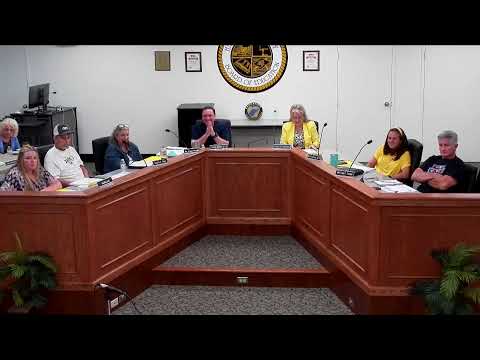
HARRISON COUNTY — At a special work session, Harrison County Schools officials reviewed the results of districtwide surveys and focus groups and identified communication consistency, discipline transparency and staff recognition as near‑term priorities.
Consultant Jennifer, who presented the March survey and focus‑group analysis, told the board the data showed generally favorable ratings for teaching quality and safety alongside pockets of concern. "We had almost 30% participation from parents, which is great," Jennifer said, summarizing response rates and turnout for the focus groups. Board members and staff discussed next steps including a communication audit, a curated public summary, and additional work sessions to convert the findings into action.
The survey reached parents, staff and students in grades 6–12. Jennifer reported participation of about 30% for parents, 39% for staff and 16% for students; the focus groups were smaller, with two parent sessions, one staff session and one high‑school student session. The district scored strongly on some measures: 78% of parents, 89% of campus‑based staff and 67% of students rated the quality of education as excellent or good. Perceptions of safety were also relatively high: 87% of parents, 86% of campus staff and 72% of students said they felt the school was safe.
Despite those strengths, the presenter highlighted consistent gaps found in other districts as well. Students and parents reported unequal access to advanced courses and extracurriculars across high schools. Responses indicated that translating classroom learning into real‑world examples scored low: Jennifer said only about 53% of parents and 48% of students agreed that schoolwork was tied to real‑life examples. Open‑ended feedback raised concerns about inconsistent discipline practices and perceived favoritism at some buildings; Jennifer suggested clearer, more transparent discipline pathways while noting limits imposed by FERPA on discussing individual cases.
On staff engagement, the consultant described a composite engagement classification built from nine weighted questions: 21% of employees were classified as highly engaged, 48% as engaged and 31% as less engaged (an average score below 3.5 on the survey scale). Employee net promoter score (eNPS) — the question that asks how likely staff would recommend working at the district — was a negative 4, a metric Jennifer described as affected by nationwide trends in education as well as district factors such as visibility of district leadership and compensation. By contrast, parents’ net promoter score (NPS) was 19, which Jennifer said is “considered high in education.”
Other highlights and recommended actions included: - A communication audit to catalog which platforms schools use and where parents and caregivers experience friction, including suggestions to produce a district playbook that clarifies expected communication by school and grade; Jennifer offered to perform a website audit as a follow‑up. (Presenter: Jennifer.) - Greater transparency and consistent documentation of discipline processes so families understand steps and expectations while protecting student privacy under FERPA. (Presenter: Jennifer.) - Simple, regular efforts to increase feedback and recognition for staff and students (for example, routine handwritten notes or visible student honor‑roll recognition), cited as low‑cost items likely to improve morale and engagement. (Presenter: Jennifer.) - Consideration of a public‑facing dashboard and a curated summary of survey findings for the community; Jennifer offered to recommend which slides and detailed analyses to publish and to prepare a condensed, public version of the report.
Board members reacted favorably to sharing a public summary. One board speaker said, "I didn't see anything in this report that was, bad about releasing to the public," and several members urged a follow‑up work session with the superintendent and staff to set priorities and timelines. Superintendent Stother and district staff were identified in discussion as the logical leads to coordinate audits, plan the recommended work sessions and decide timing for the next survey; Jennifer recommended repeating the survey in March in future years to capture responses while participants are still engaged in the school year.
The consultant and district staff also noted limitations: low student participation (16%) and small focus‑group turnout mean some qualitative findings may not generalize across the district. Jennifer offered to supply supplementary reports—such as incomplete response counts, a breakdown of grandparent vs. parent respondents if requested, and the raw distributions behind NPS/enps—to help board members interpret the results.
Board members agreed to use the packet as a baseline for strategic planning and asked staff to return with a short action plan that prioritizes low‑lift items (communication audit, curated public materials, recognition efforts) and outlines resource implications and timelines. Jennifer said she would follow up with documents, templates and templates for community communications and that the consultant team could assist on workshops to convert survey findings into specific, timed action items.
"Thank you very much. I think this is a lot to take in," a board speaker said near the close of the session; the presenter confirmed she will send follow‑up materials and support for next steps.
All substantive quotes and figures in this article are drawn from the district's presentation and the public work session discussion as recorded in the meeting transcript.