Get Full Government Meeting Transcripts, Videos, & Alerts Forever!
Get email alerts on the Addressing Code topic
No spam. Unsubscribe anytime.
City staff propose changes to Spokane addressing code to help first responders reach steep lots and rear-access units
Summary
Planning staff asked the Plan Commission on June 11 to approve code edits that would let the addressing administrator name and use nontraditional travelways (alleys, driveways, access lanes) for addressing when vehicular access or emergency response requires it, and to remove a requirement that minor deviations need city council approval.
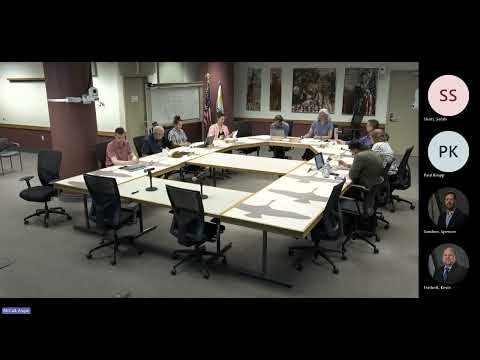
A planning staff presenter told the Spokane Plan Commission on June 11 that proposed amendments to the city’s addressing code would give the addressing administrator more discretion to name non‑roadway travel surfaces and to assign addresses where vehicular access actually occurs, changes staff says emergency responders prefer.
The presenter (identified in the meeting as planning staff) said the proposed revisions would strike a restrictive clause in current code (17D.050.A.050) that prevents naming most non‑roadway traveled surfaces, and would add language allowing "driveways, alleys, access to parking areas, and other travel surfaces that are not considered roadways" to be named at the discretion of the addressing administrator. The presenter explained that in practical terms the change would allow addresses to be assigned where vehicles access a property rather than strictly to the adjacent street when access occurs from the rear or via a steep slope.
"Addressable property or structures shall be assigned an address based upon the named travel way from which vehicular access to the property or structure is obtained," the presenter said when summarizing the proposed new language (code section 17D.050.8100 in the meeting packet).
Staff gave a hypothetical: a house built high above a lower street where the driveway and emergency vehicle access are from an alley. Under the current code, addresses might be tied to the lower street and could mislead first responders; the draft change would allow addressing off the alley or driveway that provides vehicular access. The presenter said the aim is clarity for fire and police dispatch and crews.
Commissioner Francis asked how the change would interact with accessory dwelling units and lot splits and whether the Post Office, dispatch systems and mapping providers would accept the new addressing. The presenter said accessory units typically follow multi‑unit standards (unit 1/unit 2) and that the addressing administrator would consult fire and police. The presenter said the U.S. Postal Service is generally flexible and that online map providers typically update from official addressing data, but wrestled with data‑management concerns about fractional addresses (for example, "22½"). The presenter said fractional addresses remain rare and cause complications for data systems and dispatch.
Staff also proposed deleting a provision that required city council approval for deviations from literal compliance with addressing standards. The presenter said council-level sign‑offs for minor deviations are unusual and that the addressing administrator and emergency services should instead handle minor exceptions.
The Development Services Center will do another round of engagement with police, fire and the volunteer center, staff said, then return to request a hearing before the Plan Commission. The presenter emphasized that the code changes are intended to apply prospectively to new developments and plats, not to readdress existing properties except where necessary.
Speakers identified the addressing administrator as the staff member in the Development Services Center who implements numbering and naming; staff said that person has a team and that one person is the primary administrator. The presenter said the code edits are meant to reduce confusion and improve predictability for emergency responders while avoiding unnecessary readdressing of existing parcels.