Get Full Government Meeting Transcripts, Videos, & Alerts Forever!
Get email alerts on the Comprehensive Plan topic
No spam. Unsubscribe anytime.
Spokane planning staff outline timeline, alternatives for Plan of Spokane 2046 update and EIS
Summary
City planning staff told the Spokane Plan Commission on June 11 they aim to release a draft environmental impact statement this fall and asked commissioners to review new maps, alternatives and technical memos as the Plan of Spokane 2046 update advances toward public outreach and council review in 2026.
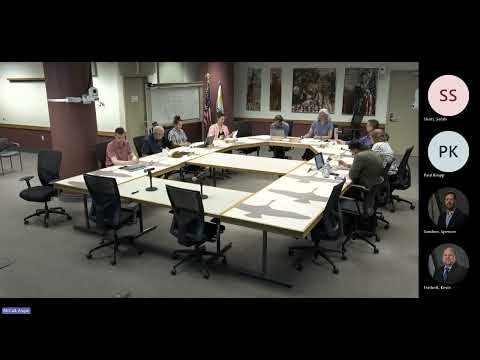
Terrell Black, planning staff for the City of Spokane, told the Plan Commission on June 11 that the city is advancing the Plan of Spokane 2046 update and its environmental impact statement, with a goal of producing a draft EIS in October and public outreach in October and November.
The draft alternatives under review include a “no action” baseline and two other alternatives described as “distributed and balanced growth” and a variant with more transit-linked intensity. "Our goal is October, and we are planning a lot of public outreach in October and early November," Black said.
The memo and presentation staff provided describe the EIS process, the analytical thresholds the consultants are using for topic areas, and the data that will feed modeling. Black said the consultants were compiling modeling inputs and that staff expects to send consolidated comments to the consultant by June 17 so modeling can begin.
Commissioners and staff discussed map presentation choices. Staff said consultants prepared a new grayscale base map to make differences between alternatives easier to read and that some growth areas outside city jurisdiction (UGA areas) will not be shown in full color on the public map to avoid confusing viewers. The presentation also added a proposed “23” transit line as a high-performance network (not a full bus rapid transit line) to help show where increased intensity is being considered.
Kevin Froggot, who staff identified as leading chapter review work, told commissioners the update will also fold in housing analyses, a racially disparate impacts housing report, an anti-displacement map update and climate planning. He said housing materials are slated for a Plan Commission housing meeting July 23 and that climate work will be on the June 23 agenda. "We're planning to bring those to you in one meeting in July," Froggot said.
On timing, Black and staff said the city’s deadline for adoption has been extended to Dec. 31, 2026. They said the objective is to provide draft plan materials to the City Council by October 2026 so council can review the document ahead of budget considerations. Staff cautioned that identifying and agreeing a preferred alternative could affect the schedule: code changes that implement the plan would likely follow adoption and could stretch into 2027. Staff said they are preparing an RFQ/RFP for consultant assistance on zoning-code updates.
Commissioners pressed staff on technical details and public clarity. Staff said they plan more intensive public outreach than earlier visioning, using story maps and videos to help residents understand alternatives. They also said technical chapters (capital facilities, utilities, transportation) are being drafted in-house and land-use chapters will follow once a preferred alternative emerges. The Washington State Department of Commerce checklist and related state review items were discussed as constraints staff must meet during the update.
Staff described the current sequence as: finalize alternatives and data inputs; consultant analysis and modeling; draft EIS and draft chapter releases; public outreach on the EIS and draft chapters; Plan Commission hearings; and, ultimately, transmittal to City Council. Black said he’d return with additional maps and technical memos as the consultant analysis advances.
Commissioners asked to see clearer depictions of water/sewer service areas; staff said those layers will remain available on the public viewer and that inset maps could be used to reduce map clutter for the public. Staff also said they would continue coordination with council members by district and other agencies as the EIS and preferred alternative work advances.