Lifetime Citizen Portal Access — AI Briefings, Alerts & Unlimited Follows
Neighbors and ANC oppose 14‑bed assisted living at 7410 Eastern Ave NW; BZA continues decision
Loading...
Summary
June 11, 2025 — The District of Columbia Board of Zoning Adjustments on Wednesday heard hours of testimony on an application to convert 7410 Eastern Ave NW into a 14‑bed assisted‑living facility and postponed a decision to its June 18 meeting.
June 11, 2025 — The District of Columbia Board of Zoning Adjustments on Wednesday heard hours of testimony on an application to convert a house at 7410 Eastern Ave NW into a 14‑bed assisted‑living facility and postponed a decision to its June 18 meeting.
The applicant’s attorney, Alex Wilson of Sullivan & Barros, told the board the proposal is intended to serve older residents who will live at the property and “not be driving.” “This is not a high volume medical facility,” Wilson said. The applicant proposed conditions including a community liaison and measures to limit on‑site parking impacts.
Neighbors and advisory neighborhood commissioners objected. Tiffany Nicole Johnson, commissioner for ANC 4B06, said the commission “is opposed to this 14 bed” facility, arguing it amounted to “opportunistic warehousing of individuals” and questioned whether the Department of Health would permit the level of care the applicants described. Several nearby residents said the house would be overcrowded for the block and raised privacy and traffic concerns.
Transportation and planning reviews were central to the hearing. Eric Osborne, development program manager at the District Department of Transportation, described DDOT’s recommendation that the existing curb cut be closed because the property has alley access: “We do not allow curb cuts on properties with alley access.” He said eliminating the curb cut would allow an additional curbside parking space along the street but that on‑site parking carved from public space is not permitted.
Office of Planning staff member Maxine Brown Roberts said the requested special exceptions and parking relief are consistent with the zoning standards for health care facilities and urged the board to consider the record; she also explained that the medical‑care parking formula is based on building area rather than zone and that the house’s square footage triggers a one‑space requirement.
Supporters, including Dr. Emmanuel Halab, a consultant pharmacist, said the proposal would keep seniors in the neighborhood. Opponents, including several nearby homeowners and a representative of ANC 4B, pressed the board for conditions or denial, citing neighborhood compatibility, the scale of the facility and unresolved questions about operations and oversight.
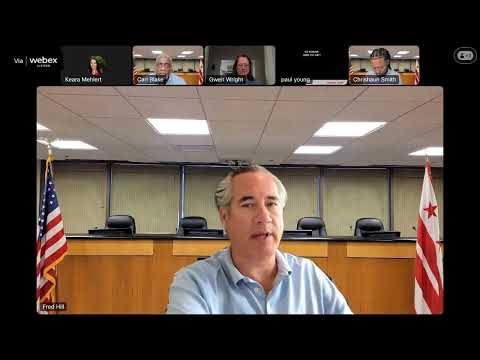
The board did not vote on the application; Chairman Fred Hill closed testimony and said the case would be deliberated at the board’s next session, no earlier than 48 hours after the hearing and scheduled this matter for further consideration on June 18. The board asked parties to provide follow‑up materials identified during the hearing and left the record open for any required filings.
If the board takes action on June 18, it will decide whether the conditions offered by the applicant—community liaison, employee parking encouragement, and coordination with DDOT and public‑space permitting—sufficiently mitigate neighbors’ concerns, or whether the special exception criteria for a 14‑bed health care facility are not met.