Get Full Government Meeting Transcripts, Videos, & Alerts Forever!
Get email alerts on the Smoke Free Air Exemptions topic
No spam. Unsubscribe anytime.
MDHHS outlines cigar-bar exemptions, renewal burden and enforcement limits under Michigan smoke-free law
Summary
Department officials described how the Michigan smoke-free indoor air law grants and renews a fixed set of cigar-bar and tobacco-retail exemptions, explained documentation and HVAC requirements, and defended a paper-based renewal process that some lawmakers called onerous.
Officials from the Michigan Department of Health and Human Services briefed the House Regulatory Reform Committee on Michigan's smoke-free indoor air law and the annual exemption and renewal process for cigar bars and tobacco specialty retail stores.
"Public Act 188 of 2009" was cited by MDHHS staff as the statute commonly known as Michigan's smoke-free indoor air law; department witnesses said it was amended to prohibit smoking in most public places while providing limited exemptions for cigar bars, tobacco specialty retail stores and certain casino floors. "A bar must have been in existence on the effective date of the section and meet all requirements included in the section," Bureau of Health and Wellness Director Brenda Jagadeh said. Sofia Hines, director of the division that manages exemptions, said one criterion is that at least 10% of a cigar bar's gross annual income come from on-site cigar sales or on-site humidor rentals and that a humidor be installed on the premises.
Hines said the law provides for a fixed total of 300 exemptions for cigar bars and tobacco specialty retail stores; some are active and others not, but the department treats the total as 300. MDHHS staff described an annual renewal affidavit that must be completed, notarized and postmarked between January 1 and January 31 (with a 21-day grace period to Feb. 21). The department said it processes renewal affidavits in the order received and generally aims to complete reviews by Aug. 30; during review an existing exemption remains in effect until the department notifies the business of approval or denial.
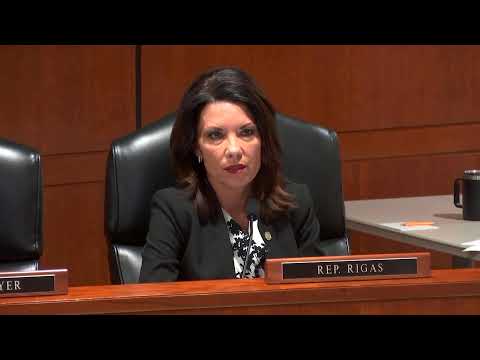
Several committee members pressed the department over the renewal process and documentation requirements. Representative Regis held up a 48-page renewal packet and asked whether the process could be streamlined or moved online. Hines said MDHHS had explored automation but did not have funds to convert the process to an online submission system. Lawmakers criticized aspects of the packet, including requirements for multiple color photographs of exterior signs and interior views, repeated address/municipality entries, and many initials and attestations.
There was also a factual dispute over fees and processing: at one point Hines said there is no fee for renewal, and committee members later referred to a $500 fee; the department said it would follow up to clarify fee and expenditure questions and noted that the renewal package is mailed by certified mail and processed by a tobacco section staffed by three employees. Committee members asked how often incomplete applications occur and what remedial steps the department takes when adjacent businesses complain about permeation of tobacco smoke. MDHHS said HVAC requirements and inspections are part of the review and that staff work with businesses to correct problems; the department said it does not itself broker or participate in private sales or transfers of exemptions but will review affidavits submitted for transfers.
Committee members asked about enforcement steps — whether the department would issue a cease-and-desist without inspection — and MDHHS said it would follow up with specifics but indicated inspections are part of the process. Lawmakers also noted potential inconsistencies in permitting cigar smoking indoors while cigarette smoking is prohibited in most public places; MDHHS said the exemptions were established in statute and that research suggests different exposure profiles but did not provide a health-comparative conclusion during the hearing.
Committee members asked MDHHS to provide additional details on fees, the rationale for particular documentary requirements, the timeline for corrections, and the department's authority and procedures for approvals, denials and enforcement.